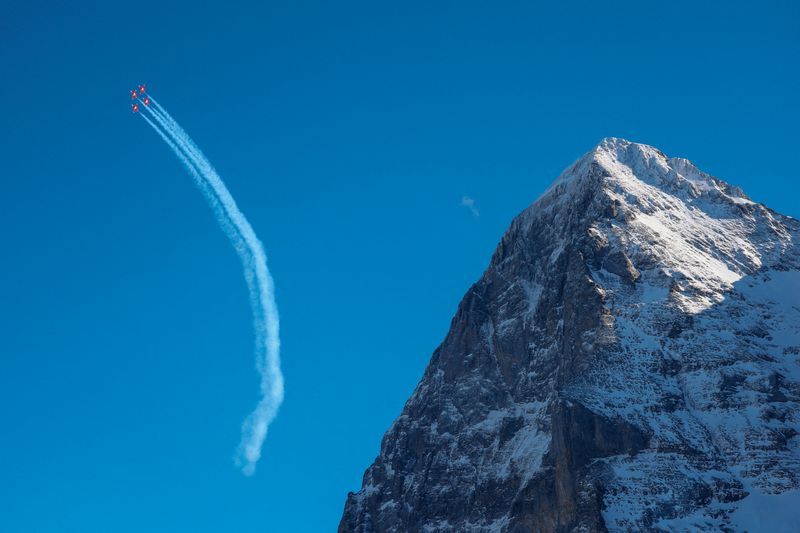
British mountaineer Fay Manners has etched her name into alpine climbing history by establishing a new route on one of the world's most formidable peaks. Working alongside Swiss climbing partner Roger Schaeli, the 39-year-old spent nearly two weeks navigating uncharted terrain on the Eiger North Face in the Swiss Alps, creating a route spanning 2,952 feet across 33 pitches that she named "Solar Eclipse." Her achievement carries particular significance as she becomes the first British woman to open an original route on this legendary face, a distinction that goes well beyond the physical feat of mountaineering.
The Eiger North Face presents climbers with one of Alpine Europe's most demanding challenges. The 1,800-metre wall combines treacherous rock and ice formations with exposure to severe weather and constant danger from falling debris. Its fearsome reputation stems from a tragic history of fatal attempts, though these early tragedies ultimately paved the way for the first successful ascent by a German-Austrian team in 1938. Despite numerous ascents since then, establishing a completely new route through previously unclimbed terrain remains extraordinarily rare and demands both technical mastery and creative problem-solving.
Manners' decision to return to the Eiger and forge her own path emerged from her prior experience on the mountain four years earlier, when she climbed the established Heckmair Route. That initial encounter sparked an obsession with understanding the wall's possibilities, leading her to extensive research and ultimately to the conviction that she could identify an unclimbed section worthy of development. Unlike repeating a known route where climbers benefit from guidebooks detailing difficulty levels and established techniques, creating a new route demands pioneers venture into complete uncertainty about what obstacles they will encounter, what equipment they will need, or whether success is even achievable.
The distinction between repeating established climbs and establishing new routes carries profound meaning within mountaineering culture. When a climber tackles a familiar route, they proceed with the knowledge that others have succeeded, allowing them to prepare methodically based on documented experience. Route-finding presents an entirely different psychological and technical challenge. Manners describes the experience candidly: neither she nor Schaeli could predict how difficult the pitch would prove, what protection systems would be necessary, or whether they could ultimately reach the summit. Each decision involved calculating risks with incomplete information and adapting strategies in real time as conditions revealed themselves.
Beyond the personal achievement, Manners recognises the broader cultural importance of her accomplishment within a sport historically dominated by male pioneers. She points to a striking pattern in climbing guidebooks, where nearly every route-opener's name listed is male, creating a subtle but powerful message about who belongs in the sport's creative and groundbreaking roles. This representation matters profoundly because it shapes not merely what women see as possible but what they unconsciously internalise about their own potential. By actively engaging in route-finding rather than simply repeating male-established climbs, Manners and other women alpinists actively contest the narrative that climbing innovation belongs exclusively to men.
Women's presence on the Eiger extends back decades, though often overshadowed within climbing narratives. Daisy Voog shattered gender barriers in 1964 by becoming the first woman to successfully climb the North Face, accomplishing this despite having been rejected from a mountaineering club simply for being female. Five years later, Japanese climber Michiko Imai made her own mark by becoming the sole woman on the six-person team that established the "Japanese Summer Direttissima" route. These pioneering women demonstrated both capability and determination, yet their stories remain less celebrated than contemporary male achievements, illustrating how representation gaps persist even as barriers gradually lower.
Manners reflects on the subtle mechanisms through which gender stereotypes limit potential. She considers how seemingly minor comments during childhood—such as suggestions that women cannot carry as much weight—accumulate into deeper self-doubt that individuals may not even consciously recognise. These absorbed assumptions about female capability extend throughout athletic and professional spheres, often preventing women from pursuing paths they might otherwise choose. The stereotypes operate so insidiously precisely because they feel natural rather than constructed, embedded in everyday language and casual expectations rather than explicit prohibition.
Her own journey to professional climbing illustrates these dynamics vividly. Growing up in England with genuine passion for sport, Manners imagined building a career around athletic pursuits. Yet people around her consistently dismissed this ambition, insisting that female athletes had limited financial prospects and no viable professional future. Internalising these messages, she instead pursued data science, a more conventional path that offered stability. She eventually relocated to Chamonix, France, continuing to work as a data consultant while pursuing climbing as a secondary interest. Only when The North Face approached her about sponsorship—initially allowing her to maintain both careers—did a professional path in climbing become reality, first part-time, then full-time.
Manners identifies a crucial psychological barrier: she struggled to believe a female athlete could sustain a professional career in sports because no one had convincingly demonstrated this possibility to her. The absence of visible examples created genuine uncertainty, not arrogance or disinterest, about whether such a path existed. When sponsorship opportunities materialised, she recognised opportunities that her earlier self would have dismissed as impossible. This recognition of how possibility itself depends on visibility demonstrates why representation matters so profoundly in athletic and professional fields. Young women considering mountaineering careers need concrete examples of successful female professionals, not merely anecdotal encouragement.
Looking forward, Manners envisions her route serving as inspiration and invitation to other women climbers. She dreams of seeing all-female teams attempt to repeat the "Solar Eclipse" route, viewing such ascents as the ultimate validation of her work. This vision extends beyond individual achievement to imagine a climbing culture where women regularly establish new routes alongside men, where guidebooks increasingly list female route-openers, and where the assumptions that once limited Manners herself gradually dissolve for the next generation. Her accomplishment thus transcends personal mountaineering success to represent a broader challenge to how sport allocates opportunity and recognition.
For Malaysian and Southeast Asian mountaineers, Manners' achievement resonates particularly given regional climbing development. As Alpine climbing culture influences Asian mountaineering communities, the visibility of women establishing routes rather than merely repeating them becomes crucial for developing local female climbing cultures. Malaysian climbers increasingly participate in international climbing competitions and expeditions, meaning that challenges to global climbing hierarchies directly affect local climbing aspirations. Manners demonstrates that capability, creativity, and determination can overcome historical barriers, a message particularly relevant for emerging mountaineering communities still negotiating gender dynamics within their climbing cultures.
The 13 days Manners spent establishing "Solar Eclipse" represent far more than a technical climbing achievement. They embody a deliberate choice to occupy space historically claimed by men, to create rather than merely follow, and to demonstrate that women belong among mountaineering's innovators and pioneers. Her accomplishment will endure not merely as a route on a famous peak but as proof that women's entry into climbing's creative processes—establishing new routes, pushing boundaries, and shaping the sport's future—remains not merely possible but necessary for mountaineering's continued evolution.

