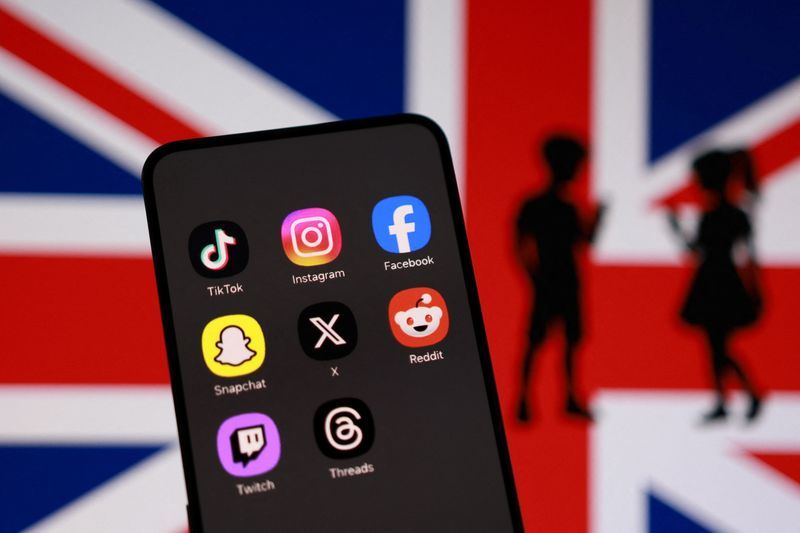
Britain's government is moving to curtail late-night social media use among older teenagers, announcing a scheme that would automatically block access to platforms between midnight and 6 a.m. for users aged 16 and 17. The new safeguarding approach comes just weeks after the government unveiled proposals for a complete ban on social media for anyone under 16, signalling an increasingly aggressive stance toward protecting young people from potential digital harms. Under the planned system, teenagers would need to actively alter their account settings to access apps during overnight hours, rather than the current default permitting round-the-clock use.
The regulatory framework represents a significant escalation in government intervention into the social media sector. Beyond the simple time-based restrictions, the rules would also automatically disable addictive features—such as infinite scroll and algorithmic recommendations designed to maximise engagement—unless individual users deliberately re-enable them. This dual approach targets both the temporal aspect of social media consumption and the deliberate design mechanics that platforms employ to keep users engaged. Technology minister Liz Kendall framed the initiative as essential for youth wellbeing, emphasising that uninterrupted sleep, academic focus, and family time remain critical developmental needs that social media use can undermine.
Online safety minister Kanishka Narayan underscored that the restrictions would not be voluntary suggestions but legally enforceable requirements. Speaking to LBC Radio, he stated bluntly that the government would be "forcing the tech companies to do it," indicating that platforms such as Instagram (owned by Meta), TikTok (ByteDance), and YouTube (Google) would have no choice in implementation. Narayan also flagged that technology companies would face liability for failing to conduct robust age verification checks, with consequences extending to "very severe regulatory sanction" for non-compliance. This language suggests the government is prepared to deploy substantial penalties against platforms that resist or inadequately execute the new rules.
Major technology companies have maintained silence on the proposals so far. Meta, ByteDance, and Google did not provide immediate statements when contacted by international media regarding the planned restrictions. Their quiet response likely reflects the complexity of implementation—deploying geographically targeted defaults for British users while managing systems across global markets, handling technical integration challenges, and assessing potential impacts on user engagement and revenue. The lack of public pushback may also indicate these corporations are awaiting formal legislation before committing resources to response strategies.
Domestic political opposition has already emerged from across the aisle. Conservative Party education policy chief Laura Trott dismissed the strategy as ineffective, arguing that opt-out curfews represent a contradictory halfway measure. Trott's critique highlights a fundamental tension: if the government genuinely believes 16- and 17-year-olds should not use social media, permanent restrictions would be more coherent than settings users can readily disable. Her point cuts to implementation challenges that have plagued similar policies elsewhere. The distinction between mandatory defaults and truly enforceable restrictions remains critical, as many teenagers possess sufficient technical literacy to override default settings.
The legislative timeline suggests this will not be a rapid transformation. The government plans to present the first regulatory framework to parliament by the end of 2024, with the actual rules coming into force sometime in spring 2027. This extended timeline reflects the complexity of drafting legislation that must account for technological realities, legal precedent, and coordination with the private sector. The two-year implementation window also allows space for international experience to inform the final rules, as other democracies grapple with similar challenges.
Australia's experience offers instructive lessons for British policymakers. That country became the first to legislate an outright social media ban for children under 16, but a review team discovered that platforms fundamentally failed at the primary hurdle: implementing reliable age verification. Without functioning age checks, regulatory intentions collapse at the enforcement stage. This finding is particularly relevant to the British approach, which relies on technology companies to comply with default settings—a measure that assumes platforms will resist financial incentives to bypass their own safety mechanisms. If age verification remains unresolved, even the most sophisticated curfew system could prove toothless.
Recent legal developments in the United States have added pressure on technology platforms regarding youth mental health protections. Within the past month alone, both Google and TikTok settled lawsuits brought by a minor alleging that exposure to social media caused documented mental health damage. These settlements, though not admissions of liability, underscore growing judicial recognition that platforms bear responsibility for youth wellbeing impacts. For British regulators, such precedents strengthen the case for intervention and potentially establish legal grounds for enforcement action against platforms that demonstrate negligence in safeguarding implementation.
The broader global pattern reflects converging concern among parents and policymakers about social media's effects on adolescent development. Sleep disruption, anxiety, depression, and reduced face-to-face social interaction represent documented risks widely discussed in academic literature and parental discourse. Britain's two-pronged approach—a complete under-16 ban plus curfews for older teenagers—acknowledges that young people's vulnerability to digital harms is not uniform. The graduated strategy recognises that 16- and 17-year-olds possess greater autonomy and potentially greater capacity to manage online risks than younger teenagers, while still requiring protective intervention.
For Malaysian audiences, Britain's regulatory approach offers relevant implications. Southeast Asia has experienced explosive growth in social media adoption among youth, with usage patterns and demographic profiles often differing significantly from Western nations. The voluntary nature of parental controls in the region stands in sharp contrast to Britain's mandatory framework. Whether Malaysia or neighbouring countries might follow suit remains uncertain, but the UK legislation will likely influence regional discussions about digital governance, particularly among policymakers concerned about youth welfare and educational outcomes. The success or failure of Britain's implementation will provide crucial data about whether legally mandated digital restrictions can function effectively in a global, technologically sophisticated operating environment.
The coming years will reveal whether Britain's regulatory ambition can overcome the practical obstacles that have constrained similar initiatives elsewhere. The interaction between legal requirements, technological feasibility, corporate compliance incentives, and user behaviour will determine whether teenagers actually experience reduced late-night social media use or simply navigate around default settings. What remains clear is that governments worldwide are no longer willing to defer entirely to market forces when it comes to protecting young people from potential digital harms.

