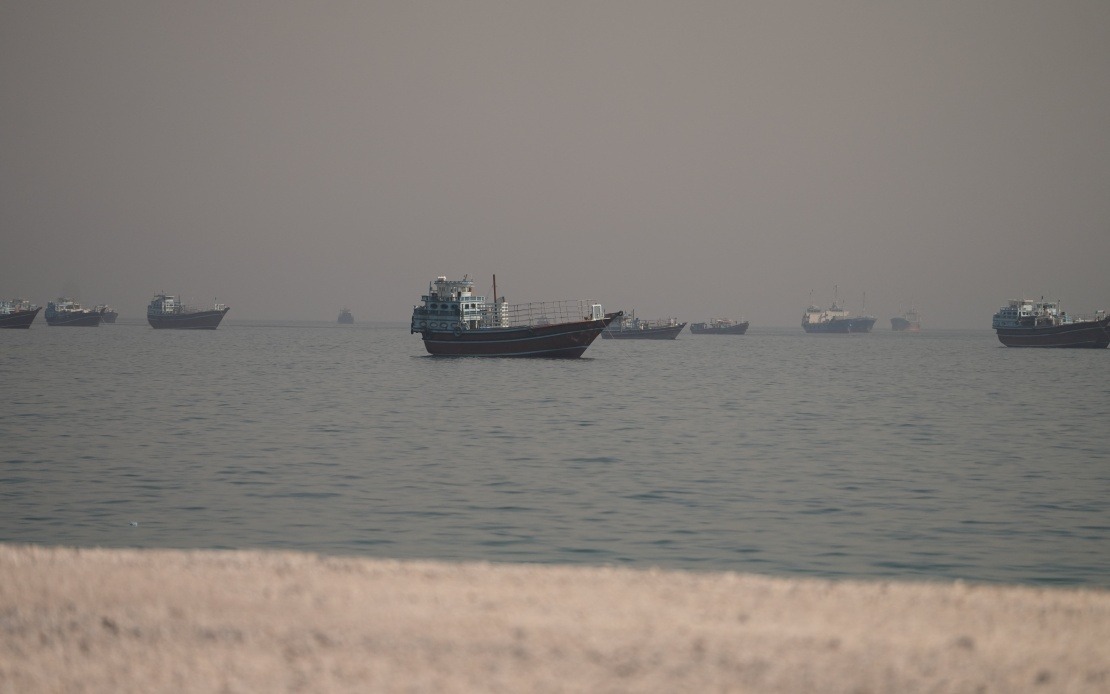
Britain and France have signalled their willingness to establish a multinational military operation aimed at securing safe passage through the Strait of Hormuz, one of the world's most strategically vital maritime corridors. The announcement, delivered jointly by Prime Minister Keir Starmer and President Emmanuel Macron in a coordinated statement, reflects growing Western concern over maritime security in a region where geopolitical tensions continue to escalate and shipping interests face mounting risks.
The two European leaders framed their initiative as a response to fundamental economic imperatives. In their joint declaration, they emphasised that the Strait of Hormuz functions as "a vital artery for the global economy," underscoring that restoring unimpeded transit for vessels from all nations through the waterway represents not merely a regional matter but one of genuine global consequence. This framing signals that Britain and France view the security challenge through the lens of international commerce and systemic stability rather than purely geopolitical competition.
Crucially, the European powers indicated they have secured preliminary diplomatic cooperation from Oman, a sultanate whose territorial waters encompass a critical portion of the Strait of Hormuz. By obtaining Omani agreement to cooperate in ensuring safe passage, London and Paris have sought to anchor their initiative in legitimate coastal state sovereignty rather than presenting the mission as an external imposition. This approach reflects a sophisticated understanding that any multinational operation lacking regional endorsement would face significant legitimacy challenges and operational complications.
The proposed force would not represent a unilateral British or French deployment but rather a broader coalition effort. Both European nations explicitly stated their readiness to "anchor a broader multinational military mission to support freedom of navigation in the area." This language suggests coordination among multiple partners, potentially including other maritime powers with substantial interests in Gulf commerce, though the statement did not specify which additional nations might participate in such an operation.
The initiative underscores London and Paris's stated commitment to upholding what they characterise as essential principles: regional stability, respect for state sovereignty, and adherence to international law. Their joint statement reaffirmed these commitments while emphasising the importance of close cooperation among international partners to maintain global security and freedom of navigation. For Malaysia and other Southeast Asian trading nations, whose vessels traverse these waters and whose economies depend on uninterrupted Gulf shipping, such commitments carry direct material consequence.
However, the Western proposal arrives amid a backdrop of mounting tensions with Iran, which has repeatedly and forcefully rejected any foreign military involvement in maritime security operations within the Strait of Hormuz. Iranian officials have consistently articulated a position that security in the waterway represents the exclusive responsibility of littoral states—those whose territories directly border the strait. This principled stance reflects both nationalist sentiment and Iran's desire to maintain strategic autonomy in a region where it faces considerable external pressure.
Iran's warnings have not been merely rhetorical posturing but reflect genuine security concerns rooted in historical experience. From Tehran's perspective, the introduction of Western military vessels in waters adjacent to Iranian territory represents both a physical security threat and a symbolic reassertion of external dominance in regional affairs. Previous foreign military interventions and political interference in Iran's modern history inform contemporary Iranian resistance to what officials view as renewed attempts at hegemonic control through force projection.
The timing of this announcement carries additional significance given the fragile state of regional stability. Existing maritime incidents, including reports of ship seizures and attacks attributed to various Iranian-affiliated actors, have already elevated tensions considerably. The introduction of formal multinational naval patrols could either stabilise the situation through visible international commitment to freedom of navigation or potentially escalate confrontation, depending on how Iran responds and whether operational encounters occur between coalition vessels and Iranian forces or proxy actors.
For Malaysia and the broader ASEAN region, this development presents a complex scenario. Southeast Asian nations depend heavily on the Strait of Hormuz for energy imports and global trade flows. Approximately one-third of maritime crude oil passes through the waterway, making its security directly relevant to regional economic interests. However, Southeast Asian states have long cultivated non-aligned positions, seeking to avoid entanglement in great power competitions. The British-French initiative may prompt questions from regional governments about whether to support, remain neutral toward, or actively distance themselves from the multinational operation.
The success of any multinational force would depend substantially on its operational coordination, rules of engagement, and whether it can genuinely protect commercial shipping without triggering escalatory incidents. International shipping companies operating in the region will scrutinise closely whether such a mission provides genuine protection or merely alters the nature and location of risks. The confidence of insurers, shipping firms, and energy traders will likely shape whether the initiative achieves its stated economic objectives.
Ultimately, the British-French proposal represents an attempt to internationalise responsibility for a security problem that has regional dimensions but global implications. Whether this approach can reconcile the competing interests of external powers seeking to maintain freedom of navigation with Iran's assertions of regional authority remains uncertain. For Southeast Asia, the unfolding situation reinforces the importance of maintaining constructive engagement across all parties to avoid confrontation that could disrupt critical trade flows upon which the region's prosperity depends.

