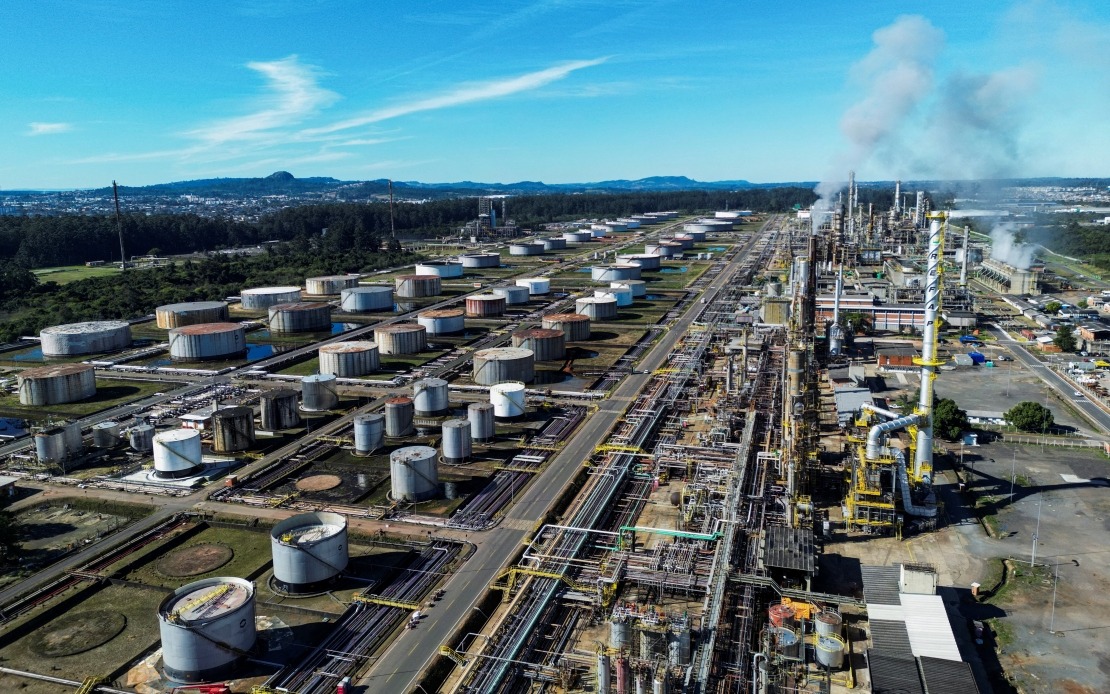
The Brazilian government has escalated its response to fresh American trade restrictions, announcing plans for swift economic countermeasures following the Trump administration's decision to impose a blanket 25 per cent tariff on selected Brazilian goods entering the United States from July 22. The tariffs represent a significant hardening of Washington's trade stance against Latin America's largest economy and come at a particularly sensitive moment for Brazilian domestic politics, with the country preparing for an election in October.
The Office of the United States Trade Representative justified the new duties by citing a trade investigation concluding that Brazil's commercial policies systematically disadvantage American interests. However, President Luiz Inacio Lula da Silva's administration has flatly rejected these findings, characterising the tariffs as economically baseless protectionism designed to inflame political divisions within Brazil. Brasilia's response has been swift and structured, with officials immediately signalling their intention to invoke the country's domestic Reciprocity Law to impose equivalent penalties on American products entering Brazilian markets. Additionally, the government has announced it will escalate the dispute through the World Trade Organisation's formal dispute settlement mechanism, signalling Lula's determination to challenge the tariffs through multilateral channels.
The Brazilian presidency released a formal statement emphasising that it does not recognise the legitimacy of trade investigations that operate outside the established framework of international commercial law. Lula has specifically highlighted what he views as a glaring factual error in Washington's assessment, noting that 76 per cent of all American imports enter Brazil completely without tariffs, and that the average effective tariff rate applied to US goods stands at just 3.1 per cent. He has pointed to broader trade statistics as evidence that Brazil is not the culprit in their commercial relationship: last year, American exports to Brazil exceeded Brazilian imports to the US by nearly USD 42 billion, representing Washington's third-largest global trade surplus after only the Netherlands and the United Kingdom.
The Trump administration's decision to exempt certain Brazilian commodities from the tariffs reveals the complexity and contradictions embedded within the policy. The carve-outs cover products including coffee, beef, oranges, orange juice, and aerospace components—goods that are either essential to American supply chains or produced in insufficient domestic quantities to meet national demand. These exceptions demonstrate that Washington simultaneously recognises Brazil's strategic importance to the US economy while pursuing protectionist measures that risk destabilising the relationship. The selective nature of the tariffs suggests negotiations around specific sectors may remain possible, even as headline political tensions escalate.
US Secretary of State Marco Rubio has personalised the dispute, taking to social media platform X to blame Lula directly for the tariffs, claiming the Brazilian president prioritised his ego over reaching a negotiated settlement and failed to engage in good-faith discussions. This rhetorical escalation reflects how the trade dispute has become entangled with broader geopolitical and personality-based tensions between the two administrations. The American framing attempts to shift responsibility from Washington's policy choices to Lula's alleged intransigence, a tactic designed to shape international perception of who bears responsibility for the escalating economic conflict.
The roots of current tensions extend back to July 2025, when the Trump administration initially imposed an aggressive 50 per cent tariff on Brazilian goods. At that time, Washington explicitly justified the measure by reference to Lula's government's prosecution of Jair Bolsonaro, former Brazilian president, characterising the legal proceedings as a politically motivated witch hunt. Bolsonaro had been convicted for his alleged role in orchestrating an attempted coup following his electoral defeat in 2022. While some of those initial tariffs were subsequently reduced, the fresh 25 per cent duties represent a renewed escalation rather than a genuine de-escalation of trade hostilities. The pattern suggests that the Trump administration intends to maintain sustained economic pressure on Brazil regardless of whether negotiations occur.
The timing of these tariffs creates considerable complications for Brazilian domestic politics. With a presidential election scheduled for October, Lula faces pressure to demonstrate strength in responding to American economic aggression while simultaneously managing the domestic economic consequences of potential trade warfare. The political landscape has become increasingly polarised, with Lula expected to seek re-election in a contest against conservative Senator Flavio Bolsonaro, son of the former president. The elder Bolsonaro remains a powerful political figure despite his legal troubles, and his family's evident alignment with the Trump administration creates suspicions within Brazil that Washington is deliberately attempting to destabilise Lula's government ahead of the election.
For Malaysian policymakers and regional observers, the Brazil-US trade conflict carries important implications. Southeast Asian economies, like Brazil, depend substantially on access to American markets and investment, and the willingness of the Trump administration to pursue aggressive unilateral tariffs against major developing economies demonstrates that no country—regardless of size or diplomatic relationship—is immune to American trade pressure. The episode illustrates how the rules-based international trading system faces serious erosion when a major power decides to pursue tariffs without clear WTO justification. Malaysia and other ASEAN nations must consider whether similar tariffs might be directed toward their own exports, particularly agricultural products and manufactured goods.
Moreover, the Brazilian case demonstrates how trade disputes can become instruments in broader geopolitical and domestic political conflicts. The explicit connection between the tariffs and the prosecution of Bolsonaro suggests that Washington is willing to weaponise trade policy to influence internal political outcomes in other countries. This precedent creates concerning implications for regional stability and sovereignty, as smaller nations might face similar pressure if their domestic political trajectories diverge from American preferences. The intersection of economics and electoral politics in this dispute underscores the vulnerability of developing democracies to external economic coercion during sensitive political periods.
Brazil's decision to pursue both reciprocal tariffs and WTO action represents a dual-track strategy designed to signal resolve domestically while exploring diplomatic solutions internationally. The reciprocal tariffs serve an important domestic political function, allowing Lula to demonstrate that his government will not passively accept American protectionism. However, the WTO route acknowledges the reality that formal dispute settlement, while slower, may ultimately prove more effective and carry greater legitimacy in the international system. The outcome of this dispute will have consequences extending well beyond Brazil, establishing precedents for how other nations should respond to American trade pressure and whether the multilateral trading system retains sufficient authority to constrain unilateral tariff actions by major powers.

