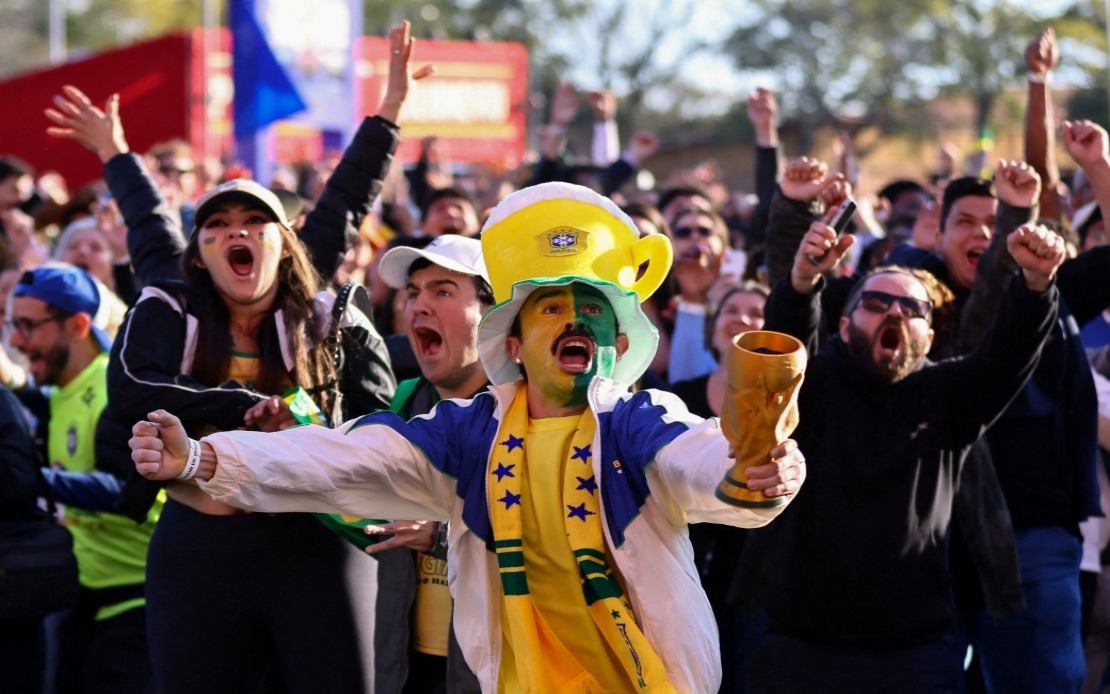
Brazil staged a dramatic second-half turnaround to defeat Japan 2-1 at Houston Stadium on June 30, advancing to the Round of 16 of the 2026 FIFA World Cup. The Selecao looked far from their imperious best for much of the match, undone by Japan's compact defensive organisation and clinical finishing, before launching a powerful comeback to snatch victory in the tournament's closing moments.
The opening 45 minutes belonged entirely to Japan, who frustrated their illustrious opponents with a disciplined five-at-the-back formation that starved Brazil of the space they needed to dominate proceedings. The Samurai Blue's defensive setup, anchored by four defenders and a midfielder sitting deep, proved remarkably effective at breaking up Brazil's rhythm and limiting scoring opportunities. Despite controlling possession in the first half, the South Americans found themselves unable to generate the quality of attacking play that has defined their World Cup campaigns in recent years. Their usual fluidity in transition was negated by Japan's well-organised shape, particularly in the wide areas where Brazil typically looks most dangerous.
The shock came in the 29th minute when Japan struck against the run of play. Kaishu Sano latched onto a loose pass from Danilo before surging forward and striking a low, precise effort from distance that sailed beyond goalkeeper Alisson. The goal represented Sano's breakthrough on the international stage and handed Japan a lead they had barely suggested they were capable of achieving. More significantly, it kept alive Japan's quest for an elusive first knockout-stage victory at a World Cup, a milestone that has long eluded Asian football's traditional powerhouse.
Carlo Ancelotti's Brazil faced the prospect of extra time and potential elimination as the teams went into the interval. The magnitude of the situation was not lost on the supporters inside Houston Stadium, with Brazilian fans anxious about their team's ability to break down a Japan side that had proven far more resilient than anticipated. The script seemed to be writing itself for one of football's great World Cup upsets, as the Samurai Blue stood just 45 minutes from historic qualification.
The second half, however, told a completely different story. Brazil emerged with significantly enhanced intensity and purposeful intent, flooding forward with considerably greater frequency and urgency. The attacking philosophy shifted markedly, with the team creating numerous dangerous crossing opportunities from wide positions and keeping Japan under sustained pressure around their penalty area. The improvement in energy and execution proved immediately effective as a territorial onslaught began to wear down the Japanese defence.
The equaliser arrived in the 56th minute when Casemiro, arriving at the far post with typical midfielder's instinct, directed a powerful header past goalkeeper Zion Suzuki from Gabriel Magalhaes' delivery. The goal breathed fresh life into the Brazilian contingent in the crowd and shifted the momentum entirely in their favour. From this point forward, Japan found themselves increasingly hemmed into defensive positions, struggling to replicate the attacking threat they had managed in the opening period.
Brazil's relentless pursuit of a winning goal finally bore fruit in the 90th minute of play plus five minutes of added time. Bruno Guimaraes drove purposefully towards the box before releasing Gabriel Martinelli with a precisely weighted pass. The winger composed himself and finished clinically past Suzuki, whose attempted block proved insufficient to prevent the decisive breakthrough. The late strike delivered a crushing blow to Japan's tournament dreams and ensured Brazil's passage to the knockout rounds.
The victory, though secured in dramatic fashion, underscores both the quality and resilience of Brazil's squad, while simultaneously highlighting how even the most fancied sides can be troubled by opponents who arrive with clear tactical discipline and defensive solidity. Japan's performance, despite the defeat, demonstrated why Asian football continues to narrow the gap with traditional powerhouses. For Brazilian supporters and the wider Southeast Asian football audience following the tournament, the match served as a reminder that World Cup football tolerates no margin for complacency, regardless of historical pedigree.
Brazil will now prepare to face either Norway or Ivory Coast in the next round, continuing their pursuit of a record sixth world title. The team's ability to adapt and overcome adversity in the second half suggests they retain the capacity to compete with the tournament's most demanding opponents, provided they maintain the intensity and tactical flexibility demonstrated after the interval. For Japan, the wait for that elusive knockout-stage victory continues, though their competitive display here leaves them with grounds for optimism about the direction of their national team development.

