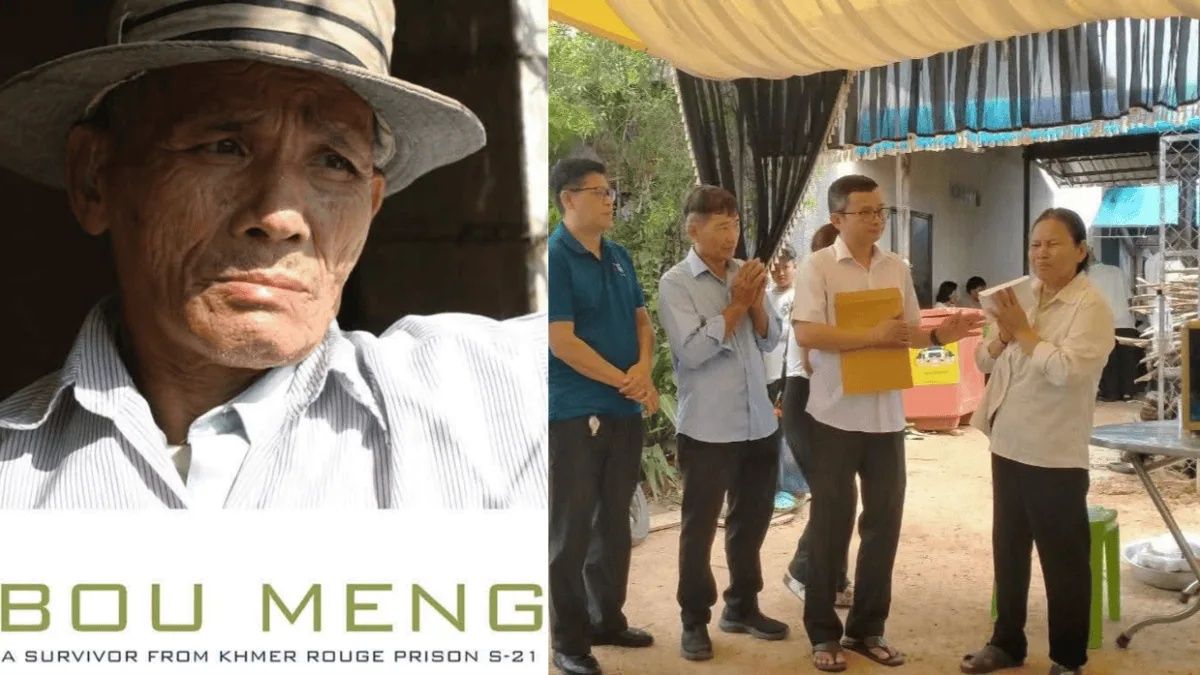
The death of Bou Meng at age 85 on August 14, 2026, represents the loss of one of Cambodia's most vital living links to the horrors of the Khmer Rouge era. As one of merely seven known survivors among tens of thousands who passed through the gates of Tuol Sleng prison—known internally as S-21—Meng carried with him firsthand testimony to one of the twentieth century's most systematic programmes of state terror. His passing underscores the narrowing window through which the world can hear directly from those who endured the genocidal regime that claimed approximately two million lives between 1975 and 1979.
The Tuol Sleng Museum, which now occupies the former prison compound in Phnom Penh, issued a formal statement acknowledging the profound significance of Meng's death. Museum officials recognised him not merely as a survivor, but as a crucial historical witness whose lived experience bore testimony to the meticulously documented crimes perpetrated under the command of Kaing Guek Eav, better known as Comrade Duch, who orchestrated the detention centre's operations with bureaucratic precision. The murder rate at S-21 was staggering—estimates suggest that fewer than fifty individuals walked out alive from among the estimated 17,000 people detained within its walls during the regime's rule.
Meng's survival itself was an extraordinary accident of history rather than any form of privilege or protection. While imprisoned in 1977 alongside his wife, his children were separated and sent to labour camps, a separation from which they never returned. The vast majority of families faced similar fates, with the Khmer Rouge viewing kinship ties as potential sources of ideological contamination. Yet Meng lived where so many perished, owing to a skill that proved unexpectedly valuable in a regime bent on destruction: his ability to paint. The regime's leadership required documentation of their atrocities and propaganda materials, and skilled artisans were occasionally spared execution to serve these purposes. This macabre reprieve allowed Meng to witness the systematic torture and execution occurring around him, absorbing details that would later constitute irreplaceable evidence.
Decades after liberation, Meng channelled his survival into a commitment to justice and historical accountability. He became a witness for the prosecution in the trial of Comrade Duch before the Extraordinary Chambers in the Courts of Cambodia, the international tribunal established to prosecute senior Khmer Rouge leaders. His testimony provided the court with intimate details of conditions within S-21, the interrogation techniques employed, and the fates of prisoners. ECCC proceedings, which began in 2006, faced significant obstacles—many perpetrators had died, documentation was incomplete, and political considerations complicated investigations. Meng's direct account therefore carried exceptional weight, offering corroboration and human context to the archival evidence preserved at the prison.
Beyond his formal role in legal proceedings, Meng devoted his later years to a form of testimonial activism that proved equally vital. He regularly visited the Tuol Sleng Museum, now a memorial and educational institution, where he shared his experiences with tourists, researchers, and school groups. Through these encounters, he transformed abstract historical tragedy into immediate human reality. Visitors encountering Meng could hear directly how torture was inflicted, how prisoners were selected for execution, and how the machinery of genocide operated at its most granular level. In an era when survivors are progressively fewer, this intergenerational transmission of memory takes on critical importance for preventing historical distortion and maintaining collective memory.
The Khmer Rouge's genocide remains profoundly relevant to Southeast Asia's contemporary political landscape. Cambodia itself continues grappling with trauma's legacy, while the region confronts persistent questions about authoritarian governance, the importance of institutional restraints on state power, and mechanisms for accountability when atrocities occur. Malaysia, as a neighbouring nation with its own complex political history, shares Cambodia's interest in ensuring that such catastrophic episodes remain firmly within historical memory rather than fading into generalised abstraction. Survivors like Meng function as irreplaceable anchors to that reality.
The ECCC tribunal, while imperfect and politically constrained, represents one of the rare instances where genocide perpetrators faced international justice years after their crimes. Comrade Duch himself was convicted and died in prison in 2020, with Meng's testimony contributing to that outcome. Yet many other senior figures escaped prosecution or faced trials of questionable rigor. The tribunal's work remains incomplete, and its legitimacy continues to face political pressure. Meng's participation helped establish crucial precedent for survivor testimony's role in such proceedings, a model relevant to contemporary transitional justice efforts globally.
The narrowing circle of survivors carries broader implications for how humanity preserves knowledge of genocide. Institutional memory through museums, archives, and documentary projects becomes exponentially more important as direct witnesses age. Cambodia has invested significantly in preservation efforts, yet resources remain limited and political will fluctuates. The death of survivors like Meng creates urgency around recording remaining testimonies comprehensively, ensuring their voices remain accessible to future generations who will never have opportunity for direct encounter.
Meng's legacy ultimately transcends his individual story, significant though that is. He exemplified how survivors can channel trauma into purposeful engagement with historical truth and collective memory. His decision to spend his final years educating others, rather than retreating from the sites of his suffering, reflected a commitment to ensuring that the Khmer Rouge's crimes would not be relegated to dusty archives but would remain vivid, real, and morally demanding. As Cambodia and the region continue processing the twentieth century's darkest chapter, the passing of voices like Bou Meng marks an irreplaceable loss.

