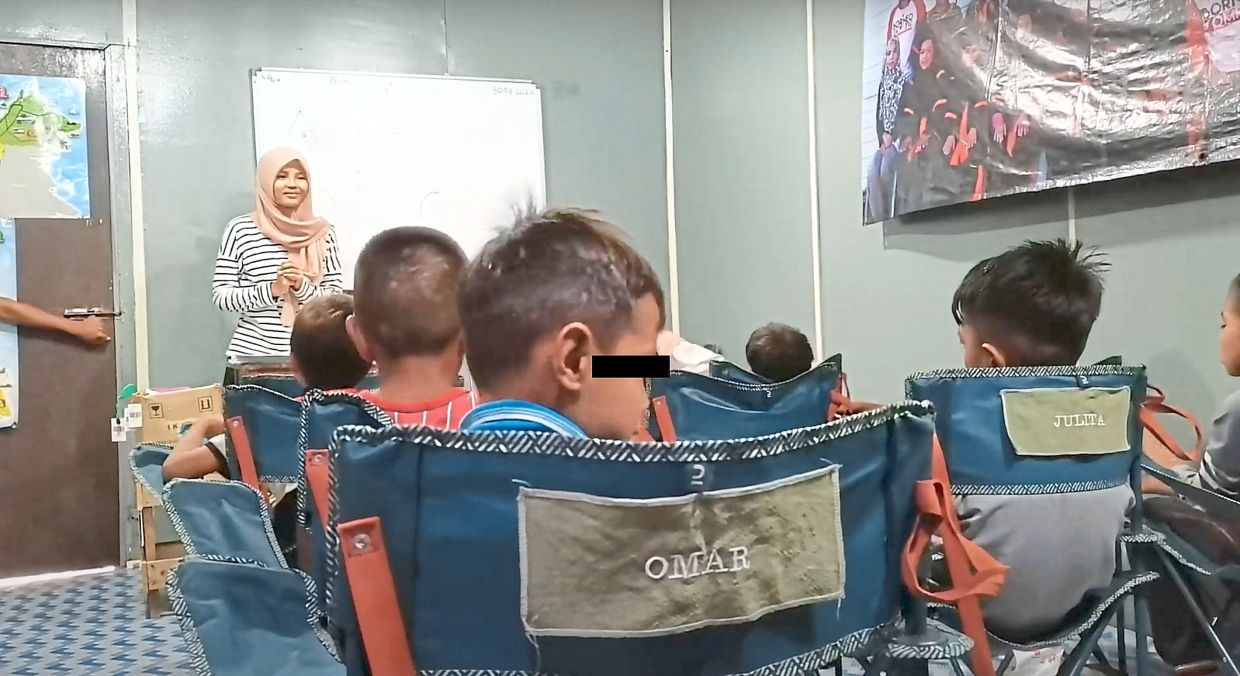
A Malaysian child who has spent every moment of their life within the country's borders, attended school here, built friendships and memories here, and knows nowhere else as home could still be denied citizenship simply because their parents were not married when they were born. This harsh reality emerged sharply following two recent Court of Appeal rulings that have prompted soul-searching among legal experts, child welfare advocates, and policymakers about whether Malaysia's citizenship framework adequately protects the interests of its youngest and most vulnerable residents.
The Court of Appeal cases involved children with confirmed biological links to their Malaysian fathers, verified through DNA testing. However, because the children's mothers—from Indonesia and the Philippines—were not legally married to the fathers at the time of birth, the court determined that citizenship must follow the maternal line. The timing adds particular poignancy: both mothers had departed Malaysia during the children's early years, leaving them to be raised entirely by their fathers in Malaysia with no substantive connection to their mothers' countries of origin. Yet under the Federal Constitution's provisions on citizenship, these biological ties and lived experience counted for far less than the absence of a marriage certificate.
This constitutional framework traces its origins to an era when marital status served as the primary legal mechanism for establishing paternity and determining a child's legal identity. At the time of Malaysia's independence, DNA technology was not merely unavailable—it existed only in the realm of science fiction. The Constitution's architects could not have anticipated a world in which paternity could be established with near-absolute certainty through scientific means. Today, that certainty exists, yet the law remains anchored to outdated assumptions about how parentage should be determined and what weight biological fatherhood should carry in the eyes of the state.
Child rights organisations and civil society groups have mounted vocal critiques of both the court's decision and the constitutional provisions underlying it. Their central argument strikes at the principle enshrined in international child protection frameworks: decisions affecting children must prioritise their best interests above all other considerations. Denying citizenship based on the marital status of parents, they argue, fundamentally violates this principle because the child bears permanent consequences for an adult decision in which they had no agency whatsoever. The Development of Human Resources for Rural Areas (DHRRA) has highlighted that Malaysia occupies an exceptionally restrictive position globally, standing as one of only two countries where fathers cannot transmit citizenship to children born outside marriage—a distinction that underscores how far the nation has drifted from contemporary standards of child protection and gender equality.
The injustice becomes more apparent when one examines how the law distributes punishment and consequence. Legal systems typically operate on the principle that those who violate rules face the penalties: speeding drivers receive fines, tax evaders incur additional charges, fraudulent businesspeople face sanctions, and violent offenders receive imprisonment. Yet in these citizenship cases, the child—who committed no transgression, made no choice, and violated no law—endures a lifetime consequence. The adults involved made decisions about their relationship; the child must live indefinitely with the legal limbo that results. This inversion of accountability stands in sharp contradiction to how justice systems typically function.
The contradiction deepens when one considers that marriage itself is a voluntary choice, while citizenship is not. A Malaysian father can elect whether or not to marry; a child cannot choose the legal status they inherit at birth. These are fundamentally different categories of human arrangement serving entirely different social purposes. Marriage provides legal recognition and structure to intimate partnerships between consenting adults. Citizenship, by contrast, determines whether a child possesses the fundamental legal identity required to participate fully in society. Conflating these two distinct purposes—allowing an adult's marital choice to dictate a child's access to legal personhood—represents a categorical error in legal reasoning.
The practical consequences of statelessness extend far beyond questions of abstract legal status. Children without recognised citizenship face systematic exclusion from the basic infrastructure of modern life. They struggle to access formal education, as many schools require citizenship documentation for enrolment. Healthcare becomes complicated, with hospitals often demanding proof of citizenship before providing treatment beyond emergency care. Employment prospects evaporate, as most legitimate employers require citizenship or work authorisation. Financial institutions decline to open bank accounts for those lacking legal status. Government authorities refuse to issue driving licenses or identity documents. Stable housing becomes elusive when landlords demand proof of legal residency. These barriers accumulate to create a permanent underclass, trapped in shadow economies and informal arrangements, unable to fully participate in the legal, economic, and social systems that sustain modern society.
This is not a new problem emerging suddenly from the recent court decisions. The issue has surfaced repeatedly throughout Malaysia's post-independence history, manifesting in different contexts but following similar patterns. Foundlings without documented parentage, children born in remote indigenous communities where birth registration has never been properly established, and children born to undocumented migrants all face versions of this legal limbo. While the specific circumstances vary, the underlying theme remains constant: children end up lacking recognised nationality through absolutely no fault of their own, bearing consequences for circumstances entirely beyond their control.
Yet constitutional provisions are not immutable laws of physics; they represent human choices made at particular historical moments and can be reformed when circumstances change. Parliament demonstrated this principle clearly in 2024 when it amended the Constitution to allow Malaysian mothers to automatically pass citizenship to children born overseas. That reform represented a recognition that citizenship laws must evolve to reflect contemporary realities and modern understandings of gender equality. The amendment acknowledged that a mother's capacity to confer nationality should not depend on whether she happened to deliver her child within or beyond Malaysia's borders—a distinction that served no rational purpose in the modern era.
That same spirit of reform should animate reflection on the current rules governing fathers' capacity to confer citizenship. If Parliament could recognise that mothers' citizenship should not be constrained by the accident of birthplace, surely it should recognise that fathers' ability to transmit citizenship should not be constrained by the absence of a marriage certificate—particularly when DNA science can now establish paternity with certainty that exceeds what was possible in 1957. The two reforms address parallel questions: should arbitrary technical requirements prevent parents from passing their nationality to children who genuinely belong in Malaysia?
The question posed by this citizenship crisis is ultimately simple and profoundly human: Does this child belong here? For children raised in Malaysia, educated in Malaysia, with family ties in Malaysia and no meaningful connection to any other nation, the answer seems obvious. Yet Malaysia's current legal framework can produce results where such a child, despite satisfying all the substantive criteria for belonging, remains excluded from legal citizenship. That outcome serves neither justice nor the national interest. A nation that expects to prosper in the modern world cannot afford to create permanent classes of residents without legal status, unable to contribute fully to economic and civic life.
The stateless children produced by these cases will grow into stateless adults. Without intervention, they will navigate adulthood trapped in legal and economic margins, their potential diminished by bureaucratic barriers rather than circumstance or ability. These are not abstract policy questions; they represent real children's futures and Malaysia's capacity to fulfill its stated commitment to protecting vulnerable populations. Citizenship law requires review and reform—not as a soft humanitarian gesture, but as a necessary step toward ensuring that every child born and raised in Malaysia can access the legal identity required to build a dignified life. That is not merely a matter of legal principle; it is fundamental to creating a more just and prosperous nation.

