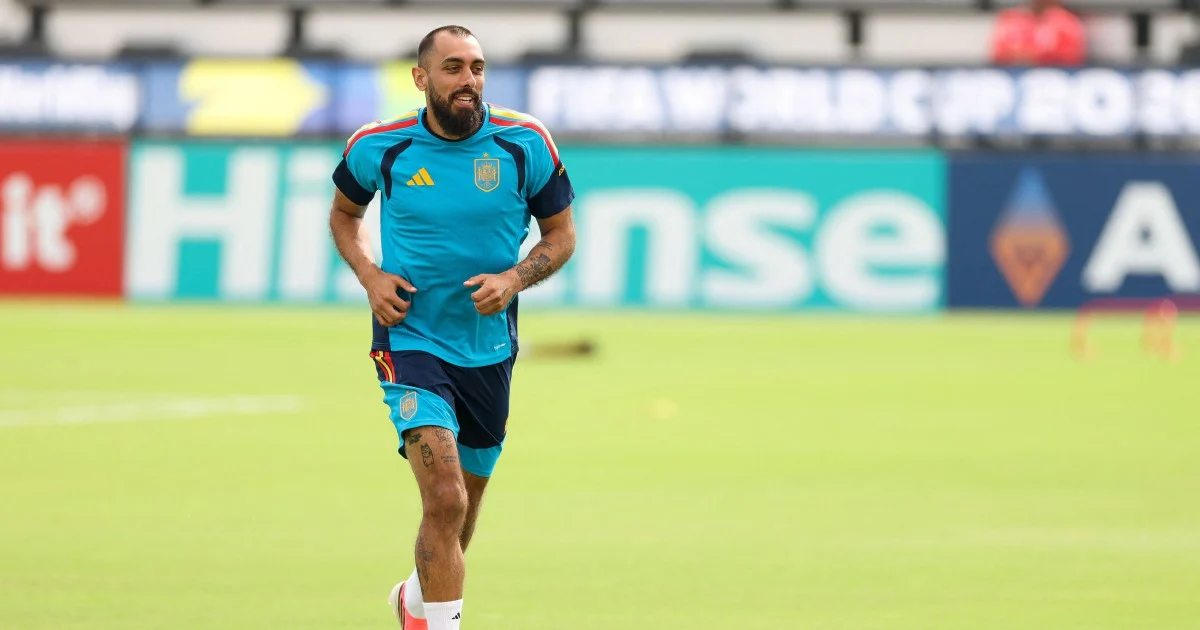
In an era when professional footballers are often expected to keep their opinions private and their image carefully curated, Borja Iglesias stands apart. The Spanish striker has become known for addressing contentious social and political matters with a frankness that unsettles the football establishment, earning him the unflattering moniker 'the alien of football' from critics who view his activism as unconventional and out of place. His willingness to paint his nails and speak openly about issues ranging from the humanitarian crisis in Gaza to homophobia within sport demonstrates a player who refuses to accept the traditional boundaries that constrain athlete discourse in mainstream football.
For Malaysian football enthusiasts and Southeast Asian sports observers, Iglesias represents a broader shift among younger athletes who leverage their platform to drive conversations beyond pitch performance. The Spanish forward's approach challenges the conservative culture that has long dominated professional football globally, where silence has been weaponised as a tool to avoid controversy and maintain commercial relationships. His activism comes at a moment when questions about athlete responsibility and social consciousness are intensifying across sport, particularly in regions like Southeast Asia where football commands enormous cultural influence.
Iglesias's decision to express himself through both traditional and symbolic gestures—such as nail painting—carries particular significance in football culture, a sport historically dominated by rigid masculinity codes. In many Southeast Asian contexts where traditional gender norms remain influential in sports spaces, his defiance of these unwritten rules becomes especially provocative. The reaction to his appearance and statements reveals deeper tensions within football about who gets to speak, how they should present themselves, and what topics are considered appropriate for athletes to address publicly.
The World Cup footballer's openness regarding Gaza reflects an emerging generation of athletes who recognise their platform extends beyond entertainment into advocacy. His willingness to address this geopolitical issue, despite its polarising nature, distinguishes him from peers who calculate every public utterance for maximum commercial safety. For Malaysian audiences familiar with regional tensions and international relations complexity, his approach invites reflection on whether athletes should remain politically neutral or whether neutrality itself represents a choice with moral implications.
His candid discussions about homophobia within professional football strike particularly close to home for many athletes in conservative sporting environments. Football remains overwhelmingly heteronormative across Southeast Asia, where LGBTQ+ athletes often face tremendous pressure to conceal their identities. Iglesias's willingness to name and address homophobia creates space for conversations that many governing bodies prefer to sideline. His activism suggests that progress on inclusion requires individual athletes to risk their comfort and reputation.
The Spanish striker's refusal to conform extends to his aesthetic choices, which double as political statements. By painting his nails, he deliberately transgresses the invisible borders of professional football masculinity. In countries across Southeast Asia where conservative values still shape perceptions of appropriate male athlete behaviour, such choices carry even greater weight. Iglesias demonstrates that reclaiming personal expression represents an act of resistance against systems designed to homogenise athletes into palatable, commercially viable products.
Football's institutional response to players like Iglesias often oscillates between tolerance and suppression. While leagues and federations have made measured commitments to diversity and inclusion, individual athletes who actively challenge the status quo frequently face backlash—from media criticism to commercial ostracism. The nickname 'the alien of football' itself functions as a dismissal mechanism, positioning him as outside the natural order of sport rather than acknowledging his activism as legitimate political speech. This dynamic parallels patterns across Southeast Asian sports where activists and outspoken athletes are frequently marginalised.
The influence of Iglesias's activism extends beyond his immediate professional sphere. Young athletes across Europe and further afield, including in Southeast Asia, witness a prominent footballer using his visibility to champion causes that matter to him. This visibility matters particularly in regions where sporting icons wield disproportionate cultural influence. His example provides permission for other athletes to consider their own positions on social justice, even while recognising the professional consequences of such stances.
Communications scholars recognise that athlete activism shifts slowly due to structural incentives favouring silence and neutrality. Sponsorship contracts, media relationships, and team management all conspire to encourage conformity. Yet Iglesias persists despite these pressures, suggesting that authentic personal conviction can override commercial calculation. For Malaysian sports professionals and emerging athletes navigating similar choices, his example poses uncomfortable but necessary questions about complicity and responsibility.
The broader significance of Iglesias's activism lies in his refusal to compartmentalise his identity as an athlete from his identity as a citizen engaged with the world. He rejects the false premise that professional football requires surrendering political consciousness. This integration of athlete and activist identity challenges the very foundations of how football—and sport generally—understands the role of public figures. In Southeast Asia, where sport often functions as a escape from politics, his approach introduces the uncomfortable reality that withdrawal from political engagement itself constitutes a political choice.
Looking forward, Iglesias's trajectory will reveal whether institutional football can accommodate more voices like his, or whether the sport will continue forcing a choice between commercial viability and authentic expression. For Malaysian observers, his example illuminates both the possibilities and costs of athlete activism in conservative sporting environments. Whether others will follow his lead remains uncertain, but his presence on international football stages ensures that conversations about justice, identity, and athlete responsibility continue.

