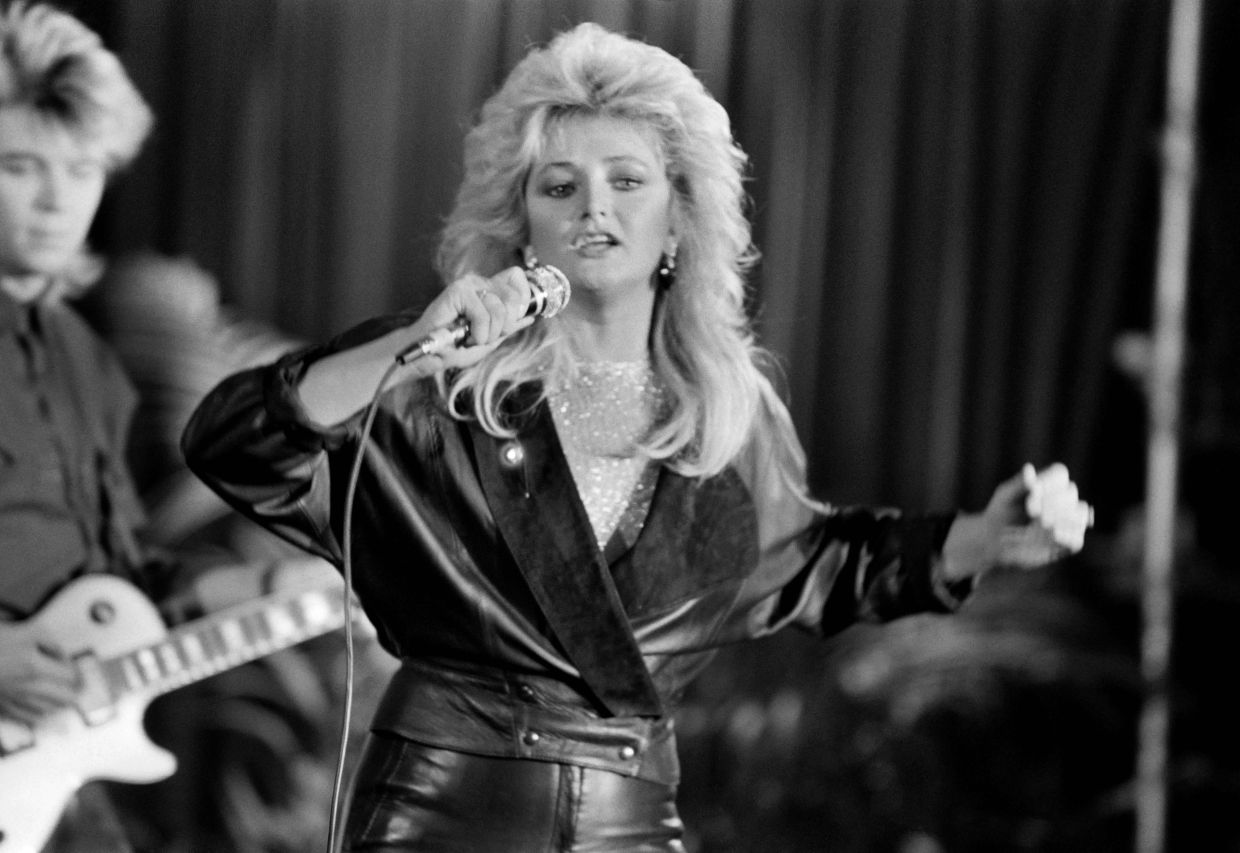
The gravelly-voiced Welsh pop star Bonnie Tyler, whose unforgettable 1983 power ballad 'Total Eclipse of the Heart' became a cultural phenomenon that resurged with each solar and lunar eclipse, has passed away at the age of 75. Her family announced the unexpected death on Thursday through a statement on her official website, confirming that she died in a hospital in Portugal where she was undergoing treatment for an unspecified illness.
Tyler had been hospitalised in May in Faro, Portugal, where she maintained a residence, after requiring emergency surgery for an intestinal condition. She was subsequently placed in an induced coma as part of her medical care. The circumstances surrounding her final days remain largely private, with her family and management team expressing their grief over her sudden passing.
For Malaysian and Southeast Asian audiences, Tyler's legacy extends far beyond the music charts. Her rise from humble Welsh origins to international stardom mirrors the inspirational narratives that resonate across Asia's diverse entertainment landscapes. Born as Gaynor Hopkins, the daughter of a coal miner in the small Welsh village of Skewen near Swansea, Tyler grew up in public housing with limited amenities, yet cultivated a passion for music that would eventually earn her an MBE from Queen Elizabeth II in 2023 for her contributions to the music industry. Her journey from working-class Britain to global recognition speaks to the transformative power of artistic talent and determination.
The phenomenon of 'Total Eclipse of the Heart' demonstrates how a single song can transcend generations and remain culturally relevant decades after its release. The track achieved remarkable commercial success, spending four consecutive weeks at number one and accumulating more than one billion streams across digital platforms. The accompanying music video, filmed in a converted psychiatric hospital in Surrey, has itself garnered over one billion views on YouTube, making it one of the most-watched music videos of all time. This enduring popularity was significantly amplified during the solar eclipses of 2017 and 2024, when streaming platforms reported unprecedented spikes in the song's plays, introducing the ballad to younger audiences who discovered it through viral social media trends.
Tyler's achievements throughout her career earned her three Grammy nominations, though she did not secure a win in any of the major categories. Her debut single 'Lost in France' from her 1977 album established her initial foothold in the British music scene, while 'It's a Heartache' reached number three on charts in 1978. However, it was her collaboration with legendary producer Jim Steinman that transformed her career trajectory. Steinman, best known for his work with Meat Loaf, crafted 'Total Eclipse of the Heart' specifically for Tyler's fifth studio album, 'Faster Than the Speed of Night'. The track featured contributions from Bruce Springsteen's E Street Band members Roy Bittan on piano and Max Weinberg on drums, lending it the bombastic rock production that became its signature sound.
The composition itself emerged from Steinman's creative archive, with one of its most memorable lyrics—'Turn around, bright eyes'—originating from his 1969 college musical 'The Dream Engine', which he had written while studying at Amherst College in Massachusetts. Steinman presented the song to Tyler as material from a proposed musical adaptation of the classic horror film 'Nosferatu', a creative context that influenced the gothic aesthetic of the accompanying visual production. The recording process exemplified Steinman's meticulous approach to production, involving multiple takes before selecting the optimal version and layering additional instrumentation in a style reminiscent of Phil Spector's distinctive 'wall of sound' technique.
The lyrical content of 'Total Eclipse of the Heart' explores the emotional devastation of romantic loss, with Tyler's distinctive husky vocals delivering lines like 'Once upon a time there was light in my life / But now there's only love in the dark' with haunting intensity. Her trademark vocal quality, which would become instantly recognisable across the music industry, developed following throat surgery in 1976 when doctors removed vocal nodules. What might have been a career-ending medical crisis instead resulted in the unique tonal characteristics that defined her artistic identity. Before achieving international success, Tyler—then performing under the stage name Sherene Davis—fronted a soul band until talent scout Roger Bell discovered her and facilitated her relocation to London for professional recording sessions.
Beyond 'Total Eclipse of the Heart', Tyler maintained a presence in popular culture through her contributions to film soundtracks and her continued recording activity. She performed 'Holding Out for a Hero' for the 1984 film 'Footloose', another ballad that has proven enduringly popular with contemporary audiences. In 2019, she released 'Between the Earth and the Stars', featuring collaborative duets with established British artists including Rod Stewart and Cliff Richard, demonstrating her sustained relevance within the music industry. That same year, she performed at a Vatican Christmas concert in the presence of Pope Francis, representing one of the more unexpected career highlights of her later years.
In 2013, Tyler represented the United Kingdom at the Eurovision Song Contest held in Sweden, performing the country-influenced ballad 'Believe in Me', which she had recorded for her album 'Rocks and Honey', produced in Nashville. Although her Eurovision entry finished in 19th position, the appearance reintroduced her to a pan-European television audience and demonstrated her willingness to adapt her artistic approach to contemporary musical trends. This country-pop experiment reflected her broader artistic flexibility and refusal to rely solely on the reputation of a single hit, even as 'Total Eclipse of the Heart' continued to dominate her public profile.
The remarkable resurgence of 'Total Eclipse of the Heart' during recent eclipse events illustrates how technological change and social media have fundamentally altered the relationship between classic recordings and contemporary audiences. When music streaming platforms and viral video culture converged during the 2017 and 2024 eclipses, the song experienced renewed commercial momentum that might have seemed impossible in the pre-digital era. Music critics and cultural commentators have increasingly recognised the track's artistic merit beyond its novelty value, with publications reassessing it as a legitimate artistic achievement rather than mere bombastic spectacle. Stereogum's 2020 reevaluation described it as 'pop music as heart-pounding, chest-thumping, blood-gargling, heavens-falling passion explosion', elevating the song's status within contemporary musical discourse.
The song's cultural footprint extended throughout the entertainment industry, appearing in numerous films and television productions that introduced it to audiences who might never have encountered it during its initial chart run. Cate Blanchett famously performed the track in the 2001 film 'Bandits', while it featured prominently in the 2003 comedy 'Old School' and was performed by One Direction on the British version of 'The X Factor' in 2010. These appearances kept the song circulating through popular culture, ensuring that each new generation encountered it through multiple cultural touchpoints rather than relying solely on radio airplay or streaming algorithms.
Tyler's influence on the landscape of popular music extended beyond her commercial achievements to encompass her representation of female artists navigating the male-dominated music industry of the 1970s and 1980s. Her memoir 'Straight From the Heart' provided insights into her artistic formation, detailing how her childhood fascination with singers including Janis Joplin, Nina Simone, and Tina Turner shaped her musical sensibilities and vocal approach. These influences contributed to the emotional authenticity that characterised her performances, distinguishing her from contemporaries who prioritised commercial appeal over emotional substance. As Southeast Asian music industries continue to develop and mature, Tyler's career trajectory offers valuable lessons about artistic persistence, stylistic evolution, and the unpredictable nature of career longevity in entertainment.

