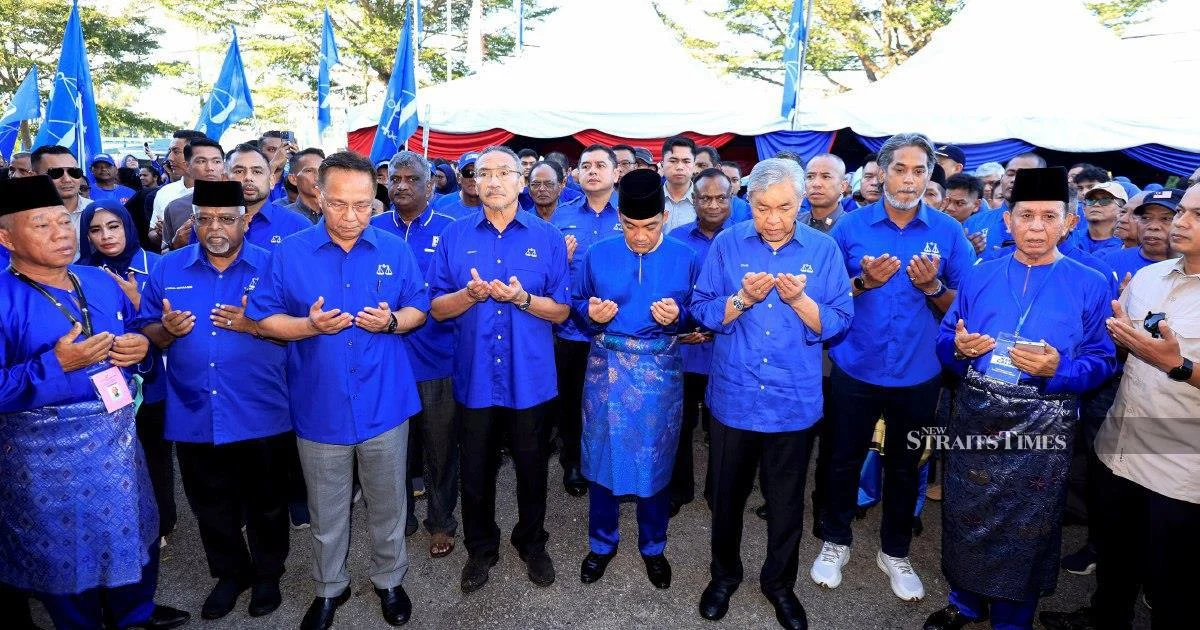
The Johor election campaign entered a new phase of intensity as senior Barisan Nasional leadership descended on Simpang Renggam District Council to visibly back Datuk Onn Hafiz Ghazi, Johor's current Chief Minister. The coordinated appearance of multiple BN figures represented more than routine electioneering—it underscored the coalition's strategic investment in retaining control of Malaysia's southern industrial and agricultural heartland ahead of what promises to be a closely contested state ballot.
Datak Onn Hafiz has emerged as a central figure in Johor's political trajectory, presiding over the state at a time of economic adjustment and demographic shifts that will likely define the coming electoral cycle. His administration has navigated complex infrastructure challenges, including managing the relationship with Singapore and addressing local development priorities. The gathering at Simpang Renggam, a district encompassing rural constituencies with longstanding BN support, served as a tangible endorsement of his stewardship and a message to wavering voters about coalition unity.
The decision to deploy multiple heavyweight figures simultaneously reflects broader calculations within BN about consolidating support across different demographic and regional constituencies within Johor. Rather than rely solely on the Chief Minister's personal appeal, the coalition's strategy involved leveraging the credibility and networks of established leaders to reach voters in traditional strongholds while signalling institutional confidence in the government's direction. This coordinated approach has become routine in Malaysian politics when coalitions sense competitive pressure.
Johor's electoral significance extends beyond state politics. The state has historically served as a testing ground for national political trends, with results often providing early indicators of broader shifts in voter sentiment. A strong BN performance would strengthen the coalition's narrative of recovery and consolidation at the federal level. Conversely, significant losses would embolden opposition parties and potentially trigger internal recalculations within BN's component parties about their strategic positioning.
The Simpang Renggam gathering took place within the broader context of Johor's economic priorities. The district has long depended on agriculture, manufacturing, and regional commerce. How effectively the state government addresses cost-of-living pressures, employment opportunities, and infrastructure development in such areas will likely determine voting patterns. BN's emphasis on demonstrating leadership cohesion may be calculated to address concerns among traditional supporters about governance effectiveness.
Onn Hafiz's position as Chief Minister has attracted scrutiny from both opposition parties and observers within BN itself. His administration's record on healthcare delivery, education quality, and environmental management in an increasingly urbanised state has generated mixed assessments. The public show of support from BN heavyweights can be interpreted partly as a response to any internal doubts, reasserting that the coalition remains committed to the current direction despite challenges.
The election campaign dynamics in Johor are further complicated by the presence of multiple opposition groupings competing for different voter segments. The coordination and visibility of BN's leadership presence serves partly to remind voters of the coalition's institutional depth and experience in managing state affairs. However, the appearance of multiple senior figures also raises questions about whether the government believes its current messaging requires reinforcement through additional authority and credibility.
For Malaysian and Southeast Asian observers, the Johor election represents a significant test of how established political coalitions respond to electoral uncertainty. The region has witnessed numerous instances of governing coalitions fracturing or losing power, making Johor's outcome potentially instructive for understanding broader patterns of political stability and change. BN's mobilisation of top-level support indicates serious concern about defending what has traditionally been regarded as a coalition stronghold.
The Simpang Renggam event also reflected evolving campaign strategies in Malaysian politics, where physical demonstrations of unity have become essential components of electoral communication alongside digital outreach and traditional media engagement. The optics of prominent leaders appearing together send signals to party members and supporters about expectations for the campaign's intensity and duration. It also potentially sets expectations for similar shows of force by opposition coalitions.
Looking ahead, the extent to which these displays of solidarity translate into actual electoral success will depend on whether BN's campaigning successfully addresses substantive voter concerns or remains primarily symbolic. The coming weeks will reveal whether the leadership's engagement in grassroots campaign events influences opinion among undecided voters in key districts like Simpang Renggam.

