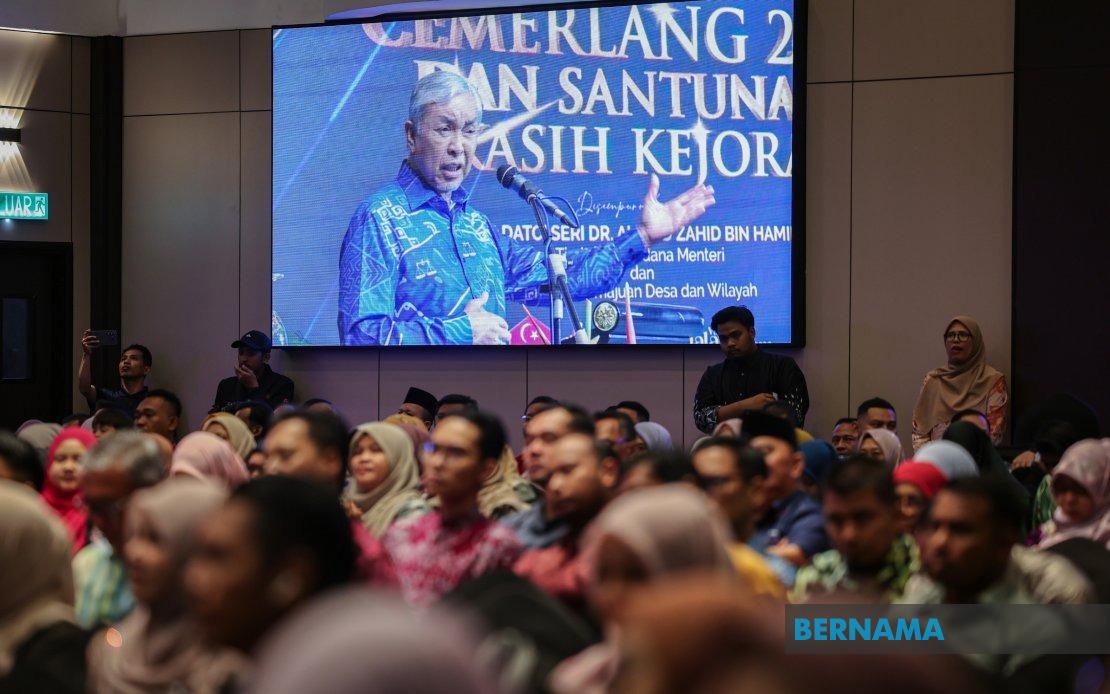
Barisan Nasional's election campaign for Johor is far more vigorous than outside observers have suggested, according to coalition chairman Datuk Seri Dr Ahmad Zahid Hamidi, who pushed back against characterisations of the campaign as lacking energy or focus. Speaking in Kota Tinggi following an official event, Zahid emphasised that assessments of campaign strength often reflect political positioning rather than observable reality on the ground, where BN's machinery has been mobilising actively across constituencies.
Zahid's comments address a narrative that has gained traction in political commentary circles, with some observers noting what they perceive as a more subdued BN effort compared to previous election cycles. The BN chairman acknowledged that rival coalitions naturally hold their own perspectives on the campaign's intensity, but framed such commentary as a matter of political preference rather than factual assessment. He noted that coalitions outside BN had every right to express their views, whether supportive or critical, without this reflecting the actual level of organisational activity occurring across the state.
The Deputy Prime Minister highlighted Johor's unique position within Malaysia's current political configuration. The state government, led by Menteri Besar Datuk Onn Hafiz Ghazi, was formed before the Unity Government took shape at the federal level, creating a distinct governance structure that does not suffer from the voter confusion that might theoretically arise from federal-level cooperation between BN and Pakatan Harapan. This separation of state and federal political dynamics allows BN to pursue its agenda in Johor without the complication of explaining its simultaneous participation in a federal coalition with its traditional rival.
Zahid pointed to concrete achievements under Onn Hafiz's administration as evidence that BN's record in Johor provides substantive grounds for voter support. The state government generated RM2.26 billion in revenue during the previous financial year, a figure Zahid stressed was the highest among Peninsular Malaysian states, demonstrating fiscal strength and effective management. This economic performance forms the foundation of BN's campaign narrative, suggesting that the coalition's governance record speaks louder than campaign visibility metrics that critics may cite.
The coalition is contesting all 56 state seats in the July 11 election, signalling confidence across the board rather than a selective or defensive posture that might characterise a campaign lacking momentum. Zahid expressed confidence that translating voter support into electoral victory would provide BN with a strengthened mandate to continue its development agenda over the next five years. The emphasis on strengthening the mandate suggests BN views this election as an opportunity to consolidate its position in Johor rather than merely defend existing seats.
Zahid's response to Perikatan Nasional leader Tan Sri Abdul Hadi Awang's call for voters to reject Pakatan Harapan entirely, including in contests where BN faces PH candidates, illustrates the delicate political positioning that BN must navigate. While noting PAS's more confrontational approach, Zahid indicated that BN prefers to maintain professionalism in its campaign conduct, focusing on promoting its own candidates and record rather than attacking rivals comprehensively. This distinction in campaign style may reflect BN's assessment that it can win through positive messaging about governance and development rather than through polarising rhetoric.
The election landscape features multiple competing coalitions and parties, with Pakatan Harapan also fielding 56 candidates, Perikatan Nasional presenting 33, Bersama putting forward 15, and smaller parties and independent candidates accounting for the remainder. This fragmented field creates both opportunities and challenges for BN, potentially allowing the coalition to prevail even without a simple majority if opposition votes split effectively among rivals. The complexity of the race underscores why campaign organisation and ground presence matter substantially, lending credibility to Zahid's assertion that BN's machinery remains active.
For Malaysian and Southeast Asian observers, the Johor election carries significance beyond state-level politics, as Johor remains Malaysia's most populous state and a crucial bellwether for national political trends. The result will test whether the Unity Government arrangement at federal level translates smoothly to state campaigns, and whether traditional BN voters remain cohesive or fragment toward other coalitions. Zahid's defensive posture regarding campaign perceptions suggests the coalition recognises that messaging and momentum are crucial factors influencing voter behaviour, particularly among urban and younger demographics that may be less anchored to traditional party loyalties.
Zahid's framing of campaign assessment as a matter of perception versus ground reality presents an important challenge: objective measures of campaign momentum remain difficult to establish without detailed analysis of rally attendance, volunteer mobilisation, media expenditure, and polling data. His emphasis on professionalism and focus on candidates rather than attacking opponents may also reflect tactical choices about how best to win in a fragmented electoral field where negative campaigning could backfire. The July 11 polling date will ultimately determine whether BN's actual organisational strength and the state government's economic record prove decisive with voters, regardless of how campaign momentum has been characterised in media commentary.

