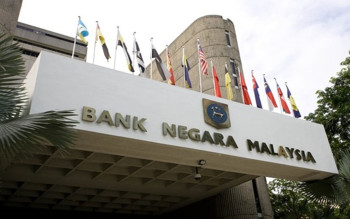
Bank Negara Malaysia has clarified its advisory relationship with Tabung Haji, stating that guidance provided to the pilgrimage fund management body constitutes a core function of its financial stability mandate enshrined in the Central Bank of Malaysia Act 2009. The central bank's intervention reflects its broader responsibility to monitor and identify emerging risks that could undermine the integrity of Malaysia's financial system, a framework that extends well beyond the traditional banking sector.
The financial regulator emphasised that its oversight approach encompasses major non-bank financial institutions that maintain significant operational and structural connections with the broader financial ecosystem. Tabung Haji, as one of Southeast Asia's largest Islamic financial institutions managing billions in pilgrim savings, clearly fits this classification despite operating outside the formal banking perimeter. This designation carries important implications for how Malaysian authorities approach systemic risk management in an increasingly interconnected financial landscape where non-bank entities can pose meaningful stability concerns.
Under the Central Bank of Malaysia Act 2009, Bank Negara Malaysia established the Financial Stability Executive Committee, a governance structure designed to coordinate surveillance activities and formulate policy responses to emerging vulnerabilities. Operating through this institutional mechanism, the central bank and FSEC retain statutory authority to furnish advisory communications to significant non-bank financial institutions whenever their surveillance activities identify concerning trends or imbalances. This arrangement allows the regulator to exercise preventive influence without requiring direct supervisory powers, a pragmatic approach that respects institutional independence while protecting systemic interests.
Bank Negara Malaysia stressed that despite Tabung Haji's operational independence from direct central bank supervision, the provision of financial guidance carries protective significance for both the institution itself and the broader financial system. Ensuring that Tabung Haji maintains sound financial health and operational resilience represents a precautionary measure intended to prevent deterioration that could generate wider economic consequences. The central bank's logic reflects growing recognition globally that systemic risk can emerge from unexpected quarters, particularly when large institutions manage concentrated exposures to vulnerable customer segments or maintain fragile asset-liability structures.
The nature of Bank Negara Malaysia's engagement with Tabung Haji has become particularly relevant given the institution's troubled recent history. Between 2014 and 2019, the central bank issued five separate warning letters to Tabung Haji's leadership and the Minister of Religious Affairs, each highlighting concerning discrepancies between the fund's asset base and accumulated liabilities. These communications represented escalating expressions of concern about financial deterioration that threatened the institution's capacity to meet future obligations to pilgrims and stakeholders. The persistence of warning letters across multiple years underscores how advisory mechanisms can function as early warning signals when underlying problems prove resistant to internal correction.
Tabung Haji's financial troubles subsequently attracted higher-level scrutiny beyond the central bank. The Auditor-General, conducting the nation's constitutional audit function, included critical observations regarding Tabung Haji's financial position in the 2017 Financial Statements Report, effectively echoing and amplifying concerns about governance and fiscal sustainability. When multiple authoritative institutions issue overlapping warnings, the pattern typically indicates systemic problems that demand substantive intervention rather than peripheral attention. For Malaysian depositors and pilgrims who maintain savings with Tabung Haji, such convergent warnings created legitimate concerns about institutional stability and the safety of accumulated funds.
Government recognition of Tabung Haji's deepening difficulties culminated in the decision to establish a Royal Commission of Inquiry, announced in 2021 and formally commissioned with member appointments confirmed on January 20, 2022. The RCI framework represented an acknowledgment that standard regulatory tools and internal oversight mechanisms had proven insufficient to address the institution's mounting challenges. Extensive investigative powers available to the RCI allowed for comprehensive examination of governance failures, decision-making processes, and structural vulnerabilities that contributed to Tabung Haji's distressed condition.
The RCI investigation proceeded over approximately eighteen months before presenting its comprehensive findings to the Yang di-Pertuan Agong on August 30, 2022. This investigation period allowed detailed forensic analysis of how Tabung Haji accumulated its problematic asset-liability gap and identify responsible parties or systemic weaknesses that enabled deterioration. For Malaysian financial oversight authorities, the RCI process represented a critical information-gathering exercise that could inform future policy adjustments affecting non-bank institution governance and Bank Negara Malaysia's preventive regulatory approach.
Bank Negara Malaysia's explanation of its advisory mandate carries broader implications for how Southeast Asian financial regulators conceptualise systemic risk management beyond traditional banking channels. As Islamic finance and non-bank financial institutions expand throughout the region, regulatory approaches that maintain flexibility to monitor and advise significant institutions without imposing complete supervisory control offer pragmatic middle-ground solutions. Malaysia's framework demonstrates how central banks can maintain protective influence over systemic institutions while respecting institutional autonomy and avoiding institutional proliferation that creates administrative burden.
The Tabung Haji episode illustrates both the necessity and limitations of non-direct regulatory tools. While Bank Negara Malaysia's warning letters represented appropriate use of advisory authority, the persistence of problems across multiple years before triggering RCI investigation suggests that advisory warnings alone may prove insufficient when institutions resist internal reform or face governance obstacles that prevent effective response. For Bank Negara Malaysia and other regional regulators, the experience underscores the importance of developing graduated response frameworks that escalate from advisory communication through formal investigation when institutions prove unresponsive to initial warnings.
Moving forward, Bank Negara Malaysia's articulation of its financial stability mandate clarifies that oversight of significant non-bank institutions constitutes a permanent regulatory function rather than extraordinary intervention. This perspective should enable more proactive engagement with vulnerable institutions before problems accumulate to crisis proportions. For Tabung Haji specifically, the RCI report and subsequent regulatory adjustments will determine whether the institution can stabilise its finances and restore confidence among Malaysian pilgrims and depositors who depend on its financial integrity for managing their accumulated pilgrimage savings.

