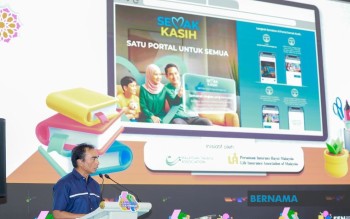
Bank Negara Malaysia has rolled out a new digital portal called 'Semak Kasih' designed to address a persistent problem affecting thousands of Malaysian households: the discovery and recovery of unclaimed insurance and takaful benefits left behind by deceased relatives. Launched in Kuala Terengganu on 26 June, the initiative represents a significant step in improving financial transparency and ensuring that families receive protection payouts they are entitled to but may not even be aware exist.
The underlying issue that prompted this portal's creation reflects a troubling gap in Malaysian financial awareness. Joint estimates from the Life Insurance Association of Malaysia and the Malaysian Takaful Association indicate that approximately 50,000 insurance policies and takaful certificates carrying death benefits have never been claimed by intended beneficiaries. For many families, particularly those from lower-income or less financially sophisticated backgrounds, this represents thousands of ringgit in lost financial security at moments when they need it most. The tragedy of these unclaimed benefits extends beyond mere monetary loss; it underscores how inadequate communication channels and limited accessibility have prevented families from accessing critical safety nets during periods of grief and economic vulnerability.
Bank Negara Malaysia Deputy Governor Adnan Zaylani Mohamad Zahid explained that the new system fundamentally simplifies the process for beneficiaries to verify whether deceased family members held coverage and to contact the appropriate insurance or takaful provider. Rather than navigating fragmented systems across dozens of providers, families can now access a centralised database to check for policies, eliminating the uncertainty and legwork that previously discouraged claims. This represents a meaningful modernisation of what should have been a straightforward administrative process but which, in practice, has proven remarkably opaque for Malaysian consumers.
While insurance and takaful companies have previously undertaken direct outreach through letters and agents to contact beneficiaries, these efforts have demonstrably fallen short of reaching all intended recipients. The portal effectively reverses the burden of discovery: rather than waiting for companies to find them, families can now proactively search for coverage they may inherit. This shift towards beneficiary-initiated access through a user-friendly digital interface addresses the fundamental weakness of previous notification strategies and recognises that many families remain unaware of policies their relatives purchased years earlier.
The significance of this initiative for Malaysian households extends beyond administrative convenience. During periods of severe financial stress—following illness, accidents, or property damage—families often struggle with immediate expenses while simultaneously processing loss. Insurance and takaful protection serves a critical function in these moments, covering medical treatment, funeral expenses, and household income replacement. Yet when families do not even know such coverage exists, they cannot access these resources precisely when they provide the greatest benefit. The 'Semak Kasih' portal directly addresses this failure point in Malaysia's financial protection infrastructure.
Adnan Zaylani emphasised the broader context of financial vulnerability facing Malaysian households and small businesses. With inflation pressuring household budgets and economic uncertainty creating employment instability, financial protection through insurance and takaful has become increasingly essential. The central bank simultaneously announced expanded microfinancing schemes for micro, small, and medium enterprises, including loans of up to RM100,000 requiring no guarantor or collateral, alongside RM5 billion in relief financing for companies affected by the West Asia conflict. These complementary initiatives reflect a comprehensive approach to strengthening financial resilience across different segments of the Malaysian economy.
Financial literacy has emerged as a critical concern underlying these policy interventions. Research presented during the Terengganu Financial Literacy Carnival revealed that approximately 37 per cent of Malaysians engage in impulsive online purchases, while 26 per cent carry debt burdens they acknowledge as unsustainable. These findings suggest that even as digital financial tools expand economic opportunity, they simultaneously create new vulnerabilities for consumers lacking adequate financial knowledge. The portal launch thus forms part of a wider ecosystem of financial education initiatives that Bank Negara Malaysia has been developing to equip Malaysians with tools for more prudent decision-making.
The iTekad initiative exemplifies this educational approach, having already benefited more than 14,000 participants nationwide, including approximately 600 in Terengganu, by facilitating income growth and improved living standards. Similarly, the Financial Education Forum has evolved to ensure financial literacy reaches underserved populations, including persons with disabilities, through a redesigned website functioning as an inclusive, accessible education hub. These programmes recognise that financial capability requires sustained education rather than one-time intervention, and that accessibility for disadvantaged groups remains essential to equitable economic participation.
School-based financial education represents another critical frontier. The MyDuitStory competition and the newly launched FEN Proaktif 2.0 Programme, developed in partnership with Universiti Malaysia Terengganu, aim to instil financial discipline and planning skills in young people before they enter the workforce. The reasoning underlying this approach is straightforward: habits developed during educational years establish trajectories that often persist across decades. Teaching younger Malaysians to save consistently and understand long-term compound returns creates the psychological and behavioural foundations for more secure financial futures, independent of external economic conditions.
Adnan Zaylani's closing remarks captured the philosophy animating these initiatives: while macroeconomic factors and technological disruption lie beyond individual control, personal financial decisions remain entirely within reach. This message carries particular resonance in Malaysia, where external economic shocks—from global trade disruptions to regional conflicts—have repeatedly demonstrated the fragility of those lacking adequate personal financial buffers. By providing better access to insurance and takaful benefits, improving financial education, and supporting small business resilience, Bank Negara Malaysia is systematically addressing the multiple dimensions of financial vulnerability that constrain Malaysian households and enterprises.
For ordinary Malaysians, the immediate practical value of 'Semak Kasih' lies in its simplicity: entering a family member's name or identification number to verify whether forgotten insurance or takaful coverage exists. Yet this straightforward interface masks a more fundamental reform: the recognition that when financial protection systems fail not because coverage is unavailable but because beneficiaries cannot access what they are entitled to, the problem requires technological and structural solutions rather than merely more aggressive marketing. The portal represents an overdue acknowledgment that financial protection works only when families actually receive the benefits promised to them.

