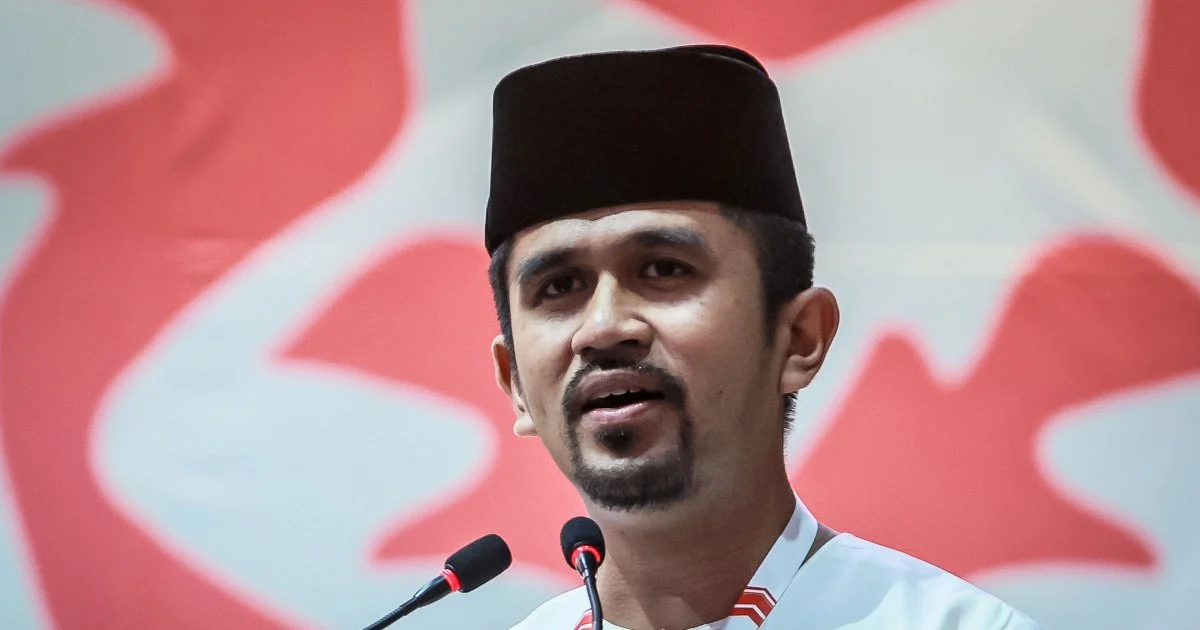
Barisan Nasional Youth secretary-general Hafiz Ariffin has raised pointed questions about the composition of Pakatan Harapan's candidate roster for Johor's upcoming state election on July 11, notably highlighting the conspicuous absence of several heavyweight opposition figures from the state. The critique touches on a sensitive area within Malaysian politics—the coherence and depth of opposition leadership structures at the state level, particularly in a traditionally competitive political battleground like Johor.
The questioning by Hafiz, who holds a significant position within Umno Youth and serves the broader BN machinery, represents part of the pre-election narrative-building that typically characterises Malaysian electoral contests. By drawing attention to who is absent from the PH candidate list, BN is attempting to frame the opposition coalition as lacking sufficient local heavyweight representation or facing internal complications regarding candidate selection. This tactic often proves effective in seeding doubts among voters about an opposition coalition's readiness to govern.
Johor occupies a particularly important position in Malaysian politics. The state has historically served as a proving ground for political movements and a barometer of broader political sentiment across the peninsula. Its electoral outcomes frequently signal shifting tides in national politics, and control of Johor's state government carries substantial symbolic and material significance. The state's economic importance, its proximity to Singapore, and its substantial Malay-Muslim demographic make it a crucial prize for both BN and opposition coalitions seeking to strengthen their political position.
Pakatan Harapan's composition and performance in Johor has been a mixed affair in recent years. The coalition, which comprises PKR, DAP, Amanah, and several smaller parties, has struggled to maintain consistent unity while simultaneously managing the competing interests and leadership aspirations of its constituent parties. In Johor specifically, the coalition's presence has been less dominant compared to some other states, making the candidate selection process particularly delicate and politically fraught.
The absence of established PH figures from the candidate line-up could reflect several underlying dynamics. Internal coalition negotiations may have resulted in difficult decisions about which figures contest which seats, with some senior leaders potentially stepping back to allow newer or more locally connected candidates to take the forefront. Alternatively, strategic calculations about electability and the distribution of candidacies among coalition partners might have pushed certain prominent opposition figures into non-electoral roles. There is also the possibility that some leaders have chosen not to contest, perhaps anticipating a difficult electoral environment or preferring to focus on organisational rather than electoral duties.
From a broader Southeast Asian perspective, Malaysia's opposition coalitions continue to struggle with the fundamental challenge of maintaining unity while accommodating the egos, ambitions, and party interests of multiple constituent organisations. Johor's election serves as a microcosm of these wider challenges. The region has witnessed numerous coalition formations in recent years, from Thailand's complex political alignments to Indonesia's evolving opposition structures, and the ability of multi-party coalitions to maintain coherence during electoral campaigns remains a persistent difficulty across the region.
Hafiz Ariffin's intervention also reflects BN's confidence in its position heading into the Johor contest. Rather than merely focusing on promoting its own candidates and narrative, BN is simultaneously attempting to undermine the opposition's credibility by questioning its candidate selections and implying organisational weakness. This two-pronged approach—promoting one's own message whilst attacking the opposition's—is a standard feature of Malaysian electoral campaigns, though its effectiveness depends heavily on whether the criticisms resonate with voters.
The timing of such statements, with the election campaign in full swing, suggests BN believes it has identified a vulnerability in PH's election machinery. By highlighting gaps in the opposition's candidate slate, BN may be attempting to convince voters that PH cannot field a sufficiently capable team to govern the state effectively. This argument carries particular weight in a state like Johor, where issues of economic management, infrastructure development, and maintaining investor confidence are paramount concerns.
For PH, the challenge lies in deflecting such criticism whilst explaining the rationale behind its candidate selections. The coalition must convince Johor voters that its chosen representatives possess both the competence and commitment necessary to serve effectively, regardless of how well-known they may be. This often requires emphasising local connections, grassroots engagement, and specific policy achievements rather than relying on the prestige of established political figures.
The broader implications of these candidate choices will become clearer once voting concludes and results are analysed. Election outcomes in Johor will provide insights into whether voter concerns about opposition leadership depth and coalition coherence significantly influenced voting behaviour. Additionally, the electoral performance of individual candidates—both established figures and newcomers—will offer clues about whether PH's candidate selection strategy succeeded or backfired.
Looking ahead, both BN and PH face the ongoing challenge of balancing experience with renewal in their political formations. Voters increasingly expect fresh faces and new approaches, yet they simultaneously value proven track records and established competence. How Malaysian coalitions navigate this tension will continue shaping electoral outcomes and political fortunes across the country.