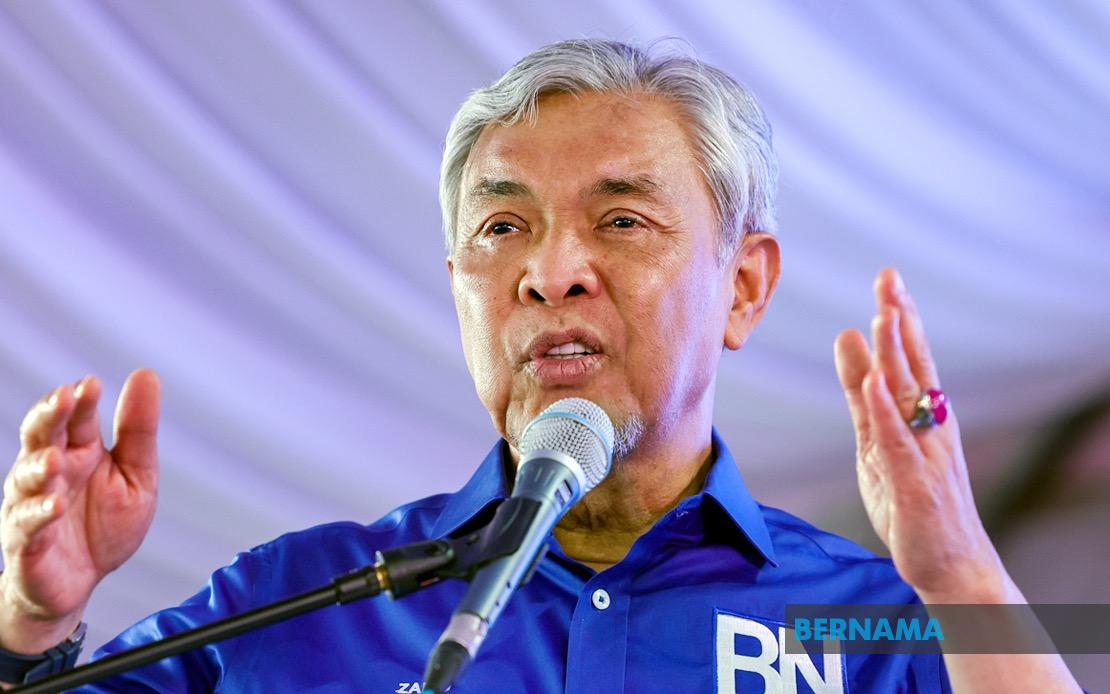
Barisan Nasional chairman Datuk Seri Dr Ahmad Zahid Hamidi pledged during a campaign engagement in Kluang that the coalition would execute its full manifesto if granted the electoral mandate in the upcoming Johor state election. Speaking as Deputy Prime Minister, Ahmad Zahid framed manifesto implementation as essential to maintaining developmental momentum and safeguarding public welfare across the state.
The BN leadership has positioned the manifesto commitments as binding obligations rather than aspirational rhetoric. Ahmad Zahid underscored that party officials would assume responsibility for tracking progress on each pledge, establishing accountability mechanisms to prevent campaign promises from becoming hollow campaign statements. This emphasis on concrete follow-through reflects growing voter skepticism regarding political commitments, a concern that has reshaped electoral dynamics across Malaysian politics in recent years.
Ahmad Zahid's remarks carry particular weight given BN's dominance in Johor, where the coalition has historically maintained strong electoral support. The framing of an electoral mandate as a trust rather than a license to govern unchecked represents an attempt to rebuild public confidence in political institutions. He articulated a vision where voter support translates into tangible governance improvements rather than partisan leverage or opportunity for administrative complacency.
The concept of "Bangsa Johor" unity, invoked by Ahmad Zahid, reflects efforts to transcend narrow party-political divisions and emphasize collective state identity. This rhetorical strategy acknowledges that electoral victory, while important for BN, should not create space for factional triumphalism or exclusionary governance. Instead, he framed success as an invitation to strengthen social cohesion and inclusive policymaking across Johor's diverse communities.
The Deputy Prime Minister's assurances regarding manifesto implementation also signal BN's confidence in electoral performance. With 172 candidates competing for 56 state assembly seats, the coalition appears positioned to maintain its traditional electoral stronghold in Malaysia's second-largest state. Ahmad Zahid's emphasis on manifesto commitment may be calculated to consolidate voter support during the final campaign phase and discourage defection to rival coalitions.
The 16th Johor state election, scheduled for Saturday, will engage approximately 2.7 million registered voters. This electoral exercise occurs within Malaysia's broader political landscape, where manifestos have become increasingly detailed and policy-focused. BN's explicit pledge to implement its Johor commitments addresses longstanding voter concerns about the gap between campaign promises and post-election governance reality, a credibility challenge that has affected political parties across the region.
Ahmad Zahid's invocation of "Insya-Allah" while discussing national-level monitoring of manifesto implementation reflects the integration of religious language into political discourse, particularly in Muslim-majority Malaysia. This rhetorical choice appeals to voters' faith-based values while simultaneously emphasizing that BN leadership takes its commitments seriously at both state and federal levels, creating perception of seamless governance coordination.
The timing of these pledges, delivered through direct engagement with Village Development and Security Committees, indicates BN's grassroots campaign strategy. Johor's JPKK network represents crucial local governance structures, and their endorsement or support substantially influences community-level voting behavior. Ahmad Zahid's commitment to these bodies suggests BN recognizes that electoral success requires mobilizing local institutional networks and demonstrating respect for grassroots governance frameworks.
For Southeast Asian observers, Johor's electoral dynamics reflect broader regional patterns where traditional ruling coalitions face pressure to demonstrate governance legitimacy beyond merely securing electoral victory. BN's emphasis on manifesto accountability aligns with evolving voter expectations across mature democracies in the region, where electoral mandates increasingly carry expectations of documented, implementable commitments rather than generalized aspirational statements.
The manifesto implementation pledge also addresses potential criticism regarding resource allocation and development priorities. By committing publicly to manifesto implementation, BN creates benchmarks against which future governance performance can be measured, a development that reflects modernization of political accountability in Malaysian politics. This contrasts with earlier eras when electoral mandates operated with minimal documented performance expectations.
Ahmad Zahid's warnings against arrogance or conceit following electoral success carry implicit acknowledgment that voter disillusionment stems partly from post-election complacency among winning coalitions. By preemptively rejecting boastfulness and reframing electoral success as responsibility, BN attempts to manage post-election expectations and establish a governance culture emphasizing accountability and sustained public engagement.
The electoral context in Johor also reflects Malaysia's competitive political environment, where even traditionally dominant coalitions cannot assume automatic support. BN's manifesto commitment strategy represents adaptive response to this evolving political reality, where voters increasingly demand substantive policy differentiation and documented commitment to implementation. Johor's election will demonstrate whether explicit manifesto pledges influence electoral behavior and whether voters reward parties emphasizing accountability frameworks.

