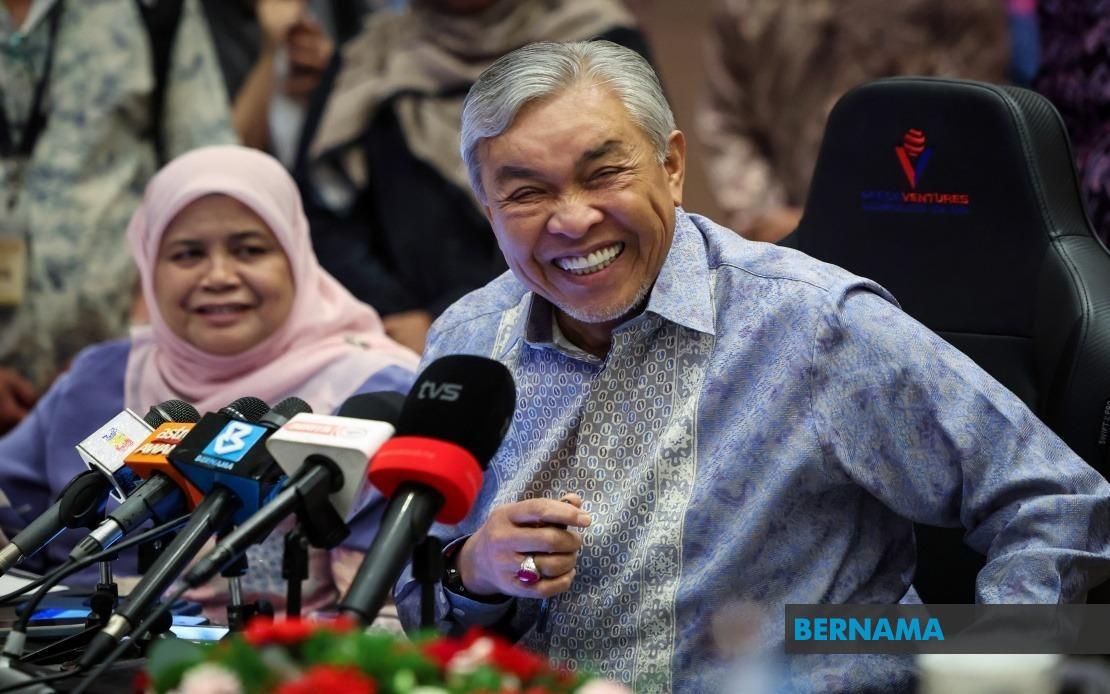
Barisan Nasional has doubled down on its pledge to remain within the Unity Government framework through the end of the 15th Parliament, with senior leadership emphatically rejecting suggestions of instability or covert manoeuvres to destabilise the administration. Deputy Prime Minister Datuk Seri Dr Ahmad Zahid Hamidi delivered the reassurance in George Town on July 23, addressing persistent rumours that the ruling coalition might fracture or that BN might pursue alternative political alignments outside the existing power-sharing arrangement.
Ahmad Zahid, who also leads UMNO as party president, was particularly emphatic in denying any intention to orchestrate what he termed "Bangkok Move" or "Dubai Move" scenarios—coded references to the kind of behind-the-scenes political manoeuvres that have occasionally destabilised Malaysian governance. His categorical dismissal signals BN's determination to anchor itself firmly within Prime Minister Anwar Ibrahim's coalition, framing stability as both a constitutional obligation and a moral imperative for the nation.
The coalition's commitment, Ahmad Zahid explained, flows directly from the constitutional arrangements established following the 2022 General Election, when the Yang di-Pertuan Agong issued the royal decree that necessitated a broad-based Unity Government. For BN, participation in this framework represents not merely a tactical decision but a binding constitutional compact that transcends individual political calculations or inter-coalition rivalries. This framing places BN's loyalty within a framework of institutional duty rather than mere pragmatic choice, lending additional weight to the commitment.
Yet beneath this surface unity lies discernible tension within the coalition architecture. Ahmad Zahid's remarks came as the ruling parties navigate the complexities of the Negeri Sembilan state election campaign, where unity principles face practical tests. The controversy surrounding a BN polling district centre in Klawang that suspended operations highlighted divisions within party ranks, particularly after the party hierarchy declined to field a candidate for the state seat, creating friction at grassroots levels. The incident illustrated that maintaining political discipline across a coalition spanning multiple parties with distinct regional interests remains a constant management challenge.
On the Klawang matter itself, Ahmad Zahid indicated that resolution was underway, with UMNO leadership in Negeri Sembilan addressing the operational closure before polling day. His confidence that the situation could be rectified within the remaining campaign window suggested that such frictions, while emblematic of coalition governance pressures, could be managed through internal party mechanisms and personal relationships among senior figures. The episode nonetheless underscored that unity rhetoric requires persistent reinforcement and active problem-solving at multiple administrative levels.
Separately, Ahmad Zahid addressed speculation regarding potential cooperation between BN and Perikatan Nasional under a proposed "Perikatan Barisan Nasional" alliance framework. He clarified that any such arrangement remained purely speculative, confined to campaign rhetoric rather than substantive interparty negotiations. This distinction carries significance for Malaysian political observers, as it signals that despite public posturing during electoral contests, BN maintains no binding commitments or advanced discussions with PN that might compete with its primary loyalty to the Unity Government. The lack of formal engagement suggests that while campaign dynamics may pit BN and PN against each other in certain constituencies, no parallel institutional relationship exists at leadership level.
The relationship between BN and the Prime Minister's office appears to have weathered recent campaign periods with cordiality intact. Ahmad Zahid noted that despite opposing each other during the Negeri Sembilan state election campaign, his personal rapport with Anwar Ibrahim remained warm. This dimension proved important symbolically: it demonstrated that electoral competition within the coalition structure, though inevitable and healthy, does not translate into personal animosity or institutional rupture among leadership figures. When Ahmad Zahid responded playfully to a pantun shared by Anwar the previous day by composing his own verse, he illustrated that even political rivals within the same coalition can maintain the cultural courtesies and interpersonal warmth that characterise Malaysian political tradition.
For Malaysian observers and Southeast Asian watchers of Malaysian politics, Ahmad Zahid's statements carry implications extending beyond mere coalition management. Political stability in Malaysia, which commands substantial regional economic significance, depends substantially on the perceived durability of governing arrangements. Repeated assertions of commitment, when delivered by senior figures through major press engagements, function as reassurance mechanisms for both international investors and domestic stakeholders who value predictability in the political environment. BN's explicit rejection of destabilising scenarios contributes to a broader narrative of institutional resilience.
However, the frequency and emphasis with which BN leadership felt compelled to issue such denials in recent months itself merits analytical attention. The persistent circulation of rumours regarding potential power shifts, Bangkok Moves, or alternative coalitions suggests that despite these reassurances, considerable scepticism persists in political circles regarding the durability of the Unity Government framework. This gap between leadership assertions and ground-level uncertainty points to underlying vulnerabilities in coalition architecture that cannot be entirely addressed through public statements alone.
The role of state-level elections in testing national coalition unity also deserves consideration. As Negeri Sembilan voted, the need to maintain both collective BN identity and internal party autonomy created inherent tensions that manifested in disagreements over candidate selection and campaign positioning. These pressures will likely recur as BN navigates other state electoral contests, requiring constant calibration between central unity commitments and peripheral political autonomy. Ahmad Zahid's visible engagement in resolving the Klawang centre issue indicated leadership awareness that such matters, if left unaddressed, could accumulate into broader coalition friction.
Looking forward, BN's commitment to the Unity Government framework through the remainder of the 15th Parliament's term appears secure based on current statements and leadership positioning. However, the intensity and frequency of reassurances required suggest that maintaining this stability demands active management, personal relationships among senior figures, and demonstrable commitment to joint problem-solving. The coalition's ability to translate its stated commitments into lived institutional practice, particularly during competitive electoral periods, will ultimately determine whether the Unity Government framework proves durable or whether the speculative scenarios that BN leadership has emphatically rejected eventually materialise.

