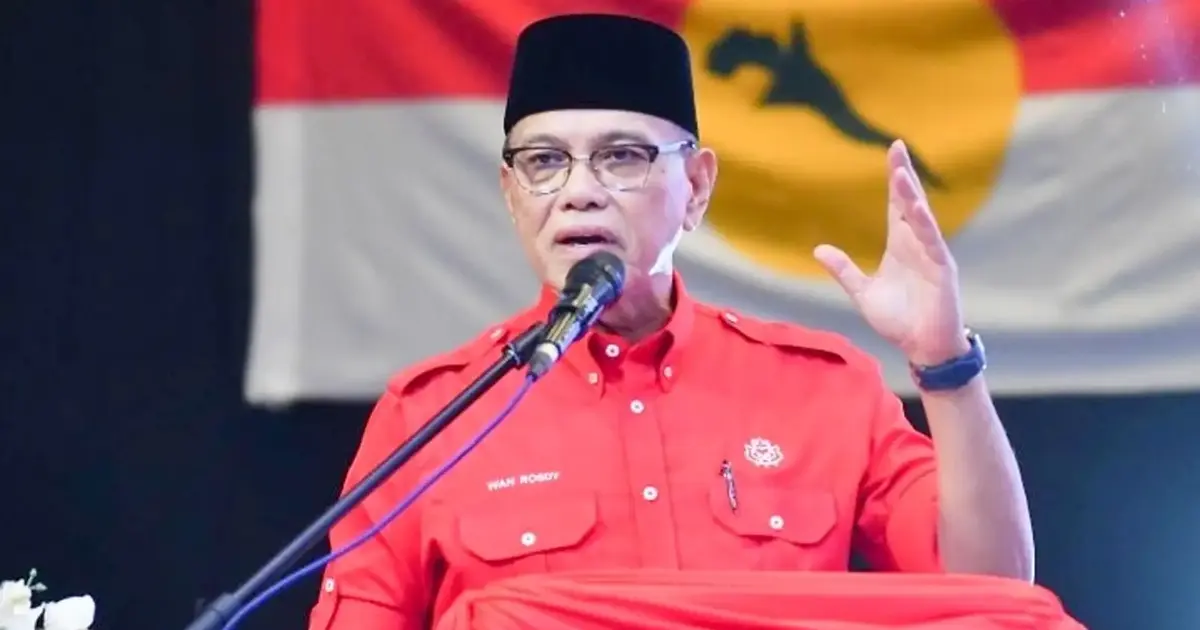
Any prospect of formal cooperation between Barisan Nasional and Perikatan Nasional ahead of the 16th general election remains distant, according to Umno vice-president Wan Rosdy Wan Zahari, who emphasised that coalition discussions have not yet materialised. The timing of such negotiations, he suggested, is premature given the immediate challenges facing Malaysia's political landscape and the current administration's workload.
Wan Rosdy's remarks come at a moment when Malaysia's political coalition landscape continues to evolve following recent electoral outcomes and state-level developments. The relationship between BN, which historically held federal power for decades, and PN, an emerging coalition that has gained ground particularly in several states, remains fluid and complicated. Understanding the implications of this non-engagement requires examining the structural constraints and strategic calculations that govern coalition politics in Malaysia's federal system.
The Umno leadership's current priority, as articulated by Wan Rosdy, is consolidating the position of the newly formed Negeri Sembilan government. State-level governance challenges often serve as proving grounds for coalition stability, and the immediate focus on strengthening this administration suggests that BN leadership views internal consolidation as prerequisite to broader political negotiations. The success or failure of this state-level effort could significantly influence the calculus surrounding future GE16 strategies.
Negeri Sembilan's political composition and the dynamics of its state government formation carry symbolic weight beyond the state boundaries. As one of Malaysia's smaller states, it nevertheless represents an important testing ground for coalition governance models. The administrative and legislative challenges that emerge during this foundational period will likely inform how BN approaches future negotiations with other political entities, including PN. A stable, effective state government can strengthen BN's negotiating position, while governance failures could weaken its appeal to potential allies.
The absence of formal talks between BN and PN reflects broader strategic uncertainty about the shape of Malaysian politics heading toward GE16. Both coalitions are simultaneously managing internal consolidation, state-level governance obligations, and preparation for federal contests. This multi-level engagement creates genuine logistical and political pressures that may explain why substantive discussions about national-level cooperation have not yet commenced. Coalition talks typically require sustained focus and high-level political commitment that may be difficult to sustain amid competing state and parliamentary responsibilities.
Historically, Malaysian political coalitions have formed and reformed based on shifting electoral mathematics and leadership calculations. The relationship between BN and PN is unlikely to follow a simple trajectory toward formal alliance or permanent rupture. Instead, Malaysian politics has typically seen tactical cooperation on specific issues coexisting with broader strategic rivalry. The emphasis on Negeri Sembilan consolidation may thus represent a deliberate decision to avoid premature national-level negotiations that could complicate state-level governance efforts or lock either coalition into positions that subsequent electoral developments might render suboptimal.
For Southeast Asian observers, Malaysia's coalition dynamics offer insights into how Westminster-derived systems evolve under pressure from fragmented electoral outcomes and competing regional power bases. The refusal to rush into GE16 coalition discussions reflects a pragmatic approach to political management, though it also leaves considerable uncertainty about the eventual configuration of competing blocs. This uncertainty itself influences political behaviour across the system, as legislators, parties, and state administrations calibrate their positioning based on multiple possible futures.
The timing of coalition negotiations carries significant strategic weight in Malaysian politics. Announcing such talks too early can invite defections or weaken internal cohesion, as members speculate about potential benefits or costs of various alliance configurations. Conversely, delaying negotiations too long can leave coalitions unprepared for electoral competition or susceptible to recruitment of their members by rival blocs. Wan Rosdy's statement suggests BN leadership believes this particular moment favours delayed engagement, a calculation that presumably factors in both internal BN considerations and assessments of PN's current trajectory and appeal.
Regional implications of BN-PN positioning deserve consideration as well. Southeast Asia's broader political environment, including developments in Thailand, the Philippines, and other neighbouring states, may influence Malaysian coalition calculations. Decisions about whether to pursue broader cooperation with PN could impact Malaysia's international positioning and regional diplomatic relationships. The current focus on state governance, therefore, may also reflect a desire to clarify domestic political foundations before undertaking negotiations with broader strategic implications.
Looking forward, the eventual shape of GE16 coalitions will substantially depend on how effectively the Negeri Sembilan government performs and what political openings or constraints emerge from that performance. The gap between Wan Rosdy's current statement and actual GE16 campaign positioning may narrow considerably once state-level governance patterns become clearer and the election timeline grows shorter. Political actors across Malaysian coalitions are likely watching the Negeri Sembilan experiment closely to gauge the viability of BN-PN cooperation models or to identify weaknesses that could be exploited in national competition.

