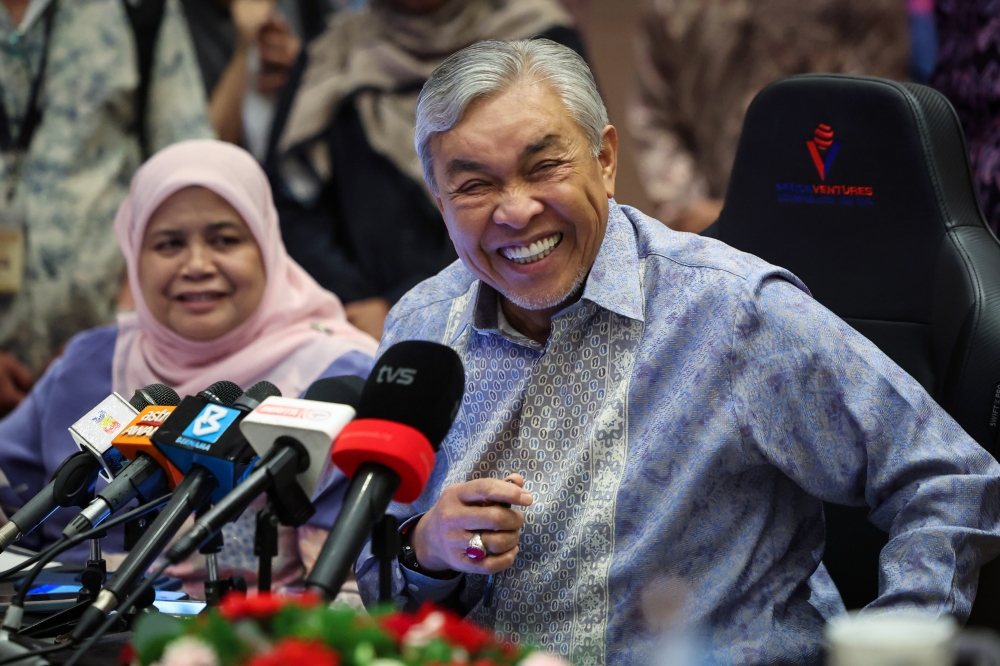
Deputy Prime Minister Ahmad Zahid Hamidi has moved to quell coalition speculation by declaring that Barisan Nasional intends to honour its commitment to the unity government arrangement for the entire duration of the 15th Parliament. Speaking in George Town on July 23, Zahid employed a colloquial phrase to emphasise the coalition's resolve, stating there would be no shifts in the political landscape reminiscent of sudden relocations or unexpected departures.
The assertion carries particular weight given Malaysia's recent political turbulence, where coalition arrangements have repeatedly fractured due to shifting alliances and opportunistic defections. Zahid's unequivocal language serves as a reassurance to both coalition partners and the broader electorate that the current governing arrangement possesses sufficient stability to function through the remainder of the parliamentary term. This stability is crucial not merely for governance continuity but for economic confidence and investor sentiment, factors increasingly sensitive to perceived political uncertainty in Southeast Asian markets.
The unity government itself emerged from Malaysia's complex electoral arithmetic following the 2022 general election, necessitating an unusual collaborative framework between traditionally opposing political blocs. This arrangement between Barisan Nasional, Pakatan Harapan, and smaller coalition partners represented a departure from conventional Malaysian politics, where singular coalition dominance had long been the norm. The structure itself remains novel enough that questions about its durability persist within political circles and among observers tracking regional political developments.
Zahid's comments implicitly address lingering anxieties about whether coalition partners might exploit dissatisfaction or shifting electoral calculations to reconfigure the governing arrangement. Such concerns are neither unfounded nor unique to Malaysia; neighbouring Thailand and the Philippines have experienced their own coalition volatility. For Malaysia, the stakes extend beyond domestic political aesthetics—investor confidence in institutional stability hinges partly on expectations that announced commitments will be honoured through their stated timeframes.
The deputy premier's remarks also respond to periodic speculation about ministerial reshuffles or senior figures relocating to alternative portfolios or positions, a common feature of Malaysian political discourse. By explicitly ruling out such movements, Zahid appears to be signalling that the current cabinet configuration and distribution of ministerial positions represents a settled arrangement rather than a transitional accommodation. This clarity may be necessary because previous unity government attempts in Malaysian history have sometimes unravelled when individual politicians perceived insufficient personal advancement or portfolio satisfaction.
Barisan Nasional's specific commitment carries weight because the coalition encompasses multiple parties representing different constituencies and regional strongholds. The Malaysia United Indigenous Party (UMNO) and other component parties within BN each bring distinct membership bases and electoral considerations. Maintaining unity across this federation requires continuous negotiation and goodwill, making public reaffirmations of commitment valuable for preventing internal fragmentation that could trigger broader coalition instability.
For Malaysian readers and regional observers, Zahid's statement represents a rare moment of definitive political certainty in an environment often characterised by ambiguity and calculated public positioning. Malaysian politics has historically rewarded hedged bets and ambiguous commitments, allowing politicians room to pivot when circumstances change. Zahid's explicit language represents a notable departure from this tradition, suggesting either genuine confidence in coalition durability or a recognition that such unambiguous statements are necessary for maintaining investor and public confidence.
The declaration also implicitly acknowledges that speculation itself constitutes a potential destabilising force. Persistent rumours about coalition fragmentation or ministerial reshuffles can gradually erode confidence in government stability even before any actual political moves occur. By firmly dispelling such speculation through clear public statements, Zahid may be attempting to eliminate this psychological component of political uncertainty.
Looking forward, the unity government framework faces various tests that will prove whether Zahid's commitment holds substance. These include navigating divergent policy preferences among coalition partners, managing expectations regarding resource allocation and ministerial appointments, and preventing opportunistic defections by individual politicians sensing electoral advantage in alternative arrangements. The framework will also face scrutiny during any prospective general election campaign, when coalition partners might emphasise their distinct identities and policy platforms.
For Southeast Asian observers, Malaysia's unity government represents an interesting democratic experiment. The region has witnessed both successful and failed attempts at cross-partisan governance arrangements, and Malaysia's experience offers lessons about institutional design, negotiation dynamics, and the conditions enabling coalition persistence. Zahid's commitment, tested against months of practical governance reality, will inform broader regional understanding about whether post-election unity arrangements can function as genuine governing mechanisms rather than merely temporary expedients.
The deputy premier's statement ultimately represents a calculated investment in political credibility. Should the unity government persist through the parliamentary term, Zahid's clear public commitment will be vindicated and may establish him as a figure capable of delivering on substantial political pledges. Conversely, any subsequent coalition realignment would underscore the limited reliability of such public assurances in Malaysian political contexts. Either outcome carries implications extending beyond immediate domestic politics into regional perceptions of Malaysian institutional stability and governance capacity.

