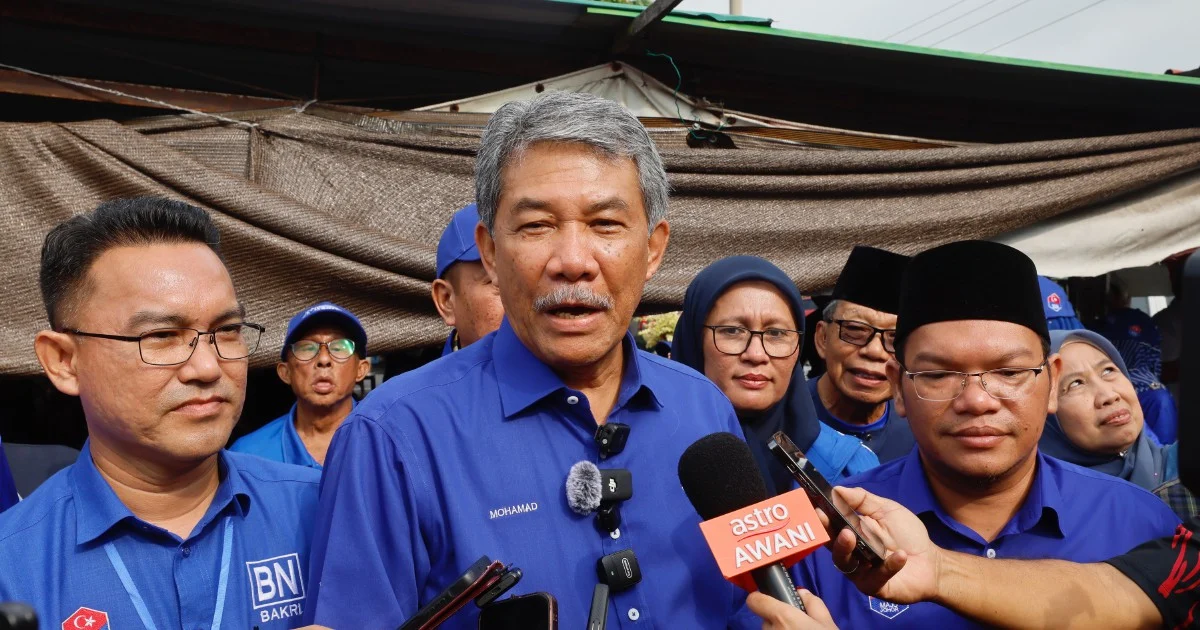
The political temperature in Malaysia has risen notably following a sharp exchange between Barisan Nasional's second-in-command and a prominent opposition figure over the state of Johor's electoral politics. Speaking in Muar, Datuk Seri Mohamad Hasan, who serves as deputy chairman of BN, has publicly challenged DAP leader Nga Kor Ming to step down from his position, citing what he characterizes as inappropriate commentary regarding Johor's recent election proceedings.
The confrontation reflects deepening fault lines within Malaysia's political landscape, particularly as coalitions continue to navigate complex parliamentary dynamics at both state and federal levels. Mohamad Hasan's intervention underscores the sensitivity surrounding electoral integrity and commentary from coalition partners, themes that have periodically destabilized governance arrangements across multiple state administrations. The exchange also reveals the precarious balance that ruling parties must maintain when addressing criticism from allies and opponents alike.
Nga Kor Ming's position as a senior DAP figure carries particular weight given the party's role within the broader political ecosystem. As a prominent Chinese-backed opposition party member, his statements on elections carry significance for how different communities perceive electoral fairness and participation. The DAP has long positioned itself as a watchdog on governance matters, frequently commenting on electoral processes and administrative decisions, though such positions occasionally create friction with coalition partners in state governments where DAP holds ministerial roles.
The Johor election context is particularly charged given the state's historical importance in Malaysian politics and its role as a traditional stronghold for certain political factions. Recent electoral developments in Johor have attracted scrutiny from across the political spectrum, with various parties offering competing interpretations of outcomes and implications. State elections serve as crucial barometers for national political momentum, and commentary on their integrity attracts disproportionate attention from political leadership.
Mohamad Hasan's public demand for resignation represents an escalation beyond typical political disagreement. Such stark language suggests frustration with what BN perceives as overstepping by a coalition partner or inappropriate criticism from an opposition figure. In Malaysian political culture, calls for resignation function both as genuine demands and as rhetorical tools to pressure opponents or reinforce party messaging ahead of potential future contests.
The timing of this confrontation may also merit consideration within the broader context of political positioning ahead of potential state or general elections. As different coalitions strengthen their organizational capabilities and messaging frameworks, tensions over narrative control and public statements become more pronounced. Party leaders increasingly scrutinize utterances from both allies and rivals, seeking advantage in the court of public opinion.
For DAP, positioning Nga Kor Ming as a voice advocating for electoral transparency and fairness forms part of a carefully constructed political identity. The party derives substantial support from urban voters and those concerned with institutional accountability. Conversely, Barisan Nasional and its coalition partners benefit from projecting an image of governmental stability and electoral legitimacy. These divergent political brands inevitably create friction when specific elections come under scrutiny.
The broader implications for Malaysian politics extend beyond this particular exchange. Coalition governments—whether at state or federal level—depend on maintaining productive working relationships among parties with sometimes conflicting interests and messaging strategies. When friction surfaces publicly, it creates opportunities for opposition forces to exploit divisions and question the stability of governing arrangements. The frequency and intensity of such confrontations can influence voter confidence in governance institutions.
Mohamad Hasan's position as BN deputy chairman means his statements carry authoritative weight within the coalition structure. His willingness to issue direct public challenges signals that BN leadership views the matter seriously enough to warrant high-level intervention rather than allowing it to simmer at lower organizational levels. This escalation approach can either resolve tensions through clear assertion of power dynamics or potentially entrench positions as both sides feel compelled to respond.
The substance of Nga Kor Ming's original remarks remains central to understanding this dispute, though Mohamad Hasan's response suggests the comments touched on sensitive matters regarding electoral conduct or administrative decisions. Election-related commentary remains inherently political in Malaysia, with different parties habitually interpreting the same events through contrasting ideological and strategic lenses. What one coalition interprets as legitimate oversight criticism, another may view as unfounded accusations demanding public retraction.
Looking forward, this exchange likely foreshadows additional political friction if tensions remain unresolved through private channels. Malaysian political parties have demonstrated capacity for both heated public confrontations and behind-the-scenes negotiations that preserve formal coalition relationships while allowing individual parties to maintain distinct political identities. Whether this dispute follows one trajectory or another will depend on factors including internal party pressures, broader coalition dynamics, and electoral considerations on the horizon.

