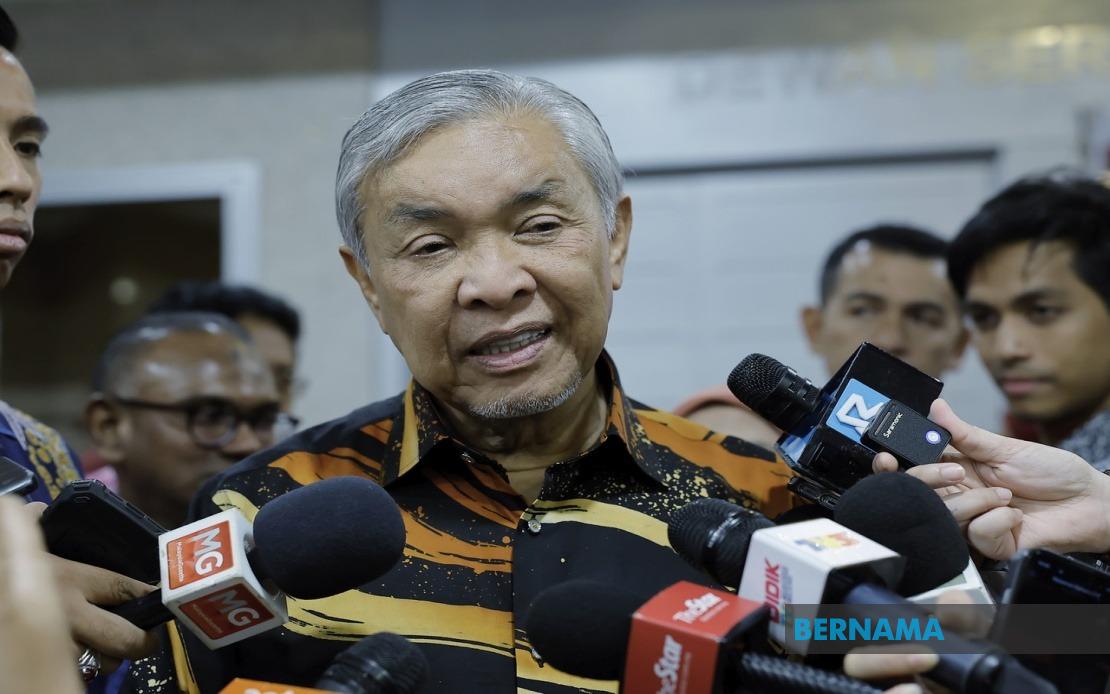
Deputy Prime Minister Ahmad Zahid Hamidi, in his capacity as chairman of Barisan Nasional, has signalled an uncompromising approach toward governance failures at Tabung Haji, the pilgrimage savings fund that has faced mounting scrutiny over its financial stewardship. Speaking at the conclusion of the Rural and Regional Development Ministry's monthly gathering in Putrajaya on August 6, Ahmad Zahid emphasised that neither the ruling coalition nor UMNO would overlook instances of corruption or administrative negligence within the institution, which holds the savings of millions of Malaysian Muslims earmarked for their hajj journey.
The statement comes as parliament prepares to convene on August 11 for a special debate focused entirely on the findings contained in the Royal Commission of Inquiry's comprehensive report into Tabung Haji's operations. That scrutiny is set to be particularly intense given the gravity of the RCI's conclusions, which were made public on July 29 following an investigation spanning the critical six-year period from 2014 to 2020. Ahmad Zahid's remarks appear designed to preempt accusations that the political establishment might shield those responsible for the fund's difficulties, a concern that has animated public discourse on the matter.
The Royal Commission's investigation uncovered troubling patterns within Tabung Haji's management during the period under examination. Beyond merely documenting administrative missteps, the inquiry identified what it characterised as suspicious transactions alongside deliberate concealment of crucial information, suggesting a more deliberate pattern of impropriety rather than simple incompetence. These findings have profound implications not merely for the institution itself but for public confidence in how government-linked entities safeguard citizen assets, particularly those held in trust for religious obligations.
Central to the RCI's recommendations is a call for forensic auditing of the investment decisions that precipitated a notable erosion of Tabung Haji's asset base. This suggestion reflects the Commission's assessment that understanding the precise mechanisms through which the fund's value declined sharply requires detailed financial reconstruction and expert analysis beyond the scope of the initial inquiry. The forensic approach signals recognition that financial misconduct often leaves traces that become apparent only when examined with specialised investigative techniques.
Ahmad Zahid's declaration that wrongdoing within government agencies and statutory bodies must invariably result in accountability reflects mounting public and international pressure on Malaysia regarding governance standards. His explicit rejection of compromise on such matters addresses concerns that political connections might insulate wrongdoers from consequences. For Malaysian Muslims who have contributed to Tabung Haji over decades, the assurance carries particular weight, as the fund represents accumulated savings that carry both financial and spiritual significance within Islamic tradition.
The timing of Ahmad Zahid's statement, just days before the parliamentary debate, suggests a coordinated communications strategy designed to frame the government's response as firmly committed to institutional integrity. By emphasising that those involved in wrongdoing must face consequences, the leadership appears intent on establishing that political considerations will not override demands for accountability. This positioning becomes especially significant given historical episodes in which Malaysian statutory bodies have faced accusations of inadequate oversight or delayed accountability for senior figures.
For Southeast Asian observers and Malaysia's international partners, Tabung Haji's governance challenges form part of a broader conversation about institutional resilience within emerging markets and the effectiveness of supervisory mechanisms within government-linked entities. Malaysia's approach to resolving this matter will likely influence investor and depositor confidence not only in Tabung Haji itself but in other similar institutions throughout the region that manage citizen savings or religious endowments.
The parliamentary session scheduled for August 11 will represent a critical juncture in determining whether Ahmad Zahid's commitments translate into concrete action. The debate will provide legislators the opportunity to interrogate the RCI's findings in detail and establish timelines and accountability measures for addressing identified deficiencies. How comprehensively parliament engages with the forensic audit recommendations and how swiftly action proceeds will serve as indicators of the government's genuine commitment to institutional reform.
For Tabung Haji itself, the immediate challenges involve restoring operational confidence among its contributor base whilst simultaneously implementing the structural and procedural changes necessary to prevent recurrence of the identified problems. The fund's custodians face the complex task of maintaining service continuity to pilgrims whilst undergoing intensive scrutiny and remedial measures, a situation that demands careful management to avoid further erosion of public trust.
The broader Malaysian context matters here as well. Recent years have witnessed heightened public expectations regarding transparency and accountability across government and related entities, driven partly by the experiences of the preceding decade. Ahmad Zahid's unambiguous language regarding zero tolerance reflects awareness that public sentiment has shifted markedly on governance matters. Whether this rhetorical commitment translates into sustained institutional reform will ultimately determine whether the Tabung Haji episode catalyses genuine improvement in how Malaysia supervises its statutory bodies or merely represents another cycle of investigation followed by insufficient remediation.

