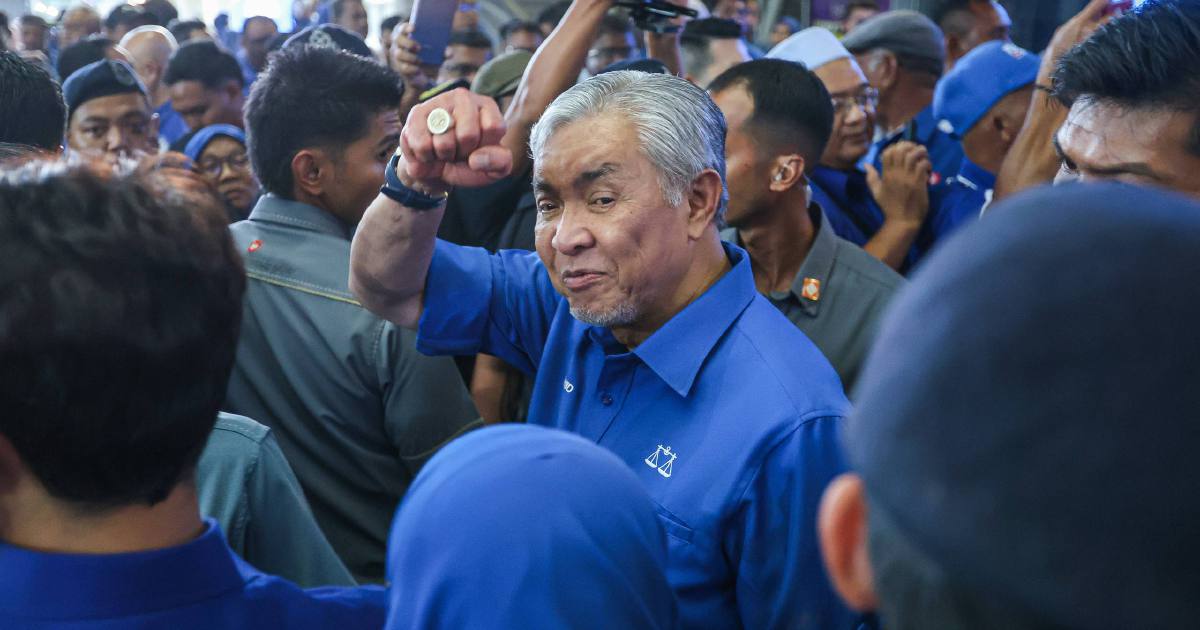
Barisan Nasional is banking on an expanded foothold in Johor when voters next head to the polls, with the coalition's chairman unveiling plans to improve upon its earlier electoral performance. Speaking at Simpang Renggam, Datuk Seri Dr Ahmad Zahid Hamidi made clear that the party sees opportunity to consolidate and grow its presence across the state's parliamentary and state assembly constituencies.
The BN's push to increase its seat tally in Johor reflects broader efforts within Malaysia's traditional political establishment to reassert dominance in one of the nation's economically significant and politically strategic states. Johor, long considered a BN stronghold despite periodic electoral challenges, remains crucial to any coalition's national arithmetic. Control of the state assembly carries symbolic weight and practical influence, particularly as it provides a platform for policy initiatives and resource distribution that can strengthen party networks.
Zahid's announcement comes as BN navigates a complex electoral landscape where voter preferences have become more fluid and issue-driven than in previous decades. The coalition must balance internal dynamics among its three main components—UMNO, MCA, and MIC—while addressing constituent concerns ranging from economic hardship to service delivery. In Johor specifically, the party faces the task of energising its traditional base whilst appealing to younger, more discerning voters who increasingly question incumbency and demand substantive platforms.
The timing of such pronouncements carries strategic significance. By publicly setting an ambitious target, BN leadership signals confidence to party members and supporters whilst potentially setting expectations that could influence volunteer mobilisation and campaign intensity. However, stating aspirations openly also invites scrutiny of whether the coalition possesses the political capital and grassroots machinery to deliver results at the ballot box.
Johor's electoral significance extends beyond state-level politics. The state contributes a meaningful number of seats to Parliament, and strong performance there bolsters a coalition's negotiating position in Putrajaya. This has become particularly relevant in Malaysia's current political environment, where no single bloc commands overwhelming majorities, making state-level victories crucial building blocks for national coalitions. For BN, demonstrating electoral momentum in Johor can help counter narratives of decline and reinvigorate party discipline among members who have experienced numerous electoral disappointments over the past decade.
Zahid's tenure as BN chairman has coincided with efforts to modernise the coalition's approach to campaigning and messaging. The party has experimented with digital outreach, attempted to rebrand itself as more responsive to contemporary challenges, and sought to position UMNO as a custodian of stability amid Malaysia's political churn. Whether these initiatives translate into actual seat gains in Johor will depend on execution at the grassroots level and the coalition's ability to differentiate itself from opposition coalitions that control the federal government.
The opposition Pakatan Harapan coalition holds the federal government following the 2022 general election, and component parties within that alliance have demonstrated capacity to win urban and suburban voters. Meanwhile, Perikatan Nasional continues to pose unpredictable competition in certain constituencies, particularly in areas where Islamic-oriented messaging resonates strongly. For BN to expand its Johor representation, it must either recapture seats lost in previous cycles or make inroads into constituencies currently held by rivals, both challenging undertakings.
Internal cohesion within BN itself remains a variable worth monitoring. Component parties sometimes pursue contradictory strategies or compete for the same voter constituencies, diluting the coalition's overall effectiveness. UMNO dominates numerically and strategically, but the inclusion of MCA and MIC serves important coalition-building functions, particularly in ensuring support from Malaysia's Chinese and Indian communities. Managing these internal relationships whilst maintaining a unified campaign message will be essential for any seat-gain strategy.
Resource availability and volunteer enthusiasm will ultimately determine whether BN's ambitions materialise. Electoral campaigns require sustained funding, coordinated messaging, field organisation, and the mobilisation of party members willing to conduct grassroots outreach. In an era of declining party membership across Malaysian political organisations, ensuring sufficient human capital for a vigorous campaign remains a persistent challenge that party leadership must address.
Zahid's announcement must also be understood within the context of BN's recent electoral performance nationally. The coalition lost its long-standing parliamentary majority in 2018 and has since struggled to convince voters it deserves restoration to power. Johor offers a test case where BN retains reasonable strength and where demonstrating electoral recovery could help restore internal morale and external credibility. A strong showing would validate the leadership's strategies and provide momentum heading into potential federal elections, whilst a disappointing result could intensify criticism from within party ranks and among supporters questioning whether BN possesses sufficient appeal for contemporary Malaysian voters.

