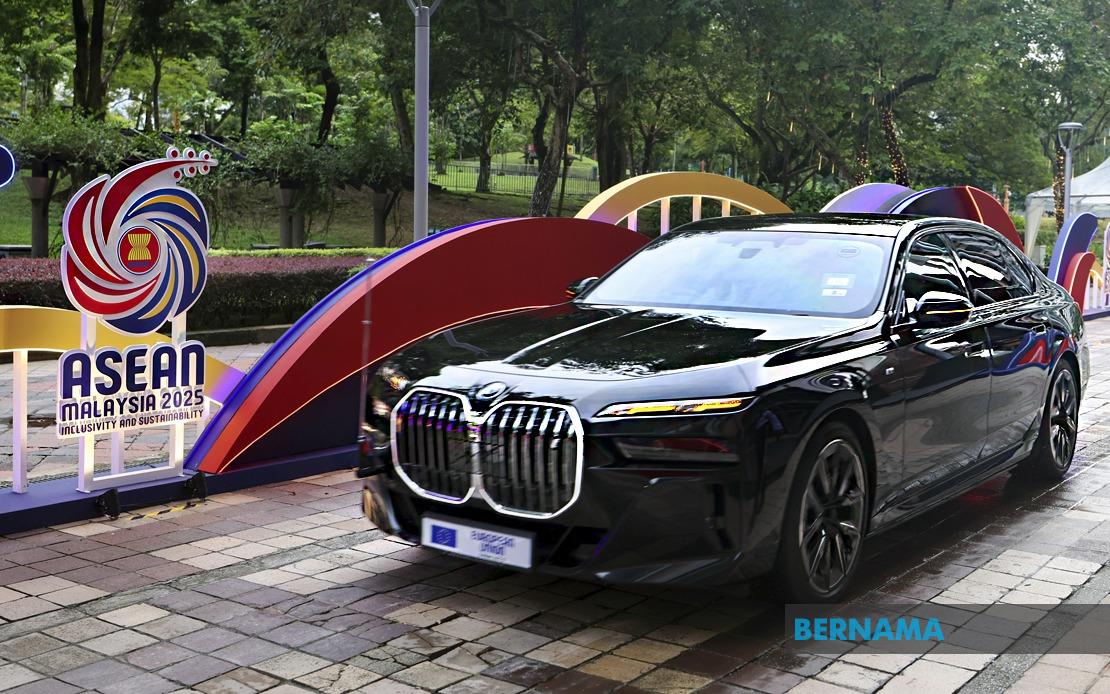
The Prime Minister's Department (JPM) has moved to dispel online speculation and social media allegations regarding a luxury BMW vehicle recently deployed for use by Prime Minister Datuk Seri Anwar Ibrahim, confirming through the Ceremonial and International Conference Secretariat Division (BIUPA) that the automobile is an established government asset rather than a freshly procured official conveyance.
In a statement released on Facebook, JPM and BIUPA explained that the BMW forms part of Malaysia's existing government fleet and falls under BIUPA's direct supervision. The vehicle is designated specifically to support the country's official logistics operations, particularly during international engagements and diplomatic functions involving heads of state and government leaders visiting Malaysian territory.
The deployment of the vehicle responds to stringent international security protocols and established standards that govern the movement and protection of visiting dignitaries. When presidents and prime ministers travel to Malaysia on official business, their host country must provide transportation infrastructure capable of meeting recognised security benchmarks. This requirement forms a foundational element of international diplomatic protocol, ensuring that visiting leaders can conduct their functions with appropriate protective measures in place.
The BMW in question has been engineered to exacting security specifications that far exceed those of standard civilian vehicles. According to the department's clarification, the automobile incorporates advanced protective engineering designed to withstand ballistic threats delivered from high-powered weapons systems. The vehicle's armoured construction extends to protection against explosive devices, reflecting contemporary security risks that government officials and visiting dignitaries face in the modern threat environment.
Beyond conventional explosive and ballistic threats, the BMW's design specifications incorporate countermeasures against emerging security challenges, including unmanned aerial systems commonly known as drone threats. As drone technology becomes increasingly accessible and potentially weaponised, state security frameworks have evolved to address these new vectors of attack. The inclusion of such protections in the Prime Minister's transport reflects the sophistication of modern security planning at the highest levels of government.
JPM emphasised that the temporary assignment of the BMW to the Prime Minister occurred not through routine selection but following formal security assessment and professional recommendation. The Royal Malaysian Police (PDRM), the nation's primary law enforcement and security agency, evaluated the requirements and advised the deployment of this particular armoured vehicle on security grounds. This distinction matters significantly, as it establishes that the decision emerged from threat analysis and protective necessity rather than preference or administrative convenience.
The timing of this deployment becomes clearer when contextualised within Malaysia's diplomatic calendar and the Prime Minister's official vehicle situation. Anwar Ibrahim's primary official conveyance, which was gifted to him by the Yang di-Pertuan Agong, entered a scheduled maintenance cycle requiring the vehicle's temporary withdrawal from service. Rather than compromise security protocols during this maintenance window, the government activated the BMW from its existing fleet, ensuring continuity of protective measures throughout the maintenance period.
The clarification issued by JPM and BIUPA directly addresses the speculative narratives that had circulated extensively across Malaysian social media platforms in recent weeks. Such speculation often centres on questions regarding government expenditure, the appropriateness of official vehicle procurement, and the distinction between personal and state property. By publicly confirming the asset's existing status within the government fleet, the department sought to establish factual clarity and prevent further misrepresentation of the situation.
For Malaysian readers and observers of political developments, this episode illustrates the tension between public transparency and legitimate security requirements. Government operations, particularly those relating to the protection of the Prime Minister, necessarily operate under confidentiality constraints. Yet in democratic systems, citizens reasonably expect clarity about how state resources are deployed and why decisions about official vehicles are made. The JPM statement attempts to navigate this balance by confirming sufficient detail to address public concern without compromising operational security procedures.
The incident also reflects broader regional and global trends in executive security. As threats to political leaders evolve in sophistication and complexity, governments worldwide invest in protective infrastructure, including specialised vehicles capable of withstanding modern attack methods. Malaysia's approach, evidenced by the existence of such armoured vehicles within the government fleet, aligns with security practices maintained across comparable economies in Southeast Asia and beyond. The BMW's capabilities represent a baseline rather than an exception in contemporary state security arrangements.
Moving forward, the clarification provided by JPM establishes an official record concerning this vehicle's status and deployment. Should similar situations arise in future—whether involving the Prime Minister's transport or other high-level official vehicles—the government's proactive communication in this instance sets a precedent for addressing public curiosity with factual information. This approach, combining security necessity with transparency where operationally feasible, may serve as a model for managing future public inquiries regarding the government's management of sensitive resources and official assets.

