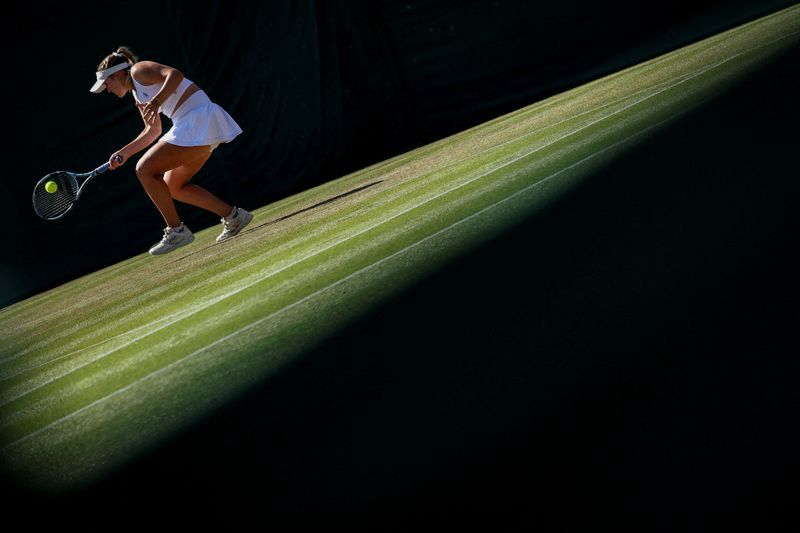
The All England Club's 149-year-old tournament stands as perhaps the world's most tradition-bound sporting event, where custom and pageantry are safeguarded with almost religious reverence. Yet beneath the manicured lawns, the all-white dress codes, and the ceremonial presence of British royalty lies a fundamentally different story—one of intense human struggle, razor-sharp competitive instinct, and the relentless pursuit of sporting glory that mirrors the drama of any major athletic competition.
Wimbledon's visual presentation remains unmistakable. Across nearly 700 matches spanning all categories, players navigate the grass courts in head-to-toe white, while spectators arrive adorned in imaginative millinery and armed with traditional strawberries and cream. The pageantry extends to royal box appearances and television coverage that emphasises elegance and restraint. This aesthetic carefully distinguishes Wimbledon from the raw energy of concurrent major sporting events, most notably the FIFA World Cup, which unfolded simultaneously and projected an entirely different cultural aesthetic.
Yet this distinction in appearance masks a fundamental truth: the sporting contests themselves demand identical levels of determination, mental fortitude, and technical excellence. The tournament represents the pinnacle of professional tennis, where only the world's finest players can realistically challenge for victory. The competitive intensity that drives a footballer to score a crucial World Cup goal burns with identical ferocity in the hearts of tennis champions pursuing a Grand Slam title. This paradox—a tournament of classical restraint housing utterly visceral athletic competition—creates a unique tension that defines Wimbledon's character.
Photographic documentation of the 2024 tournament captured this underlying intensity in unexpected moments. Before serves are struck, during critical volleys, and in the immediate aftermath of points won and lost, players reveal a psychological landscape far removed from the tournament's genteel presentation. These candid moments expose the silent concentration that precedes every stroke, the physical and mental strain of competing at the absolute highest level, and the profound emotional responses to victory and defeat that characterise professional sport.
Filipino player Alexandra Eala's engagement with third seed Iga Swiatek exemplified this competitive ferocity. The 21-year-old's struggle against a six-time Grand Slam champion displayed the kind of determined grit essential for competing against tennis's elite. A captured moment showing Eala falling while attempting a forehand return revealed gritted teeth and desperate effort—the visual embodiment of an underdog fighting against formidable odds. What was intended as a celebration photograph instead documented one of the tournament's most compelling competitive moments, with Eala's athletic commitment rendered visible for all to see.
Otto Virtanen's first-round performance illustrated another dimension of competitive pressure at Wimbledon. During his match, the player approached a courtside barrier in evident frustration, his body language suggesting an overwhelming desire to escape the mounting tension. This moment captured the psychological weight that professional tennis places upon its competitors—the isolation of individual sport, where matches are won and lost through personal performance under intense scrutiny, with no teammates to share the burden.
Conversely, certain players channelled Wimbledon's spotlight into performances of confidence and authority. Naomi Osaka's appearance on Centre Court, wearing a striking kimono-inspired dress, projected the fearlessness characteristic of her best performances. The two-time Grand Slam champion's quarter-final run demonstrated how elite players harness major tournament occasions to elevate their games. Her composed demeanour beneath the tournament's pressures reflected the psychological resilience required to contend for Wimbledon's title.
The physical toll of championship tennis manifests itself in unexpected ways throughout the tournament. Men's champion Jannik Sinner's final against Alexander Zverev required extraordinary athleticism, with the Italian stretching beyond normal human limits to return forehands against his German opponent. In one captured moment, Sinner's extended reach appeared visually augmented by his own shadow, a photographic accident that nonetheless conveyed the extreme physical demands of professional tennis at the highest level. The shadow seemed to extend his grasp, a visual metaphor for the superhuman effort required in Grand Slam finals.
The doubles competitions produced their own moments of profound human emotion. Guo Hanyu and Kristina Mladenovic's women's doubles triumph was documented in a photograph capturing their celebratory embrace, where their shadows merged in patterns that appeared to show one competitor raising a triumphant fist. This image encapsulated the communal joy of victory at Wimbledon, a counterpoint to the solitary struggles visible elsewhere throughout the tournament.
As the tournament concludes and spectator stands empty, physical evidence of the competition's intensity remains visible. Centre Court's grass displays patches of wear corresponding to the passage of thousands of players' shoes across its surface over two weeks of relentless competition. Time-lapse photography documented these accumulated marks—silent testimony to the cumulative effect of professional athletes competing at maximum intensity. These worn patches represent the tangible price extracted by the world's finest players from Wimbledon's iconic playing surface.
For Malaysian and Southeast Asian sports enthusiasts, Wimbledon's competition holds particular resonance. The tournament regularly features competitors from across the region, and serves as an aspirational benchmark for developing tennis talent. The contrast between Wimbledon's refined presentation and its underlying competitive ferocity offers instructive lessons about how sporting traditions need not diminish athletic excellence. Indeed, the All England Club demonstrates that pageantry and intensity coexist naturally within elite sport.
Ultimately, Wimbledon's enduring significance stems from its successful marriage of competing values. The tournament preserves traditions meticulously while simultaneously hosting competition of the highest order. Players conform to dress codes and behavioural expectations while engaging in sporting battles of genuine consequence. This balance—between honouring heritage and embracing excellence—explains why Wimbledon remains tennis's most prestigious championship, attracting the world's greatest players who willingly accept its unique demands and constraints in pursuit of glory.

