Betong may not feature prominently on most Southeast Asian travel itineraries, yet this modest Thai border town packs enough unexpected attractions to justify a detour for regional travellers. Situated conveniently within driving distance of Malaysia—roughly 380 kilometres from Kuala Lumpur, or about five hours by car—Betong has quietly cultivated a distinctive identity centred around its prized local chicken breed, a fascinating wartime heritage, and an endearing collection of eccentric landmarks that catch visitors off guard.
The town's most recognisable symbol is the Betong chicken, a heritage breed that dominates the local culinary landscape and serves as the inspiration for oversized statuary dotting the streetscape. These massive bronze sculptures, strategically positioned as roadside attractions, prompted curious exploration that ultimately revealed the bird's cultural significance to the region. The chicken is far more than decorative—it represents local agricultural tradition and community pride. Consequently, the town's restaurant scene revolves almost entirely around poultry preparations, from simple chicken rice bowls to elaborate chicken porridge offerings. This single-minded culinary focus may seem limiting initially, but it reflects the authenticity of local food culture rather than tourist-driven commercialisation.
For Malaysian roadtrippers planning a weekend expedition across the northern border, Betong functions as an accessible cultural checkpoint. The journey from Kuala Lumpur requires no visa complications and traverses relatively straightforward highways. The town's walkability enhances its appeal for casual exploration; accommodations clustered in the old town district place most attractions within pedestrian range, eliminating frustrating parking searches that plague larger Thai cities. Local parking conventions—distinguished by kerb markings of black and white versus red and white—prove simple enough once explained by friendly residents, whose hospitality eases navigation considerably.
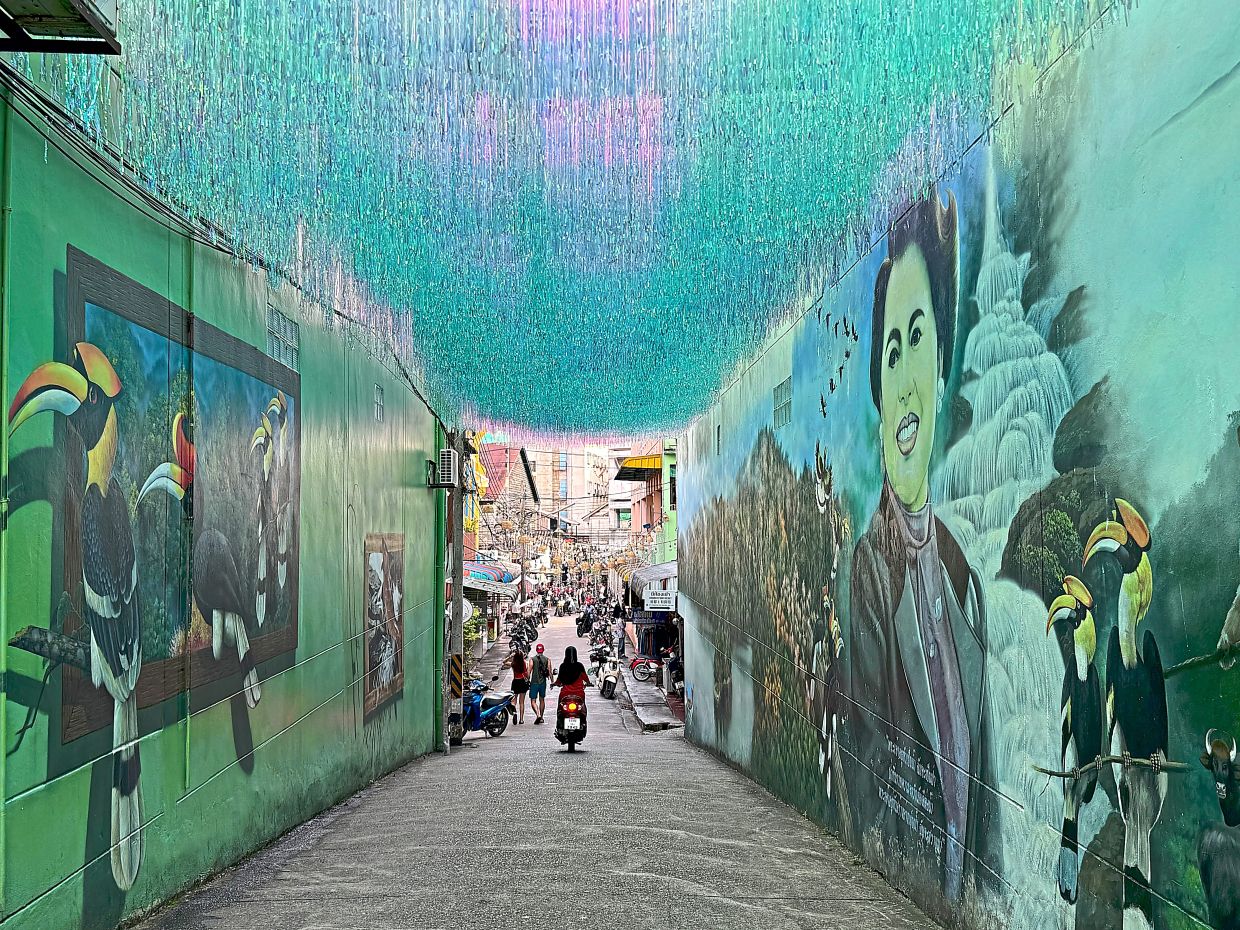
One of Betong's most visually striking features is the Mongkollit Tunnel, Thailand's maiden mountain tunnel constructed in 2001. Initially, the structure appeared architecturally unremarkable during daylight hours, but evening hours transform it entirely. Brilliant blue illumination bathes the tunnel's interior, creating an unexpected spectacle that draws steady flows of visitors to the pedestrian walkways flanking the roadway. Photography enthusiasts particularly gravitate toward this site, where the contrast between the industrial tunnel structure and vivid artificial lighting generates compelling compositions. This demonstrates how modest infrastructure investments can generate sustainable tourism interest when complemented by thoughtful ambiance design.
Piyamit Tunnel represents the destination's most historically substantive attraction, offering visceral connections to a turbulent Southeast Asian chapter often underrepresented in popular tourism narratives. Excavated in the late 1970s and located approximately 15 kilometres from town, this one-kilometre-long underground complex formerly functioned as a Communist Party of Malaya operational base. The site served multiple wartime functions—air raid shelter, ammunition storage, communications hub, and strategic escape corridor during military incursions. The original structure featured multiple entrances and exits distributed across different directions, enabling guerrilla fighters to execute coordinated dispersal when necessary. Though safety considerations have resulted in sealing several original access points, the remaining accessible passages preserve the tunnel's essential character and historical authenticity.
Navigation through the tunnel complex reveals the quotidian realities of wartime underground living. Designated sleeping quarters, meeting chambers, and radio communication stations remain visible, allowing visitors to contemplate the human experience of prolonged subterranean existence. An adjacent small museum curates historical photographs and recovered artefacts documenting the daily lives of communist fighters who inhabited the surrounding jungle encampments. Perhaps most ingeniously, visitors encounter the remnants of an outdoor cooking installation featuring a specially engineered stove that channelled charcoal smoke underground, rendering the camp essentially invisible to aerial reconnaissance. This engineering solution demonstrates the sophisticated operational thinking required for sustained insurgent activity within hostile territory.
The Piyamit site connects visitors to broader regional history accessible through related destinations. Chulabhorn Phatthana Village 9, situated approximately 120 kilometres distant in Mae Wat, provides complementary historical perspective by showcasing the post-insurgency lives of former communist party members who transitioned to civilian existence. This cultural hub contextualises the insurgency narrative within longer trajectories of personal reinvention and social reintegration, deepening historical comprehension beyond military operational chronologies alone.
For motorcycle enthusiasts, Route 410—officially designated the Pattani-Betong Highway—provides compelling recreational opportunities. This 160-kilometre scenic corridor's combination of steep elevation gains and technical switchbacks through mountainous terrain has established its reputation among regional motorcycle communities. Bikers regularly congregate at specialist shops like Betong Route 410, which supplies customised Thai-style number plates, branded apparel, and memorabilia catering specifically to this demographic. The route exemplifies how Southeast Asian tourism increasingly caters to adventure-oriented visitors seeking experiences beyond conventional sightseeing.
Wat Phutiwhat temple, alternatively named Wat Phuttha Thiwat, provides spiritual counterbalance to the town's secular attractions. A monumental bronze Buddha statue commands the temple entrance, its elevated position affording surveillance across the town's modest skyline. The temple additionally houses Buddha relics, attracting devotional visitors alongside culturally curious tourists. However, temporal planning matters considerably—early morning visits ensure manageable visitor densities and facilitate contemplative experience without navigating substantial crowds.
Betong's collection of postal landmarks constitutes perhaps its most whimsical distinctive feature, yet these oversized mailboxes possess genuine historical substance. The original 3.2-metre-tall specimen, positioned adjacent to the Betong Clock Tower, dates to 1924 and represents the town's oldest surviving structure of its type. This vintage mailbox originally incorporated a built-in loudspeaker system that broadcast official government announcements to townspeople, functioning as a crucial communication infrastructure before modern mass media proliferation. Remarkably, despite its historical significance, the mailbox remains actively utilised for postal collection, bridging historical and contemporary functions. A subsequent nine-metre replica was deliberately constructed as a contemporary tourist attraction, sited outside the City Convention Hall along Sukyang Road, representing the town's self-aware embracing of its quirky identity.
Betong's particular appeal derives from its rejection of conventional tourist polish in favour of authentic local character. The town lacks the developed infrastructure, international hotel chains, and sanitised attractions characterising mainstream Southeast Asian destinations, yet this apparent limitation becomes its greatest advantage. Visitors discovering Betong typically do so with minimal advance preparation, allowing spontaneous exploration to guide experience rather than predetermined itineraries. This unstructured approach frequently yields memorable encounters unavailable through conventional tourism channels. The town exemplifies how second-tier destinations near international borders increasingly offer rewarding alternatives to overcrowded primary tourism circuits, particularly for Malaysian travellers seeking cultural immersion within convenient driving range.

