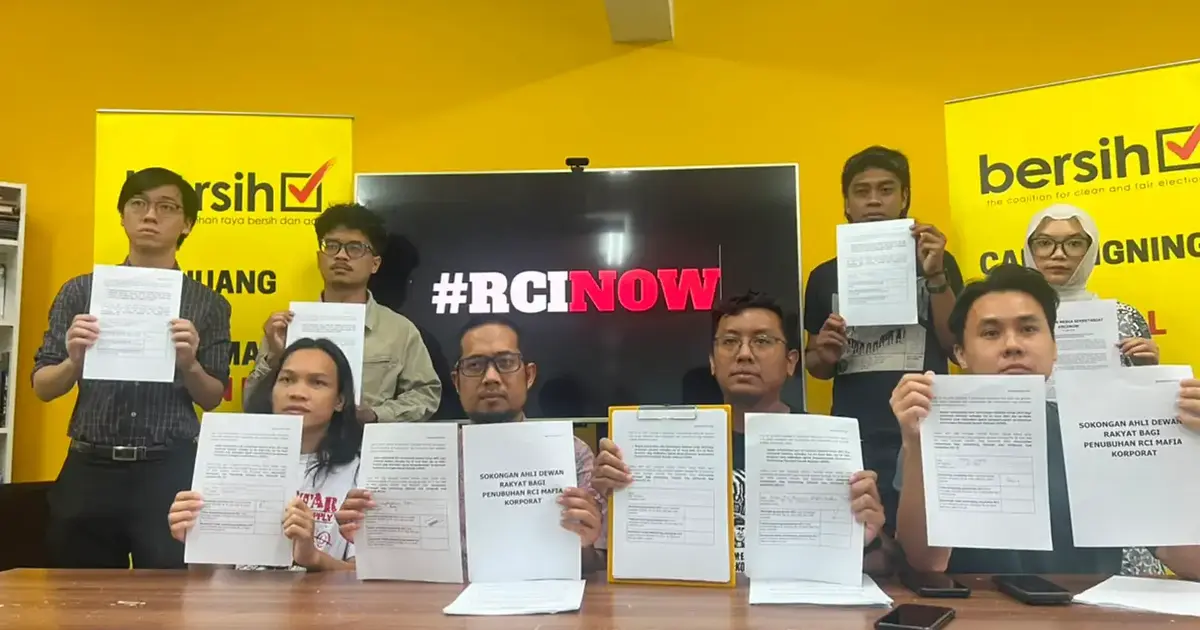
Malaysia's electoral watchdog Bersih has declared that 34 Members of Parliament spanning multiple political parties are backing calls for the establishment of a Royal Commission of Inquiry (RCI) to examine what it describes as 'corporate mafia' activities in the country. The MPs expressing support come from PKR, PAS, DAP, and Umno, signalling unusual cross-party consensus on an issue that typically divides Malaysia's fractious political landscape.
The claim of parliamentary backing represents a significant mobilisation of legislative support for the initiative, even as questions remain about the precise nature of the allegations and which corporate entities or individuals the investigation would target. The breadth of party representation reflects growing concern among lawmakers from disparate political camps that certain corporate practices have exceeded legitimate bounds, though the specifics of what constitutes 'corporate mafia' activity remain contentious.
Bersih's intervention into this debate underscores the electoral watchdog's expanded role beyond its traditional mandate of monitoring voting integrity. In recent years, the organisation has positioned itself as a broader civil society advocate, commenting on governance issues that extend well beyond election administration. This latest claim demonstrates how civil society groups in Malaysia increasingly attempt to marshal parliamentary support for specific policy outcomes.
The involvement of Umno MPs in supporting the RCI proposal carries particular significance. Long viewed as the political establishment's guarantor, Umno's parliamentary members lending their names to this initiative suggests that concerns about unaccountable corporate power transcend the traditional government-opposition binary that has structured Malaysian politics. Such cross-cutting issues can sometimes prove more resilient in gaining traction because they appeal to diverse constituencies.
PAS participation further complicates the political calculus. The Islamist party, which holds ministerial portfolios in the current administration, has historically emphasised moral and religious dimensions of governance. Its backing for an RCI focusing on corporate misconduct may reflect alignment with Islamic principles regarding economic justice and the regulation of business practices that fall outside acceptable ethical parameters.
DAP's support aligns more predictably with the party's historical emphasis on transparency and accountability mechanisms. The predominantly Chinese Democratic Action Party has consistently advocated for institutional checks on corporate and governmental power, making its involvement in this coalition relatively unsurprising. However, the party's participation alongside Umno and PAS in calling for the same investigative mechanism demonstrates a degree of pragmatic political alignment that transcends ethnic and ideological divides.
PKR's backing reflects the party's positioning as a reformist force within Malaysia's political ecosystem. Anwar Ibrahim's party has generally favoured enhanced accountability measures and investigative commissions as tools for addressing perceived governance failures. The party's stake in demonstrating commitment to reform-minded policies makes its support for this RCI proposal consistent with its broader political brand.
The practical implications of establishing such a commission remain uncertain. Royal Commissions of Inquiry in Malaysia carry investigative powers and can compel witness testimony, but their effectiveness ultimately depends on political will to act upon their findings. Previous RCIs examining contentious matters have sometimes languished, with their recommendations gathering dust as competing political interests prevented implementation.
Regional implications merit consideration as well. Southeast Asia has grappled extensively with questions about the relationship between business elites and political power, with concerns about unaccountable corporate actors recurring across the bloc. Malaysia's potential establishment of an RCI into corporate mafia activities could set precedent or spark similar movements in neighbouring countries wrestling with comparable governance challenges.
The timing of Bersih's announcement warrants scrutiny. Whether the claim of 34-MP support reflects spontaneous parliamentary sentiment or represents the culmination of organised lobbying efforts by the watchdog group remains unclear. The organisation's track record of activism suggests the former possibility, though the specific moment of public disclosure may have been strategically timed for maximum political impact.
Critical questions linger about whether this parliamentary backing will translate into concrete legislative action. Malaysia's parliamentary procedures require that such proposals navigate complex institutional machinery, and the actual introduction of legislation to establish an RCI remains a separate step from individual MPs expressing private support. The gap between expressed sympathy for an idea and its formal advancement through parliamentary channels frequently widens as competing priorities and political pressures reshape agendas.
Movement toward an RCI investigating corporate misconduct would represent a notable shift in Malaysian governance priorities, particularly if the investigation extends into sensitive territory touching on relationships between major corporations and political figures. The presence of Umno support suggests that any such commission might command sufficient parliamentary backing to proceed, provided political consensus holds and momentum is maintained through the legislative process.

