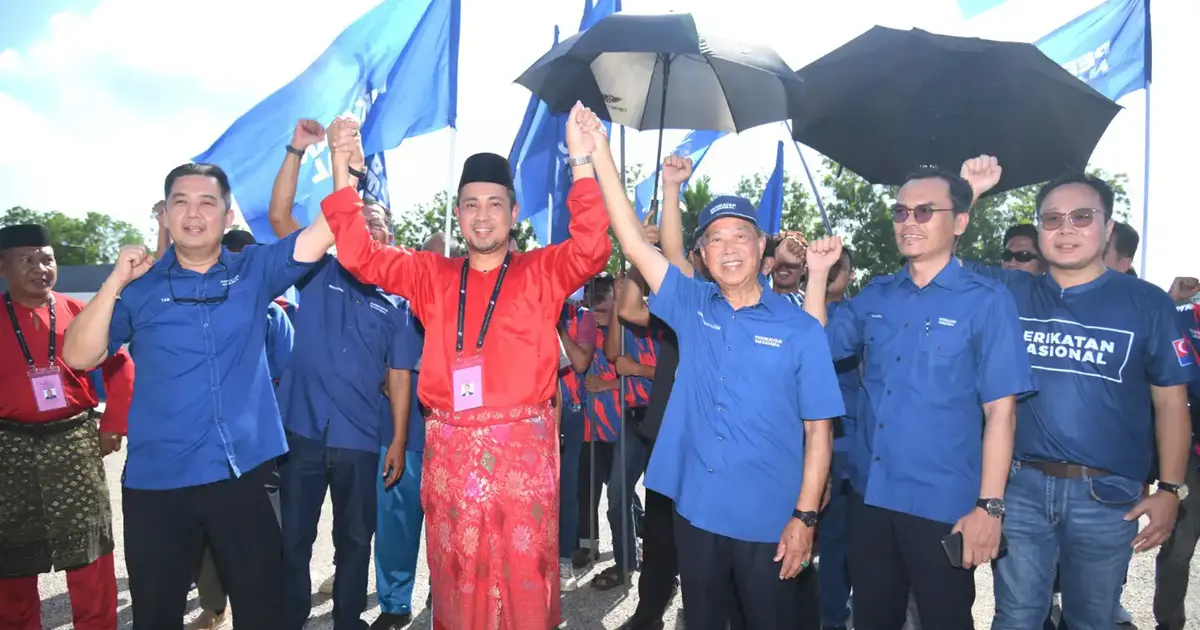
Bersatu's leadership has adopted a measured stance following PAS's decision to withhold organisational support, with party president Muhyiddin asserting that such developments do not undermine the broader coalition framework. The move reflects deepening tensions within Perikatan Nasional, the political alliance that has governed Malaysia since the 2022 general election, though public statements continue to project unity and stability.
Muhyiddin's remarks centre on a principle he characterises as fundamental to PN's operations: that collaboration among member parties should remain voluntary rather than coercive. This philosophy appears designed to legitimise what some observers view as a significant setback for Bersatu's organisational reach, particularly in areas where PAS traditionally commands substantial grassroots presence. By framing the issue as a matter of respecting autonomy, the Bersatu president avoids admitting weakness while maintaining the facade of coalition coherence.
The underlying dynamics reveal friction in a partnership that has faced mounting strain over resource allocation, leadership contests, and ideological direction. PAS, as the numerically largest component of PN with substantial rural and semi-urban representation, possesses considerable leverage within the coalition structure. Its reluctance to mobilise machinery suggests either disagreement over specific party or coalition strategies, or a calculated assertion of independence that signals shifting internal power calculations.
For Malaysian political observers, the situation underscores how contemporary coalition governance has become increasingly fragile despite formal agreements. Unlike traditional two-party systems or stable multi-party arrangements, Malaysia's recent coalitional experiments have repeatedly demonstrated vulnerability to internal disputes that public statements struggle to contain. The PN coalition's management of such tensions will significantly influence its capacity to face electoral challenges or navigate parliamentary pressures.
Bersatu's apparent acceptance of PAS's decision may also reflect strategic calculation rather than genuine equanimity. As the numerically smallest major component of PN, Bersatu depends on coalition partners to amplify its influence and resource base. Attempting to compel PAS cooperation could precipitate a deeper crisis, potentially fracturing PN entirely and eliminating Bersatu's path to maintaining federal power. Accepting the machinery withdrawal, while disappointing operationally, preserves the coalition structure that sustains Bersatu's political relevance.
The timing of PAS's machinery decision carries significance in Malaysia's electoral cycle and broader political context. Speculation continues regarding when the next general election might occur, with various analysts proposing timeframes ranging from late 2024 through 2025. Such uncertainty creates incentives for coalition members to maintain flexibility and protect their organisational independence, reducing willingness to commit resources to collective PN operations when their own party interests remain uncertain.
Regional considerations also merit attention. Southeast Asian coalition governments have witnessed similar patterns of internal tension, where formally aligned parties increasingly pursue divergent agendas while nominally remaining within shared frameworks. This reflects the difficulty of maintaining cohesion among partners with distinct voter bases, ideological commitments, and leadership ambitions—challenges that transcend Malaysia's specific context and suggest deeper structural tensions in contemporary Asian politics.
For ordinary Malaysians and voters, these internal coalition dynamics carry practical implications. Machinery withdrawals affect campaign visibility, grassroots mobilisation capacity, and ultimately electoral competitiveness. PAS's decision to withhold support could reshape electoral prospects in constituencies where the party traditionally operated ground networks, potentially benefiting opposition coalitions or other political actors who can more effectively mobilise remaining resources.
Muhyiddin's rhetoric emphasising mutual support as a PN principle, while simultaneously accepting its violation through non-enforcement, illustrates the delicate balance coalition leaders must maintain. They must acknowledge partner autonomy to avoid precipitating defections, yet simultaneously present coalitions as functional governing entities. This tension between formal rhetoric and operational reality increasingly characterises Malaysian political discourse, reflecting deeper uncertainties about governmental stability and coalition durability.
The broader question concerns PN's future viability as a governing coalition. While individual tensions might prove manageable, accumulating strains—machinery withdrawals, resource disputes, leadership contests—eventually undermine coalition functionality. Whether Muhyiddin and other PN leaders can reverse the trajectory of declining internal cohesion remains uncertain, though continued public expressions of calm confidence suggest at minimum an effort to prevent further deterioration that might provoke external intervention or accelerate political realignment.

