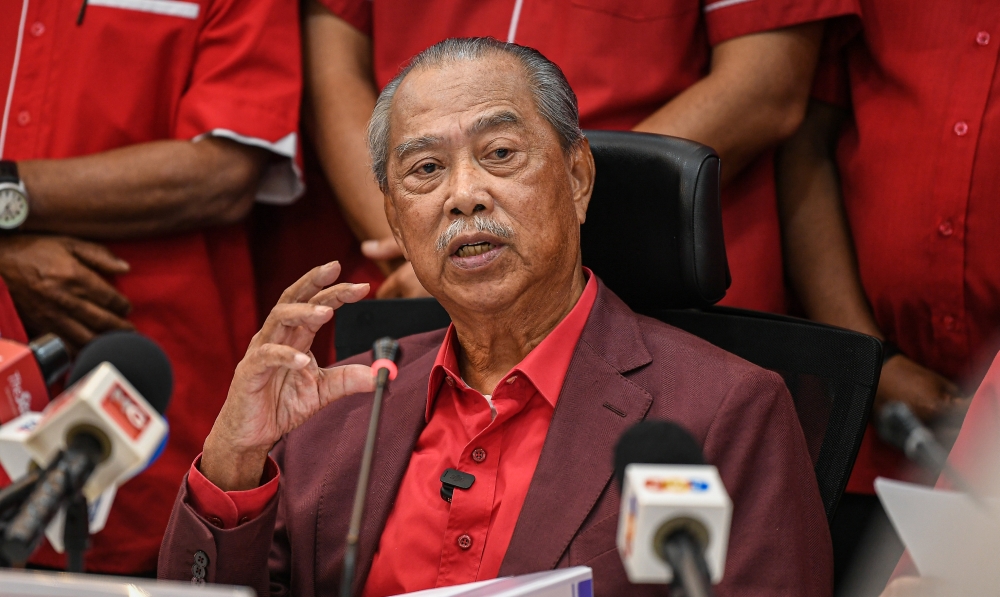
Parti Pribumi Bersatu Malaysia has signalled its intention to field candidates under its own party logo in the upcoming Negeri Sembilan state elections, a move that underscores mounting friction within the Perikatan Nasional opposition alliance and raises questions about the coalition's cohesion ahead of critical electoral contests.
Muhyiddin Yassin, the party president, made the announcement whilst addressing party members in Petaling Jaya, indicating that Bersatu would not utilise the PN logo for the Negeri Sembilan campaign. This departure from standard coalition practice suggests that disagreements over seat allocation, campaign strategy, or broader political direction have reached a critical juncture, forcing the party to chart its own electoral path in the state.
The decision reflects escalating tensions within the PN alliance, which comprises Bersatu, PAS, and several other political formations that have sought to position themselves as a credible alternative to the Pakatan Harapan government. Coalition arrangements typically involve negotiated seat divisions and unified branding to maximise voter appeal and prevent a fragmented opposition vote. Bersatu's move to contest independently signals that such consensus has broken down, at least in Negeri Sembilan.
For Malaysian political observers, the fracturing of the PN alliance carries substantial implications. A divided opposition risks splitting the anti-government vote, potentially benefiting the ruling Pakatan coalition despite widespread public dissatisfaction with various government policies. In Negeri Sembilan specifically, where electoral margins have historically been competitive, a three-way contest between Pakatan, PN, and Bersatu could fundamentally reshape the political landscape and determine which coalition governs the state.
Bersatu's independent campaign strategy also reflects the party's complex position within Malaysian politics. The party, founded by former Prime Minister Mahathir Mohamad and later led by Muhyiddin Yassin, has struggled to establish a stable electoral base and has repeatedly shifted alliances in pursuit of political relevance. Its earlier partnership with Pakatan Harapan ended acrimoniously, leading to the formation of the Perikatan Nasional coalition. Now, tensions within PN itself suggest that the party remains fundamentally unstable and prone to fragmentation when coalition interests diverge.
The Negeri Sembilan elections assume particular significance given the state's demographic diversity and its role as a bellwether for national political trends. Voters in the state span urban centres with stronger support for reform-oriented parties and rural constituencies where religious conservatism and establishment politics hold greater sway. A contest featuring multiple opposition poles could scramble traditional voting patterns and produce unexpected outcomes that reshape perceptions of each coalition's electoral viability.
Bersatu's decision may also presage similar moves in other state elections or the next general election, should tensions within PN continue to intensify. If other PN component parties follow suit and contest independently, the coalition would effectively cease to function as a coherent political force, returning Malaysian politics to a more fragmented landscape dominated by two primary coalitions competing for support alongside numerous smaller parties and independent candidates.
The timing of Muhyiddin's announcement warrants scrutiny. Coming amid broader discussions about electoral timing and political realignments across Malaysian states, the decision suggests that internal PN discussions about seat distributions and campaign parameters have reached an impasse. Whether this represents a temporary tactical disagreement capable of resolution or a terminal breakdown in the coalition's viability remains uncertain.
For Southeast Asian regional analysts, Malaysia's fractious opposition politics underscores the challenges facing multi-ethnic democracies with complex party systems. Unlike countries where opposition forces have consolidated into unified blocs, Malaysian politics remains characterised by frequent realignments, personality-driven politics, and coalition instability. These structural features complicate efforts to create coherent alternatives to incumbent governments and can inadvertently entrench ruling parties by fragmenting opposition support.
Bersatu's Negeri Sembilan strategy also carries implications for PAS, the other major PN component party. Should Bersatu perform credibly as an independent force, PAS might face pressure from party members questioning the value of maintaining the PN alliance. Conversely, if Bersatu's independent campaign falters, the party may find itself weakened and forced into even less favourable coalition arrangements in subsequent elections.
The coming Negeri Sembilan elections will therefore function as a critical test of opposition coalition durability in Malaysia. The results will likely influence calculations within both PN and Pakatan regarding campaign strategies, seat allocations, and coalition partnerships for state elections scheduled elsewhere. Regardless of electoral outcomes, Bersatu's decision to campaign independently represents a significant moment in the ongoing evolution of Malaysian opposition politics and highlights the deep uncertainties characterising the country's political trajectory.

