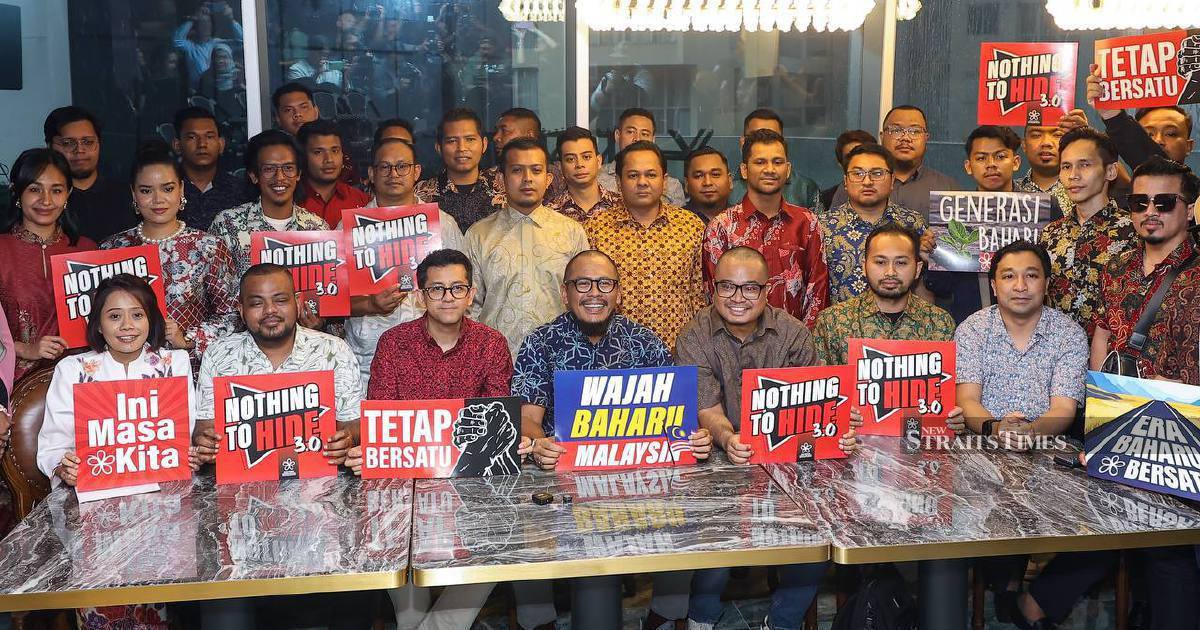
Tensions that have lately strained the relationship between PAS and Bersatu within the Perikatan Nasional coalition appear to be easing, according to a senior figure from the Bersatu camp. Mohd Ashraf Mustaqim Abdul Munir, who represents the Kota Siputeh state constituency, has indicated that there remains genuine scope for the two parties to move past their recent disagreements and restore functional cooperation. His assessment suggests that despite outward friction, underlying bonds may yet prove resilient enough to sustain the partnership.
The Kota Siputeh assemblyman drew on a domestic analogy to frame his understanding of the current state of play. He characterised the recent spate of disagreements between PAS and Bersatu as analogous to the inevitable bickering that occurs within a marriage where both partners continue to share a home despite periodic conflict. The comparison carries particular weight, since it implies that fundamental incompatibility has not emerged—rather, the tensions reflect the natural friction inherent in any intimate political arrangement operating under considerable pressure.
Within Malaysian politics, the Perikatan Nasional alliance represents a consequential force that has substantially reshaped the electoral landscape since its formation. The coalition brings together parties with distinct ideological orientations and regional power bases, making internal cohesion perpetually challenging. PAS, with its robust support particularly in the East Coast states and among rural constituencies, brings substantial grassroots mobilisation capacity. Bersatu, meanwhile, draws its strength from Malay-majority areas and commands influence within the federal apparatus. When either party signals strain in the relationship, observers immediately gauge implications for the stability of the entire governing coalition.
The timing of such reconciliation signals matters considerably for Malaysian politics. Both parties maintain significant parliamentary representation, and any serious rupture could fundamentally alter the arithmetic on which current governance arrangements depend. Episodes of public disagreement, whether over policy priorities, resource allocation, or electoral positioning, generate uncertainty that ripples through financial markets and the bureaucracy. Clear statements from influential figures that disputes are manageable therefore serve an important stabilisation function.
PAS has traditionally occupied a distinct ideological position within Malaysia's political spectrum, emphasising Islamic values and governance frameworks. The party's electoral base has expanded markedly in recent years, particularly following the 2022 general election when it achieved unprecedented parliamentary representation. This growth has correspondingly elevated its leverage within any coalition arrangement. Bersatu emerged more recently, founded by Mahathir Mohamad and initially built around Malay-Muslim interests alongside anti-corruption messaging. The two parties share overlapping voter demographics, which creates both alignment and competition.
The grievances that periodically surface between coalition partners typically revolve around matters of electoral strategy and the distribution of campaign resources. When contesting certain constituencies, both PAS and Bersatu harbour aspirations, generating friction over which party should field candidates. Additionally, ministerial portfolios and positions within state governments remain sources of negotiation and occasionally resentment. Whether either party receives recognition proportional to its electoral contribution becomes a persistent point of contention.
For Malaysian voters observing these manoeuvres, the underlying question concerns governance stability. A coalition perpetually on the verge of fracture struggles to pursue coherent long-term policy agendas. Infrastructure projects, economic reforms, and institutional initiatives all require sustained political will and cross-party coordination. When senior figures publicly reassure the electorate that internal disputes remain manageable, they implicitly acknowledge that fundamental governance capacity remains intact. Conversely, if such reassurances prove hollow and genuine ruptures occur, the resulting political instability invariably cascades through other institutional domains.
The Perikatan Nasional construct itself has proven more durable than many initial sceptics anticipated. The coalition survived the political turmoil of 2022-2023, reorganised its internal structures, and established itself as a formidable political force. Yet this durability has never been without strain. Public disputes between coalition partners, statements of grievance, and periodic talk of realignment have featured regularly. Against this backdrop, statements from figures like Mohd Ashraf Mustaqim Abdul Munir suggesting that recent tensions remain surmountable should be understood as attempts to normalise internal disagreement while reinforcing coalition cohesion.
From a Southeast Asian perspective, Malaysian coalition politics demonstrates how multi-party democracies navigate the perpetual tension between ideological distinctness and pragmatic alliance-building. Thailand, Indonesia, and the Philippines all feature coalitions where parties with divergent interests must cooperate to exercise power. The strategies deployed to maintain such arrangements—public reassurance, private negotiation, carefully calibrated statements—appear remarkably consistent across the region. The Bersatu-PAS dynamic, therefore, represents a microcosm of broader democratic challenges across Southeast Asia.
For Bersatu specifically, maintaining coalition stability carries particular significance. The party's trajectory from recent founding to kingmaker status within federal politics has been meteoric. Bersatu's influence depends substantially on remaining indispensable to wider coalition arrangements. Any rupture with PAS might diminish Bersatu's relevance, whereas sustained partnership—even amid periodic tensions—preserves the party's pivotal positioning. This structural dynamic undergirds Mohd Ashraf Mustaqim Abdul Munir's public optimism regarding reconciliation prospects.
The broader implication of such reassurances concerns the predictability of Malaysian politics over the medium term. Markets, investors, and the bureaucratic apparatus all benefit from coalition stability and clear signals that fundamental rupture remains unlikely. Conversely, politicians periodically invoke coalition tensions to signal demands for better treatment or resource allocation. Understanding these dynamics requires recognising that some degree of internal friction actually sustains coalition politics—the absence of all disagreement would suggest either suppressed grievances or fundamentally mismatched partners. The challenge lies in maintaining a productive level of internal debate whilst preserving the cohesion necessary for governance.

