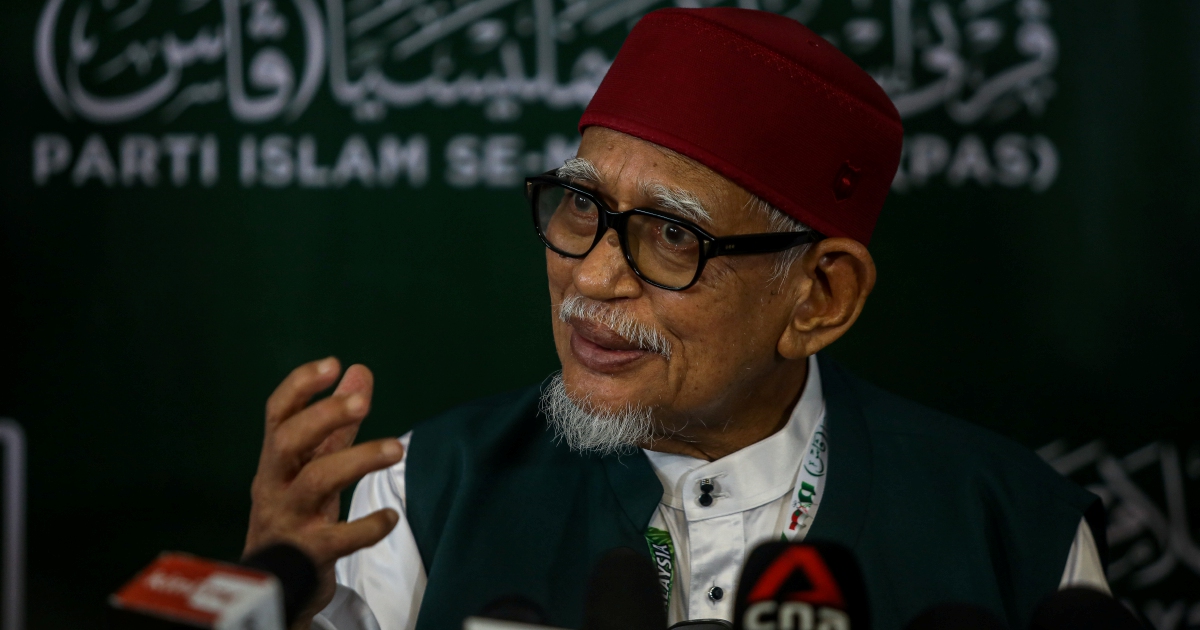
Perikatan Nasional has moved swiftly to sever ties with Bersatu, with the coalition's leadership confirming that the party's membership status has been automatically revoked in the wake of Tan Sri Muhyiddin Yassin's recent announcement regarding the formation of a new political coalition. The decision marks a significant rupture within Malaysia's opposition landscape and reflects deepening fractures among parties that have previously sought unified political positioning against the ruling coalition.
The automatic revocation mechanism underscores the stringent protocols governing coalition membership within Malaysia's fractious political environment. By declaring its intention to establish an alternative alliance structure, Bersatu crossed what appears to be a clearly defined threshold that triggered immediate consequences under Perikatan Nasional's constitutional framework. This procedural clarity suggests that the coalition's leadership had anticipated such a possibility and established predetermined safeguards to protect the bloc's institutional integrity.
Muhyiddin's move to construct a new coalition platform represents a calculated political gambit that reflects broader strategic calculations within opposition circles. Rather than continuing as a supporting member within Perikatan Nasional's existing structure, Bersatu's leadership has chosen to position itself as an independent architect of political realignment. This shift carries profound implications for how Malaysia's fractious opposition landscape might reorganise itself in the lead-up to future electoral contests and parliamentary maneuvering.
The timing of this development arrives amid increasingly complex negotiations surrounding coalition-building and power-sharing arrangements across Malaysian politics. Opposition parties have grappled persistently with questions about representation, leadership distribution, and policy harmonisation. Bersatu's decision to pursue an independent coalition pathway suggests that existing arrangements have failed to satisfy its leadership's political ambitions or strategic vision for the party's future trajectory.
For observers of Malaysian politics, this development illustrates the inherent instability within broad-based coalitions that lack strong ideological coherence or institutional mechanisms binding member parties to collective decision-making. Perikatan Nasional, despite its previous electoral performance and parliamentary significance, has struggled to maintain unified positioning as individual parties navigate competing interests and leadership ambitions. The loss of Bersatu, a substantial parliamentary force, substantially diminishes the coalition's capacity to present itself as a viable alternative governing arrangement.
The regional implications warrant careful consideration. Across Southeast Asia, opposition coalitions frequently face similar challenges regarding cohesion and longevity. Malaysia's experience with Perikatan Nasional's fragmentation provides instructive lessons about the precarious foundations upon which multi-party alliances are constructed. When member parties prioritise short-term strategic advantages over coalition loyalty, entire political arrangements risk sudden collapse or transformation.
Bersatu's repositioning also reflects internal dynamics within the party itself. Muhyiddin's leadership has consistently pursued an independent political brand and demonstrated reluctance to subordinate party interests to broader coalition frameworks. The move toward constructing an alternative coalition suggests a leader confident in his ability to attract political partners and construct viable political arrangements outside established structures. This confidence may be justified by Bersatu's parliamentary representation and its continuing appeal within certain demographic constituencies.
The practical consequences of this separation will unfold across multiple dimensions. Legislatively, the coalition's numerical strength has been substantially diminished, affecting its capacity to challenge government initiatives or construct alternative parliamentary majorities. Organisationally, the separation requires coordination between various administrative structures that previously operated under unified frameworks. Politically, individual Bersatu members of parliament and state representatives must navigate shifting allegiances and recalibrate their parliamentary and constituent strategies.
Malaysian political observers note that such ruptures, while dramatic, need not be permanent. Political coalitions have historically reformed in Malaysia following periods of separation when circumstances favoured renewed cooperation or when external pressures necessitated unified positioning. Whether Perikatan Nasional and Bersatu might eventually reconstruct their working relationship depends substantially on how the new coalition formation proceeds and whether Muhyiddin's initiative successfully attracts additional political partners or parliamentary support.
The broader question confronting Malaysia's opposition concerns whether fragmentation into multiple competing coalitions ultimately strengthens or weakens their collective capacity to influence governance and electoral outcomes. A splintered opposition potentially allows the ruling coalition greater flexibility in parliament, whereas unified opposition platforms can concentrate parliamentary leverage. Bersatu's departure from Perikatan Nasional may reflect leadership confidence that independent positioning offers superior strategic opportunities, though such calculations frequently prove miscalibrated in Malaysia's volatile political environment.
Looking forward, the consolidation of Malaysia's political landscape will depend on how various opposition factions navigate competing priorities and whether they identify sufficient common ground to support either renewed coalescence or managed coexistence. The departure of Bersatu from Perikatan Nasional represents merely one chapter in Malaysia's continuing political reorganisation, with additional realignments potentially emerging as parties reassess their positioning and prospects within an evolving parliamentary context.

