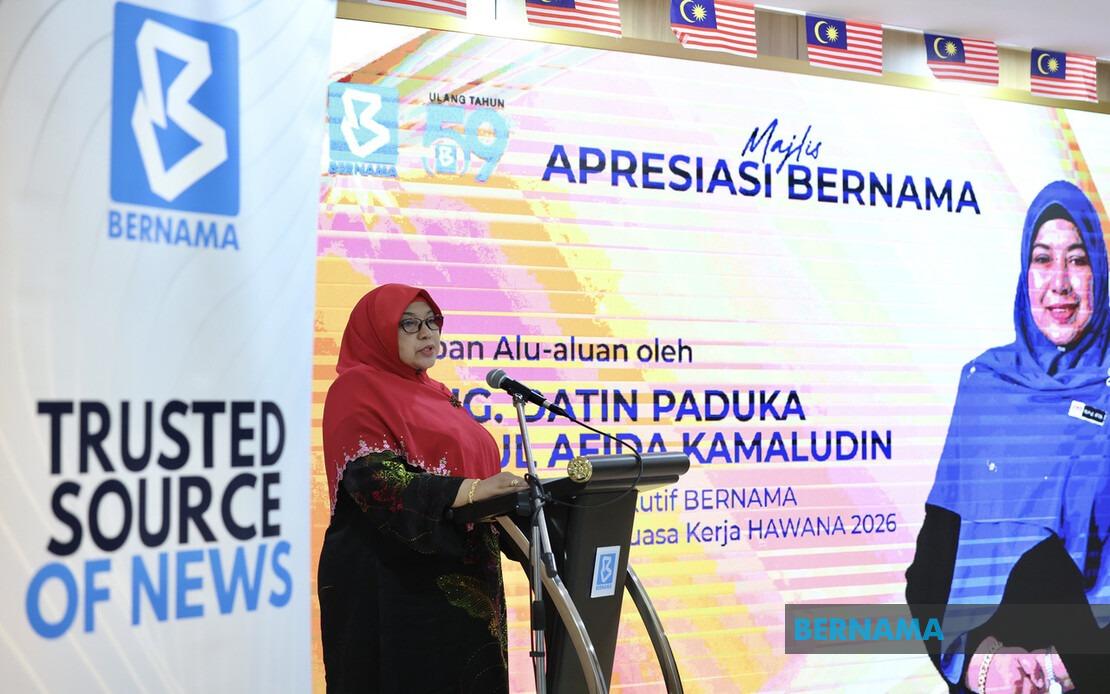
The Malaysian National News Agency, commonly known as Bernama, has committed itself to deepening its contribution to fostering a sense of national pride among Malaysians in the weeks leading up to the country's National Day festivities. Operating under the purview of the Ministry of Communications, the agency views its mission as extending beyond traditional news dissemination to encompass a broader responsibility in rallying citizens around shared national values and government messaging.
Datin Paduka Nur-ul Afida Kamaludin, the chief executive officer of Bernama, articulated this expanded mandate during remarks made at an in-house appreciation ceremony held at the agency's headquarters in Kuala Lumpur. She emphasized that Bernama's position within the government structure obligates it to actively champion ministerial programmes and initiatives, ensuring they reach the public through credible and coordinated information channels. This dual role—balancing journalistic standards with government coordination—underscores how Malaysia's state-backed news infrastructure operates as both a media organization and a tool for advancing government policy objectives.
Central to Bernama's current patriotic campaign is the "Satu Rumah, Satu Jalur Gemilang" initiative, which translates to "One Home, One Jalur Gemilang," invoking the national flag as a unifying symbol. The agency has decorated its own premises with the flag following the Prime Minister's formal launch of National Month activities in Ipoh, setting an example it hopes will cascade throughout the organization and into employees' personal lives. By encouraging staff to fly the Jalur Gemilang at their homes, Bernama is attempting to blur the line between institutional and personal patriotic expression, leveraging its workforce as ambassadors of national sentiment.
The appreciation ceremony served multiple communicative functions simultaneously. Beyond recognizing employee contributions, the event functioned as a platform for launching the National Day theme song, composed by musician Faizal Tahir, and for symbolically distributing the national flag to representatives of Bernama's principal departments. These ceremonial gestures—while seemingly ceremonial in nature—carry significance within Malaysia's political culture, where visible displays of patriotism and national symbols carry both practical and symbolic weight in public discourse.
Nur-ul Afida noted that orchestrating such company-wide gatherings presents logistical challenges for a geographically dispersed organization, necessitating the consolidation of multiple initiatives into a single event. This practical consideration reveals the organizational reality behind patriotic campaigns in large state institutions: the need to balance participatory engagement with operational efficiency. The decision to combine various programmes into one ceremony, culminating in the Jalur Gemilang distribution, reflects how government agencies optimize their internal communications to maximize impact while managing resource constraints.
The campaign also illuminates the relationship between Malaysia's state media apparatus and broader national narratives. Bernama's explicit focus on instilling patriotism among its workforce suggests recognition that media professionals themselves must embody and project the values they communicate to the public. This internal-external messaging strategy assumes that authentic institutional patriotism will translate into more convincing public communication of national themes, creating a reinforcement loop between organizational culture and media output.
For Southeast Asian observers and Malaysian stakeholders, Bernama's campaign reflects a consistent approach by Malaysian authorities to use official channels and state institutions in promoting national cohesion, particularly during significant commemorative periods. National Day celebrations traditionally serve as focal points for government messaging about unity, progress, and shared identity, and Bernama's expanded role in amplifying these themes demonstrates how state institutions coordinate messaging across multiple platforms and through various stakeholder groups.
The timing of this initiative carries additional resonance given Malaysia's ongoing efforts to strengthen national identity across its ethnically and religiously diverse population. By positioning patriotic expression as an achievable, domestic-scale action—encouraging citizens to display the flag at home—Bernama and the government frame patriotism as an accessible, non-controversial form of civic participation. This approach avoids more contentious expressions of national identity while providing tangible focal points around which citizens can organize their support.
Looking forward, the success of such initiatives will depend partly on how authentically they resonate beyond institutional boundaries. While Bernama's internal campaign can effectively coordinate messaging and demonstrate organizational alignment with national priorities, the challenge remains in translating workplace patriotism into genuine public engagement. The agency's role as a government-aligned news organization positions it uniquely to amplify patriotic messaging, though its effectiveness ultimately rests on maintaining credibility with audiences who increasingly access information through diverse and decentralized channels.

