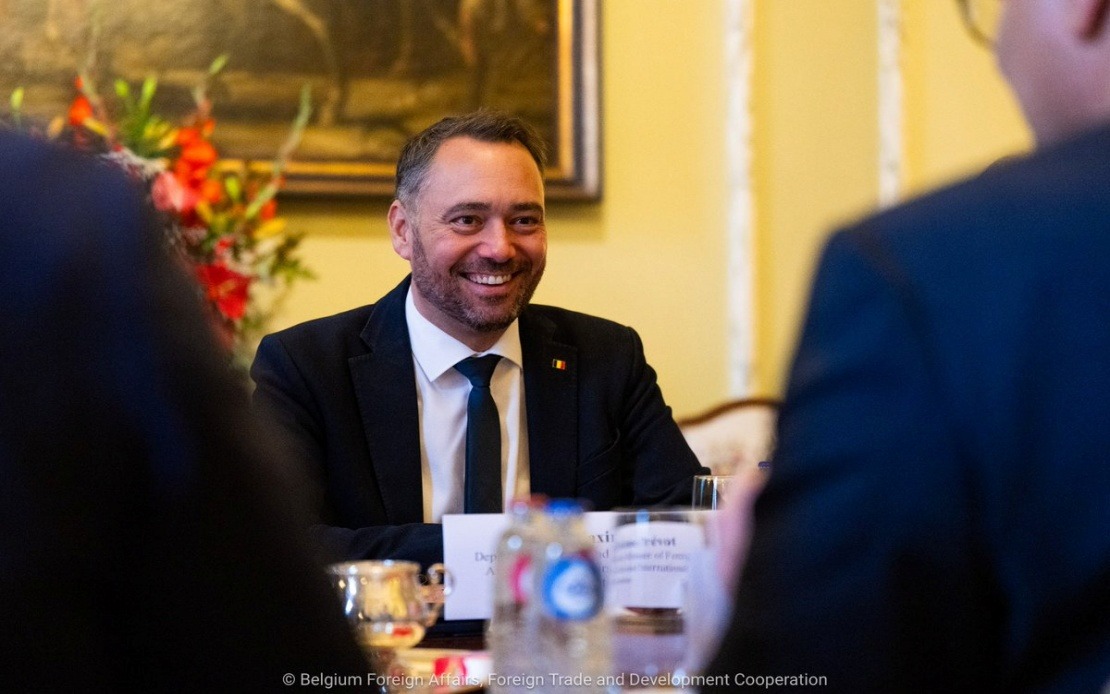
Belgium's Deputy Prime Minister and Foreign, European Affairs and Development Cooperation Minister Maxime Prévot arrives in Malaysia on Thursday for a two-day visit centred on strengthening ties in clean energy and strategic sectors. The trip represents Prévot's inaugural visit to the country since his appointment in February 2025 and underscores Belgium's growing interest in deepening engagement with Southeast Asia's largest economy on energy transition matters.
The Belgian minister will hold substantive talks with Malaysian Deputy Prime Minister Datuk Seri Fadillah Yusof on July 2, whose portfolio as Energy Transition and Water Transformation Minister makes him the natural counterpart for discussions spanning renewable energy development, rare earth mineral supply chains, and halal industry expansion. This alignment of ministerial responsibilities signals that both governments view the conversation as strategically significant rather than ceremonial.
Malaysia occupies an increasingly important position in global renewable energy supply chains and rare earth element processing. For Belgium and the broader European Union, securing reliable partnerships with Southeast Asian nations on these fronts is crucial as Europe accelerates its green energy transition and seeks to reduce dependency on Chinese rare earth supplies. Malaysia's abundant natural resources and established manufacturing expertise make it an attractive partner, while European technological know-how and investment capital can unlock new opportunities for Malaysian industry.
Beyond energy matters, the inclusion of halal cooperation in the agenda reflects Malaysia's aspirations to cement its position as a global halal hub. Belgium, with its significant Muslim population and role as host to European institutions, represents a gateway to European markets for Malaysian halal-certified products and services. This sector has grown substantially and offers mutual benefits as consumer demand for certified halal goods rises across Europe.
President Prévot's schedule extends beyond formal bilateral meetings. He will deliver a ministerial address at the 39th Asia-Pacific Roundtable, a prestigious annual gathering organised by the Institute of Strategic and International Studies (ISIS) Malaysia that brings together policymakers, academics, and strategic thinkers from across the region. His participation provides a platform to outline Belgium's vision for European engagement with Asia-Pacific nations and to elevate the profile of bilateral initiatives being discussed.
The visit will also include an audience with the Sultan of Perak, Sultan Nazrin Muizzuddin Shah, a courtesy that emphasises the diplomatic significance Malaysia places on the engagement and reflects protocols for high-level foreign visits. Such ceremonial elements, while traditional, underscore the formal nature of the bilateral relationship and Belgium's respect for Malaysian institutions.
Bilateral trade between the two nations reached RM9.74 billion in 2025, demonstrating the substantial economic foundation underpinning diplomatic relations. Malaysian exports to Belgium totalled RM6.85 billion while imports amounted to RM2.89 billion, indicating Malaysia's role as a significant supplier of goods to the Belgian market. This trade imbalance partly reflects Malaysia's strengths in manufacturing and resource-based sectors that Belgium imports, yet it also hints at untapped potential for enhanced European investment in Malaysia.
Belgian business confidence in Malaysia's investment environment remains robust. As of 2025, Belgian firms had secured approval for 67 projects valued at RM5.1 billion in aggregate investment, with these ventures expected to generate approximately 4,605 employment opportunities. These figures suggest Belgium ranks among Malaysia's meaningful foreign investors and that the business community views the country as a stable, attractive destination. The visit may catalyse discussions on additional investment in renewable energy infrastructure, manufacturing facilities supporting the energy transition, and halal-certified production.
The timing of Prévot's visit is strategically relevant. Global energy markets remain volatile, supply chain resilience has emerged as a central policy concern for developed economies, and the race to secure rare earth supplies intensifies. Malaysia's government has been proactive in positioning the country as a reliable partner for countries seeking to diversify supply chains away from geopolitical risks. Belgium's engagement signals European recognition of Malaysia's strategic importance and hints at deeper cooperation frameworks that could extend beyond energy to encompass technology transfer, skills development, and joint research initiatives.
This visit also unfolds against the backdrop of evolving Malaysia-European Union relations, which the two sides will review during bilateral discussions. The EU remains Malaysia's significant trading partner and investor, yet the relationship has experienced periodic tensions over labour standards, environmental concerns, and trade disputes. Prévot's visit offers an opportunity to reset discussions and identify areas of mutual benefit that transcend historical friction points.
For Malaysia, deepening ties with Belgium carries broader implications for its positioning within Asian geopolitics and global supply chains. As countries worldwide accelerate energy transitions and seek to build resilience in critical mineral supplies, Malaysia's role as a producer and processor strengthens its diplomatic leverage and attractiveness as an investment destination. Strategic partnerships with developed economies like Belgium enhance Malaysia's capacity to attract capital, technology, and expertise while simultaneously supporting its own development ambitions in the clean energy and advanced manufacturing sectors.

