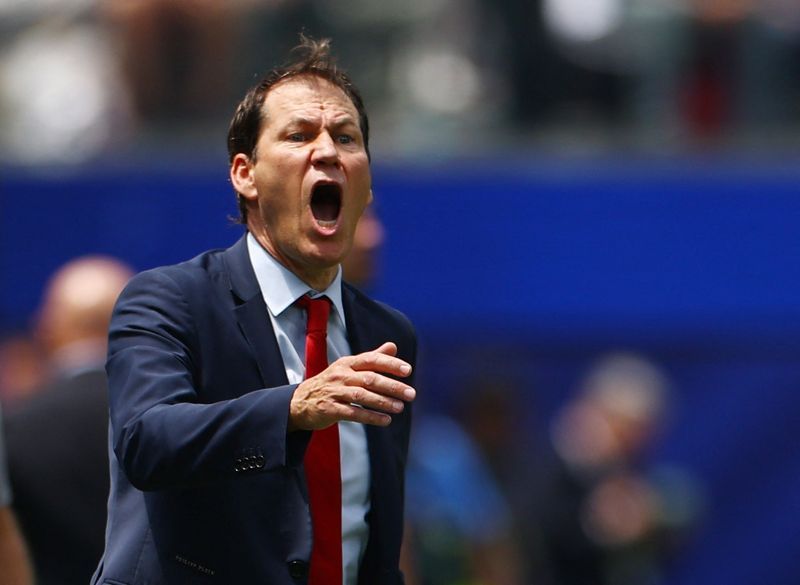
Belgium's World Cup campaign came to a controversial end on Friday when coach Rudi Garcia made a substitution decision that has since become the focal point of intense criticism from analysts and observers alike. With the match against Spain hanging in the balance during the quarter-final, Garcia withdrew first-choice goalkeeper Thibaut Courtois in the 71st minute despite the player's conviction that he could continue despite a minor leg complaint. The decision proved costly when replacement Senne Lammens failed to secure a low shot from Pau Cubarsi, allowing Mikel Merino to capitalise in the 86th minute and secure Spain's 2-1 victory. The substitution has now become the dominant narrative surrounding Belgium's World Cup exit, overshadowing other aspects of their tournament performance and casting doubt on Garcia's position as the team's manager.
Garcia's rationale for the substitution centred on his stated philosophy that only fully fit players should take the field, a principle he has maintained consistently since assuming the coaching position. The Frenchman argued that Courtois was essential to Belgium's tactical approach, particularly for his long-ball distribution to attacking players like Charles De Ketelaere and Romelu Lukaku. By removing the goalkeeper, Garcia believed he was preventing a potentially serious injury that could worsen and affect the team's overall performance in subsequent matches. However, this explanation did little to quell the backlash from Belgian football commentators and analysts who questioned whether such a rigid approach serves the team's interests in a knockout competition where every decision carries immense consequence.
The criticism from Belgian media has been particularly scathing. Prominent commentator Peter Vandenbempt publicly expressed bewilderment at the decision, noting on Belgian radio that removing the world's best goalkeeper during a World Cup quarter-final over concerns about his kicking ability seemed fundamentally flawed. Vandenbempt argued that a player of Courtois's calibre would surely understand the limitations of his own fitness and make appropriate decisions on the field rather than risk serious injury. This perspective resonates with many who viewed Garcia's approach as excessively cautious and dogmatic, prioritising an abstract principle over the practical realities of competitive football at the highest level.
Garcia's appointment at the start of 2025 came with a clear mandate to revitalise a Belgian squad that had suffered under the tenure of his predecessor, Domenico Tedesco, whose reign was widely characterised as both toxic and demoralising. The 62-year-old Frenchman brought significant pedigree to the role, having won the Ligue 1 title with Lille in 2011 and established himself as a respected tactician across European football. His initial objectives—maintaining Belgium's status in the top tier of the Nations League and securing World Cup qualification—were both achieved, providing legitimate grounds for optimism about his longer-term vision for the team.
However, the narrow loss to Spain has brought deeper questions about Garcia's tactical acumen and substitution philosophy into sharp relief. Throughout the World Cup, Belgium's performance was marked by inconsistency and moments of vulnerability that suggested underlying problems with team coherence and strategic execution. The squad scraped through their group stage despite draws against Egypt and Iran, relying on a victory over New Zealand to secure top spot. Their round-of-32 encounter with Senegal proved particularly revealing, with Garcia withdrawing key players when Belgium trailed 2-0, a decision that preceded an unlikely comeback that may have owed as much to defensive lapses by their opponents as to strategic brilliance by the Belgian management.
Yet Garcia can point to genuine achievements during the tournament that demonstrate tactical competence and effective squad management. Belgium's emphatic 4-1 victory over co-host nation the United States illustrated their capacity for dominant performances, while the integration of younger players like Nathan Ngoy and Nicolas Raskin provided evidence of successful player development and rotation planning. These moments of quality and the introduction of fresh talent suggest a coach capable of bringing energy and new ideas to an ageing squad preparing for the 2028 European Championship.
The fundamental challenge Garcia now faces is that one consequence—the loss to Spain and the accompanying substitution controversy—has overshadowed these positive elements in the minds of Belgian football observers and federation officials. In the high-pressure environment of international football, particularly in knockout competitions, a single decisive moment can define a manager's legacy and influence the trajectory of his career. The Belgian Football Association faces a significant decision as Garcia's contract expires at the end of this month and is due for review by federation officials.
The broader context for Belgium's strategic direction must also be considered. The federation is tasked with building a competitive team capable of challenging for the 2028 European Championship, a tournament that offers a genuine opportunity for silverware given the country's squad depth and traditional strength in European competition. Garcia's management style—characterised by emphasis on fitness standards, structured tactical principles, and controlled player rotation—represents one approach to achieving this objective. However, questions about whether his rigidity serves the team's interests, particularly in moments requiring tactical flexibility, remain unresolved.
Garcia's record since taking the position stands at 12 wins, six draws, and two defeats across 20 international matches, a respectable record that suggests basic competence. Yet statistics alone cannot capture the controversy surrounding his decision-making or resolve the fundamental question of whether his philosophical approach aligns with the demands of modern competitive football. As federation officials contemplate his future, they must weigh his achievements in qualification and tournament progression against the persistent tactical questions and the symbolic significance of his most disputed decision.
The coming weeks will prove critical for determining Belgium's path forward. Federation officials must decide whether to retain Garcia and allow him to implement his long-term vision or seek alternative leadership that might better align with their ambitions for the 2028 Championship and beyond. The Courtois substitution, regardless of its practical justification, has become a lightning rod for broader concerns about Garcia's methods and philosophy. How the Belgian Football Association responds will signal whether they view this moment as a learning experience for a coach still settling into his role or as evidence of fundamental limitations in his approach to managing elite international football.

