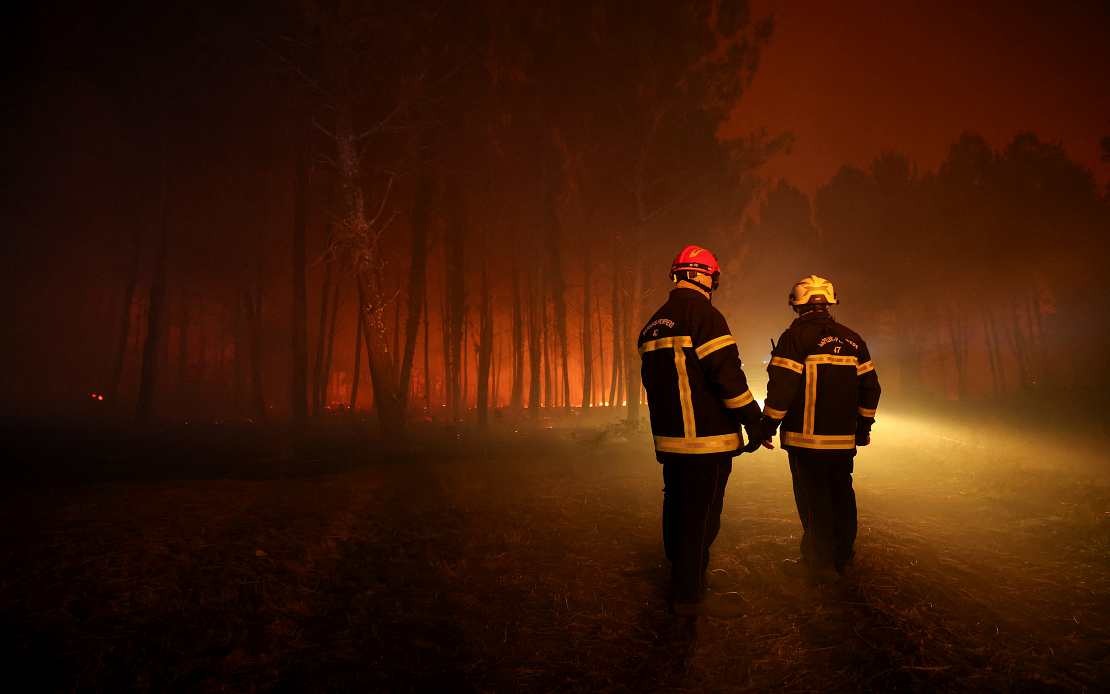
Eastern Belgium is grappling with an unprecedented natural disaster as a massive wildfire continues to rage through the High Fens nature reserve near the German border, marking the country's most severe fire crisis in recorded history. By Saturday evening, the flames had consumed approximately 2,700 hectares of terrain, nearly doubling the affected area from earlier in the day as changing wind patterns accelerated the spread. The blaze erupted around 2 pm on Friday and has forced approximately 600 residents from surrounding communities to abandon their homes, with additional evacuations of tourists and a children's summer camp underway as smoke and shifting winds threaten neighbouring areas.
The scale of this disaster far exceeds Belgium's previous wildfire records. Historical data from the European Forest Fire Information System indicates that a significant fire in 2011 destroyed nearly 1,400 hectares—less than half the current devastation. Local authorities have officially confirmed this as the largest wildfire ever documented in Belgium, signalling an escalation in extreme weather events across Northern Europe. The High Fens region, straddling the Belgian-German border in Liege province, is known for its unique ecological characteristics, making the environmental impact of this fire particularly consequential for the area's biodiversity and landscape.
Fighting the blaze has proven extraordinarily challenging due to the rugged and unforgiving topography of the nature reserve. Emergency crews have encountered significant obstacles in deploying conventional firefighting techniques at close range, as the terrain restricts access and mobility for firefighting equipment and personnel. Wind conditions have compounded these difficulties, continuously shifting the fire's direction and intensity while simultaneously hampering coordinated suppression efforts. The combination of physical barriers and meteorological factors has transformed what might otherwise be manageable into a crisis requiring unprecedented international cooperation.
Temperature extremes across the region have created ideal conditions for rapid fire propagation. Belgium experienced an intense heat wave throughout the week, with temperatures peaking at 37 degrees Celsius in certain areas on Friday—precisely when the wildfire began. These scorching conditions have dried vegetation and reduced soil moisture levels, transforming the landscape into a tinderbox where flames spread with alarming velocity. Climate scientists have long warned that such extreme heat events would become more frequent and intense across Europe, and this Belgian fire exemplifies how climate-driven conditions are already manifesting in catastrophic incidents.
Recognising the severity of the situation, Belgium has invoked the European Union Civil Protection Mechanism, a significant step that signals the nation's need for multinational assistance. The mechanism expedited the deployment of international firefighting resources, with aircraft arriving from the Czech Republic, Sweden, and the Netherlands by Saturday. This coordinated European response reflects both the scale of the emergency and the principle of mutual aid that underpins EU crisis management. For smaller nations like Belgium, access to such mechanisms provides critical reinforcement when domestic resources prove insufficient.
The multinational firefighting effort extends beyond aerial support. Firefighting teams from across Belgium have mobilised comprehensively, joined by personnel from neighbouring Germany and Luxembourg who recognise the threat posed by cross-border fire spread and understand their shared interest in containing the blaze. Furthermore, the Belgian military has been deployed to support civilian firefighting operations, and local farmers have contributed their knowledge of the terrain and resources. This mobilisation represents a rare moment of unified action where civilian, military, and international actors focus entirely on a single objective: halting the fire's advance.
The evacuation of approximately 600 residents has been executed as a precautionary measure to protect lives as the unpredictable fire approaches populated areas. Tourists and visitors in the High Fens region—a popular destination for hiking and outdoor recreation—have been advised to leave immediately, while a children's summer camp was evacuated as a matter of urgency. The speed and scale of these evacuations required rapid decision-making and coordination among local authorities, emergency services, and tourism operators.
For Malaysia and Southeast Asia, this Belgian wildfire offers instructive lessons about climate resilience and disaster preparedness. Southeast Asian nations regularly confront their own wildfire challenges, particularly during dry seasons when vegetation becomes highly flammable and smoke pollution creates transboundary air quality crises affecting millions. The Belgian experience demonstrates that even wealthy, well-developed European nations with advanced emergency infrastructure can be overwhelmed by climate-driven natural disasters. This underscores the necessity for Southeast Asian governments to invest robustly in firefighting capacity, early warning systems, and regional cooperation mechanisms that transcend national boundaries.
The environmental consequences of this fire will persist long after flames are extinguished. The High Fens nature reserve supports distinctive ecosystems adapted to specific climatic and soil conditions; widespread burning will destroy habitat, eliminate species, and alter the reserve's ecological character for decades. Soil degradation may trigger erosion and hydrological changes affecting downstream communities and water resources. The carbon released into the atmosphere contributes to global warming, creating a feedback loop where climate change drives fires that intensify climate change—a cycle that demands urgent global mitigation efforts.
Looking forward, this disaster will likely prompt Belgium and other European Union nations to reassess wildfire preparedness strategies and climate adaptation policies. The unprecedented nature of this fire suggests that historical baseline data may no longer reliably guide resource allocation and risk assessment. Policymakers will need to contemplate whether current prevention, suppression, and recovery frameworks are adequate for a climate future where such catastrophic events may occur with increased frequency. For a densely populated region of Europe, that realisation carries sobering implications.

