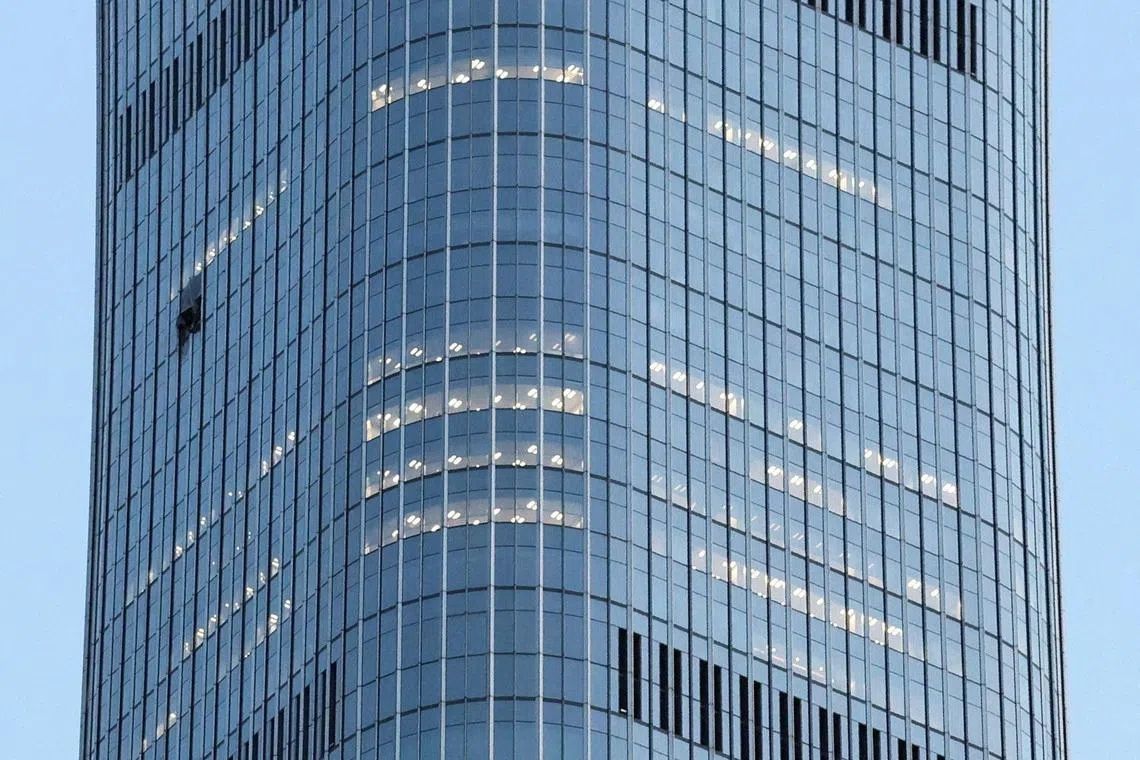
A light aircraft piloted by a 66-year-old man collided with Beijing's tallest building on June 26, prompting authorities to release a statement disclosing the pilot's documented mental health problems and references to suicide. The two-seat propeller-driven plane struck the 528-metre CITIC Tower in the capital's Central Business District during an evening solo flight, leaving 13 people injured and sparking immediate concerns about the security gaps that allowed the aircraft to breach highly restricted airspace.
The pilot, surnamed Liu, had obtained his sport pilot license in 2021 and upgraded to a private pilot license just months earlier in 2024. He was divorced, lived alone, and had experienced long-standing struggles with insomnia and anxiety, according to a statement from Chaoyang district government. His diary contained multiple references to "ending his life," authorities revealed on July 2. Officials characterised the incident as a private matter rather than a systemic failure, describing it as "an incident endangering public safety caused by personal reasons." Liu worked as a freelancer and took off from a general aviation airport in suburban Pinggu district that afternoon, first completing a supervised flight before proceeding to a solo journey.
The location of the crash poses exceptional significance within Beijing's administrative landscape. The CITIC Tower stands approximately seven kilometres from Zhongnanhai, the heavily fortified compound that houses China's top political leadership including President Xi Jinping. This proximity underscores the extraordinary nature of the incident—a breach of some of the world's most stringently controlled airspace, maintained through overlapping security protocols designed to protect the nation's highest-ranking officials. The fact that a general aviation aircraft could penetrate these defences during daylight hours raised uncomfortable questions among Beijing's business district residents and international observers monitoring Chinese aviation security.
During his final solo flight, Liu deviated from his designated flight corridor and lost radio contact with Pinggu airport. The deviation went undetected until the aircraft struck the building's upper floors at 5.55pm, creating a visible hole in the windows and triggering a small fire at the tower's base. AFP journalists and eyewitnesses documented aircraft debris scattered around the structure's foundation. The incident occurred just days before the Communist Party's 105th anniversary celebrations scheduled for the Great Hall of the People near Tiananmen Square, a period typically marked by heightened security protocols throughout central Beijing.
The immediate aftermath revealed the Chinese government's standard approach to sensitive incidents. Within hours, state authorities systematically removed photographs and videos of the crash from social media platforms, while police at the scene prevented journalists and members of the public from photographing the damaged building. This information suppression extended beyond mere visual documentation—discussion threads on Chinese social media forums discussing the crash itself were swiftly deleted, limiting public discourse to officially sanctioned narratives. Nevertheless, internet users continued posting questions beneath the Chaoyang district government's official statement before these too were removed, indicating persistent public curiosity about the security implications.
The aircraft's registration—B-12PP—was disclosed publicly for the first time in the government statement. Chinese civil aviation regulations mandate that all flights, including those operated by general aviation entities, must receive advance approval. Operators must submit detailed flight plans to flight-control authorities by 3pm the preceding day, with urban airspace typically closed to general aviation under Chinese law. These regulatory requirements suggest that Liu's flight should have been pre-authorised and monitored throughout its duration, raising questions about why a deviation and loss of radio contact did not trigger immediate intercept procedures.
The security breach highlights a paradox inherent in China's approach to aviation control. The nation maintains among the world's strictest airspace regulations and has invested heavily in sophisticated air traffic management systems designed specifically to protect senior leadership and maintain absolute control over Beijing's congested airspace. Yet a private pilot flying an older, slower propeller aircraft managed to escape designated flight corridors, lose contact with air traffic control, and strike a prominent building in one of Asia's most secure capitals. The fact that Liu's aircraft navigated past or through airspace nominally reserved for commercial jets operating Beijing Capital Airport—one of the city's major aviation hubs—suggests potential gaps in real-time tracking or response protocols.
Medical certification procedures compound the mystery. A person seeking a private pilot license in China must undergo a physical medical examination and obtain appropriate certifications. While mental health screening is standard practice in aviation globally, the specific requirements and enforcement standards for Chinese private aviation remain opaque to international observers. Liu obtained his private license in 2024, just months before the incident, suggesting that his documented mental health difficulties may not have been detected during medical evaluation, or alternatively, that screening procedures did not capture the severity of his condition.
The official narrative attributing the crash solely to personal mental health issues, while plausible, deflects from broader systemic questions. Internet users, before their posts were deleted, sought clarification about why a solo pilot could deviate from designated airspace without triggering active response measures. The statement confirms that Liu "deviated from the designated area and lost contact with the airport," but does not explain whether air traffic controllers detected this deviation, whether any warning or intervention was attempted, or why ground-based systems did not alert authorities to an unregistered aircraft entering restricted zones near the CBD.
For Southeast Asian observers and aviation professionals monitoring regional security developments, the incident illustrates both the sophistication of China's aviation surveillance systems and their apparent limitations when responding to unexpected departures from approved flight plans. The case suggests that even highly controlled airspace can prove vulnerable to determined or erratic actors with legitimate access to aircraft and pilot credentials. It also underscores how Chinese authorities manage such incidents through a combination of rapid information control and strategic narrative framing—emphasising individual pathology while minimizing discussion of systemic security gaps.
The broader implications extend beyond mere aviation safety. The incident occurred amid China's broader emphasis on comprehensive social surveillance and predictive security measures. Liu's documented mental health struggles and suicidal ideation—while troubling indicators—raise questions about how such information flows between medical providers, licensing authorities, and security agencies. In a system renowned for integrating data across government agencies, the apparent failure to prevent an at-risk individual from obtaining and operating an aircraft suggests either compartmentalisation of such systems or insufficient integration between civil aviation authorities and mental health monitoring frameworks.
Moving forward, the incident may prompt Chinese authorities to impose stricter mental health screening for aviation licenses and enhanced real-time tracking for general aviation flights, particularly in restricted zones near major urban centres and sensitive government locations. International aviation organisations will likely monitor whether Beijing implements additional safeguards for light aircraft operations in CBD airspace. For other regional economies developing general aviation sectors, the Beijing incident serves as a cautionary case study demonstrating that security breaches can occur even within tightly controlled systems, and that comprehensive safety requires integration of medical screening, real-time surveillance, and rapid response protocols.

