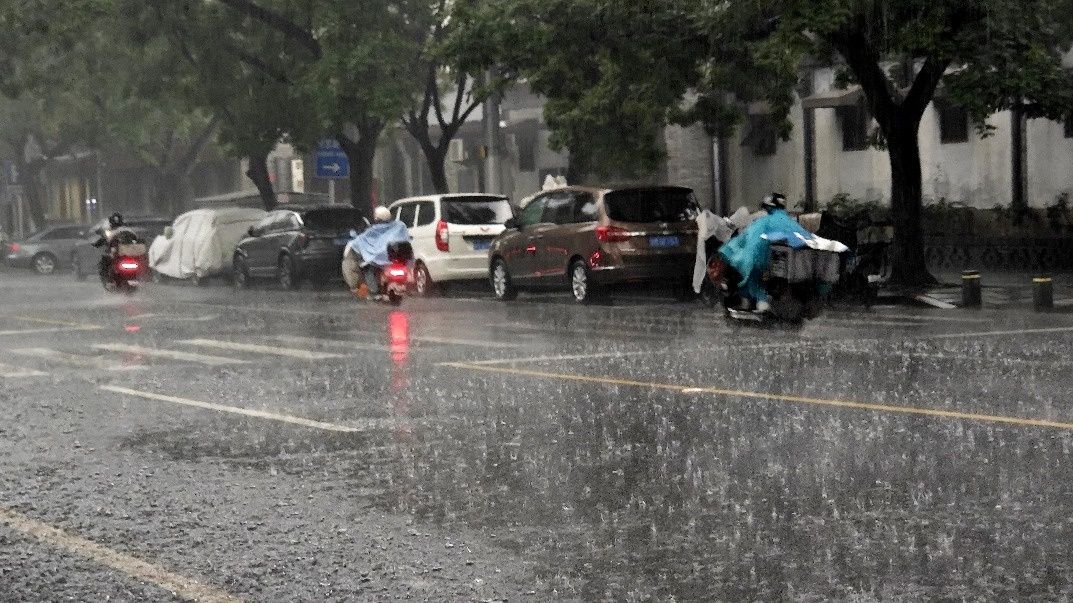
Beijing has activated its second-highest level of flood preparedness after meteorological authorities issued an orange-level rainstorm alert on Thursday afternoon—the first such warning since the 2026 flood season commenced. The alert, released at 1:30 pm, prompted the Beijing flood control office to immediately shift into a Level-II emergency response mode, signalling the seriousness with which authorities view the approaching weather system. This escalation reflects growing concern about precipitation levels that forecasters anticipate will test the city's drainage infrastructure and flood management capabilities over the next 48 hours.
The rainfall event is expected to intensify significantly from Friday afternoon, with the heaviest precipitation anticipated between 2:00 pm Friday and 8:00 am Sunday. Meteorologists have identified several districts as being particularly vulnerable to the incoming system: Huairou, Miyun, Pinggu, Shunyi, and Fangshan are forecast to experience the most severe conditions. The geographical spread of these affected areas, extending from the eastern periphery through to the southwestern portions of the municipality, suggests this will be a city-wide event rather than a localised phenomenon. The concentration of warning zones in districts with terrain prone to water accumulation indicates authorities are especially concerned about cascading hydrological impacts.
Rainfall intensity projections underscore why emergency protocols have been triggered. Hourly precipitation rates in certain locations are expected to surpass 70 millimetres, while cumulative 24-hour totals could exceed 150 millimetres in some areas. To contextualise these figures, such precipitation rates rank among the heaviest rainfall events Beijing experiences annually. The forecasted volumes present particular challenges for mountainous and hilly terrain where rapid runoff can trigger landslides and flash flooding, as well as for low-lying urban areas where drainage systems may become overwhelmed. The concentration of such intense rainfall over a compressed timeframe limits the soil's capacity to absorb water and strains municipal water management infrastructure.
Beyond the raw meteorological data, Beijing's warning system reflects the city's vulnerability to rapid hydrological changes. The capital sits in a region where heavy precipitation events, though not daily occurrences, can arrive with sudden intensity during seasonal transitions. The 2026 flood season represents a period of particular vulnerability, as atmospheric patterns shift and monsoon-influenced systems bring moisture-laden air masses northward. For Malaysian and Southeast Asian observers accustomed to tropical rainfall patterns, Beijing's precipitation response warrants attention; the temperate zone's concentrated rainfall events can produce more acute flooding than the distributed wet-season deluges of equatorial regions.
Authoritarian preparedness measures have already been implemented to minimise civilian exposure to danger. The public has been explicitly warned against visiting scenic areas involving mountains or water features, underground commercial facilities, and geological hazard zones—essentially asking residents to avoid anywhere water or landslides pose risk. Simultaneously, residents are encouraged to restrict outdoor movement entirely, remain alert to updated warnings, and utilise mass transit where essential travel cannot be avoided. These guidance points reflect a graduated approach: from voluntary behavioural modification to strong recommendations to active discouragement of specific activities.
The municipal government has signalled flexibility regarding normal operations. Enterprises and public institutions have been advised to consider staggered work schedules and remote working arrangements, reducing the number of people commuting during peak rainfall hours. Schools face explicit instruction to halt physical classes, in-person training sessions, and outdoor educational activities based on actual conditions—reflecting acknowledgment that educational continuity must yield to immediate safety concerns. These measures distribute the population's dispersal over longer timeframes, reducing congestion during dangerous weather windows.
Construction and outdoor industrial activities face mandatory suspension across the city. This blanket halt on building work, equipment operation, and field activities reflects recognition that heavy rainfall creates hazards not just for unprotected outdoor workers but for anyone in proximity to active construction sites. Cranes, elevated scaffolding, and excavation operations all present heightened risks during intense precipitation and reduced visibility. The suspension order extends to all outdoor operations, effectively halting non-essential activity across economic sectors dependent on external work environments.
Beijing's four-tier warning classification system, where orange represents the second-most severe level, provides important context for residents and businesses assessing situation severity. The red alert tier, positioned above orange, represents the most extreme threat level—one step reserved for genuinely catastrophic conditions. The issuance of orange rather than red suggests meteorologists view this event as significant but not unprecedented, yet serious enough to justify widespread precautionary measures. This calibration prevents alert fatigue while maintaining meaningful distinction between routine warnings and genuine emergencies.
The implications for regional weather management are noteworthy. As climate systems become increasingly variable and precipitation patterns shift, cities across East Asia face comparable challenges managing concentrated rainfall events. Beijing's response protocols, developed through decades of flood management experience, offer operational models for other metropolitan areas confronting similar hydrological stresses. The integration of meteorological forecasting, emergency coordination, public communication, and economic flexibility represents a sophisticated approach to weather-related disruption mitigation. For Southeast Asian cities managing their own seasonal precipitation challenges, Beijing's systematic response framework merits consideration as regions enhance climate resilience across the continent.

