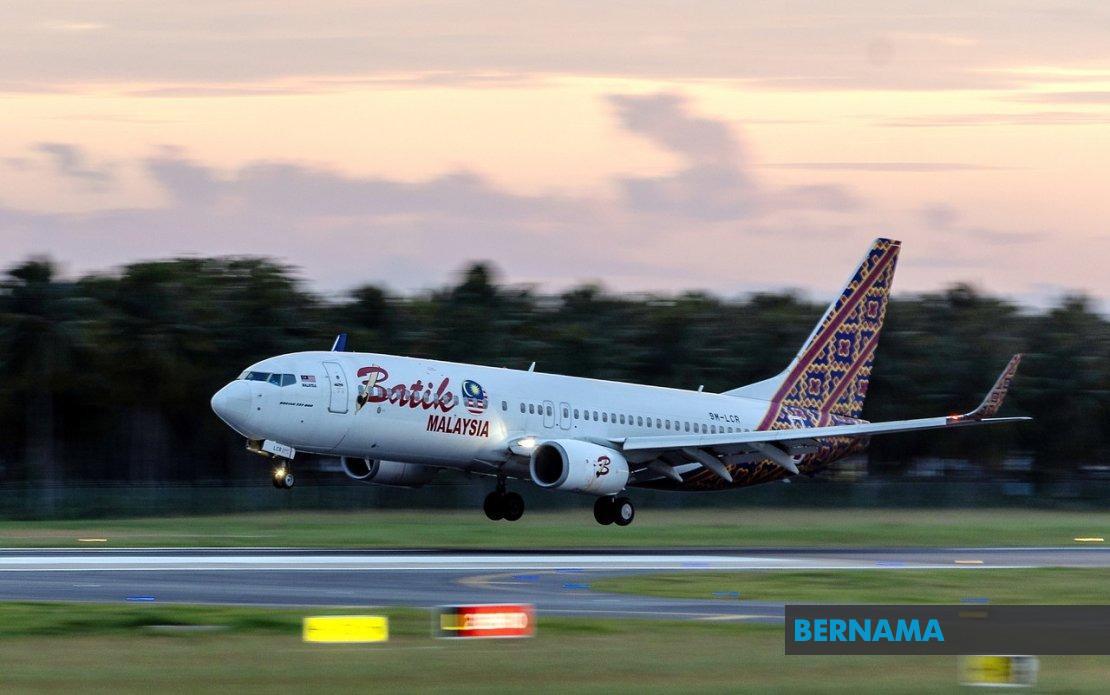
Batik Air will introduce twice-daily flights on the Bintulu-Kuala Lumpur route beginning July 20, marking a significant boost to connectivity between the eastern Malaysian state and the nation's capital. The expansion came after sustained government engagement with the airline to tackle persistent complaints about flight scarcity and escalating ticket prices. Tourism, Arts and Culture Minister Datuk Seri Tiong King Sing announced the development, framing it as a response to genuine concerns raised by residents and businesses operating in Sarawak's industrial heartland.
The additional frequency represents a compromise between government aspirations and airline operational realities. Tiong had initially advocated for three daily flights during negotiations, but Batik Air opted to implement one additional service at present, with assurances that a third daily flight could be considered if passenger volumes warrant expansion. This measured approach reflects the broader tension in Malaysian aviation policy between meeting demand and ensuring airlines maintain viable operations without excessive overcapacity.
Under the new timetable, Kuala Lumpur departures are scheduled for 10 am and 2.30 pm, while flights originating from Bintulu will leave at 1.10 pm and 5.40 pm. The timing structure accommodates both business travellers requiring same-day round trips and passengers with more flexible schedules. These departure windows provide reasonable connection options for passengers transiting through Kuala Lumpur to other domestic or international destinations, a critical consideration for a regional hub managing multiple flight corridors.
Bintulu's economic trajectory furnishes essential context for understanding the pressing need for enhanced air services. As Sarawak's major industrial and commercial centre, the city continues attracting investment in energy, manufacturing, and resource sectors. This development has catalysed demand for reliable air connectivity supporting business operations, educational mobility, and medical tourism. Workers commuting between Bintulu and Peninsular Malaysia, along with executives managing cross-regional operations, constitute a substantial passenger base whose needs had been inadequately served by limited flight availability.
The fare dimension remained central to government advocacy during negotiations. Tiong explicitly raised concerns about pricing levels with Batik Air, emphasising that excessive ticket costs create economic hardship for ordinary residents while potentially dampening overall demand growth. His appeal for "reasonably priced airfares as much as market conditions allow" reflects recognition that aviation pricing in secondary markets operates within competitive constraints, yet government influence can encourage moderation. The minister articulated a compelling economic argument: stable, affordable pricing would expand the passenger base, benefiting the airline through volume growth even with lower per-ticket margins.
Frequent flight cancellations and unexpected schedule modifications emerged as secondary but significant grievances during consultations. These disruptions impose genuine costs on passengers planning time-sensitive travel for medical appointments, educational commitments, or business meetings. Tiong urged Batik Air to prioritise operational reliability alongside frequency expansion, recognising that expanding service counts means little if cancellation rates remain high. This emphasis on stability over mere capacity additions reveals sophisticated understanding of passenger welfare considerations beyond raw flight numbers.
The coordination process between government and commercial aviation operators illustrates Malaysia's ongoing challenge in balancing regulatory oversight with market-driven operations. Unlike state-owned carriers or heavily subsidised airlines, Batik Air must satisfy commercial viability requirements while responding to political pressure for public service improvements. The negotiation's successful outcome suggests that government advocacy, when grounded in demonstrated demand and presented diplomatically, can influence route investment decisions without requiring direct subsidy or mandates.
Regional implications extend beyond Bintulu itself. Enhanced connectivity strengthens the broader Peninsular Malaysia-Sarawak corridor, facilitating business integration, educational exchange, and tourism flows between regions with distinct economic profiles. Improved flight availability reduces the geographic friction that historically limited cross-regional economic cooperation. For Malaysian Airlines' competitors seeking market share in secondary routes, this expansion illustrates the commercial opportunity in underserved regional markets once demand justifies capacity investment.
The announcement carries implications for broader aviation policy discussion in Southeast Asia. Many secondary cities across the region face similar connectivity challenges, balancing genuine demand against airline commercial calculations. Malaysia's experience with Batik Air suggests that structured government engagement, informed by constituency feedback and grounded in economic rationale, can generate improvements without resorting to subsidies or regulations that distort market signals. This model warrants examination by neighbouring countries managing comparable infrastructure gaps.
Looking forward, the conditional language regarding potential third-daily service creation introduces an interesting dynamic. Rather than imposing additional frequencies by regulation, government and airline agreed on a performance-based expansion trigger. If passenger loads justify expansion, both parties benefit from organic growth rather than forced capacity additions. This approach incentivises Batik Air to market the service effectively while giving government justification for claiming credit should demand support further increases.
For Bintulu residents and businesses, the immediately tangible benefits include schedule flexibility and reduced booking difficulties during peak travel periods. The morning and afternoon departure windows from Kuala Lumpur align well with typical business travel patterns, while evening departures from Bintulu accommodate those returning home after conducting affairs in the capital. Over time, increased flight availability should moderate pricing pressure as competition for passenger loyalty intensifies, assuming Batik Air faces or anticipates competition on this route.
The sustainability of this service expansion depends ultimately on passenger demand materialising consistently. Government advocacy succeeded in securing capacity, but commercial realities will determine whether the airline maintains or further develops the route. Tiong's public commitment to monitoring implementation and pushing for continued improvements when conditions permit suggests ongoing government engagement with the issue, transforming what might otherwise be a one-time negotiation into sustained policy attention.
This development represents incremental progress on an important regional connectivity issue. While not revolutionary, the twice-daily service substantially improves practical options for Bintulu-based individuals and enterprises. The negotiation process itself demonstrates how structured government intervention, rooted in public feedback and articulated through credible political pressure, can yield tangible improvements in aviation services without requiring formal subsidies or rigid mandates.

