The Barisan Nasional coalition is poised to fundamentally reshape how it allocates state assembly constituencies in Negeri Sembilan ahead of the August 1 election, signalling a significant departure from decades of established seat-sharing conventions that have defined its internal power structure. The shift comes as BN leadership acknowledges that voter composition across most constituencies has shifted considerably, rendering the party's historical allocation patterns increasingly obsolete and potentially counterproductive to maximising electoral performance.
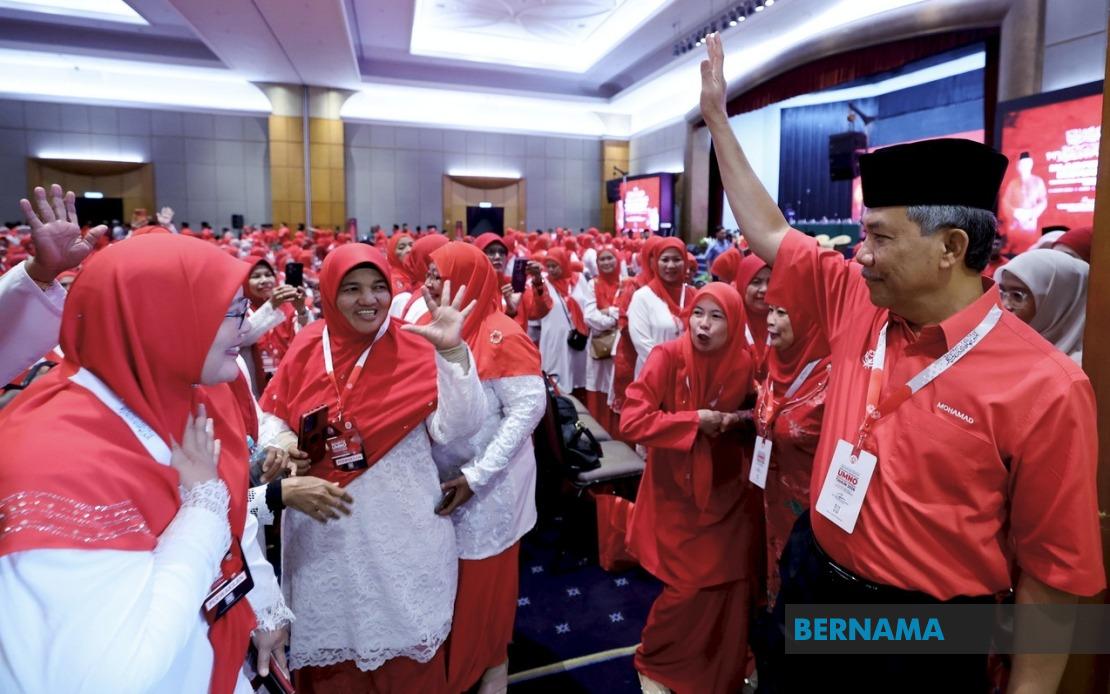
Datuk Seri Mohamad Hasan, BN's deputy chairman and the coalition's de facto leader in Negeri Sembilan, articulated the strategic rationale during a gathering of UMNO delegates in Seremban. The longstanding practice of designating specific seats as permanent holdings for particular component parties—effectively ringfencing constituencies as "yours" or "ours"—has become indefensible in a rapidly changing electoral landscape. This traditional carve-up, while politically convenient for preserving intra-coalition harmony, has frequently resulted in BN fielding candidates in constituencies where demographic shifts have eroded the party's natural support base, a structural weakness increasingly punished by voters.
The proposed restructuring reflects a pragmatic calculation that BN's electoral competitiveness depends on deploying its component parties strategically across constituencies where each stands its strongest chance of victory. Rather than adhering to formulaic seat distributions that benefit some coalition members at the expense of competitive advantage, the coalition intends to conduct granular constituency-level analysis, examining voter registration patterns, demographic trends, and past electoral performance to identify optimal matchings between parties and seats. This approach, Mohamad suggested, simultaneously expands voter choice by reducing the stranglehold any single party maintains over specific constituencies.
The scope of this recalibration extends beyond UMNO's internal decisions to reshape how all BN component parties are allocated constituencies. Mohamad indicated that divisional chairs have been instructed to submit slates of at least three candidate nominees per seat, creating flexibility for higher-level arbitration. This cascading submission process essentially opens a competitive bidding round within the coalition, allowing component parties to make cases for contesting specific constituencies based on their perceived electoral strength. The compression of this timeline—with candidate announcements scheduled for July 15 during the formal election machinery launch—underscores the coalition's determination to present a unified front despite the internal negotiation complexities involved.
However, the decentralisation of seat recommendations masks a carefully circumscribed decision-making architecture. Ultimately, the BN Supreme Council at the national level retains final authority over seat distributions and candidate selections, ensuring that central leadership can override divisional preferences to maintain coalition cohesion or advance strategic considerations beyond individual constituencies. This hierarchical structure, while appearing to devolve power, actually concentrates critical decisions at the apex where UMNO's numerical dominance can be leveraged to secure optimal outcomes for the party's candidates.
The underlying anxiety motivating this strategic pivot is the coalition's vulnerability to internal sabotage, a recurring vulnerability that has cost BN seats in successive elections. Mohamad's candid acknowledgement that component parties have historically undermined each other's campaigns—whether through deliberate foot-dragging, resource withholding, or tacit support for rival candidates—reflects deep institutional rifts within the coalition that structural reorganisation alone cannot fully remedy. By attempting to align seat allocations with genuine electoral competitiveness, BN hopes to reduce the incentive for disgruntled parties to sabotage campaigns in constituencies they believe should have been allocated differently.
The initiative also reflects generational shifts within BN's coalition management. Younger leaders like Mohamad appear less committed to perpetuating the sclerotic seat-sharing formulas that prioritised intergovernmental peace over electoral performance. His framing of the change as empowering voters—by preventing predetermined outcomes and allowing genuine electoral competition—attempts to dress what is fundamentally an intra-coalition redistribution as voter-centric reform. Whether this rhetorical reframing persuades voters that BN has genuinely modernised remains an open question.
For Negeri Sembilan specifically, the implications extend beyond abstract coalition management. The state has been a bellwether of BN's electoral health, and the decision to restructure seat allocation signals coalition strategists' concern about voter defection across historically reliable constituencies. Demographic changes in several state assembly divisions, combined with rising ticket-splitting as voters differentiate between state and federal electoral preferences, have made traditional coalition strongholds increasingly contestable. The August 1 election will test whether BN's reallocation strategy successfully arrests this erosion or merely reshuffles weaknesses across different constituencies.
Mohamad's equivocation about defending his own Rantau seat—held since 2004—adds a layer of uncertainty to coalition deliberations. If even senior leaders with lengthy incumbency face potential displacement, the psychological impact on lower-ranking component party figures could deepen existing tensions. The central leadership's willingness to countenance his possible retirement suggests either confidence that his contributions can be replaced or calculation that retaining Rantau takes priority over preserving his candidacy. Either interpretation signals that the coalition's hierarchy has effectively overridden traditional deference to seniority.
The compressed timeline for implementation creates practical challenges for component parties attempting to identify competitive candidates and mobilise campaign machinery. With nominations scheduled for July 18 and July 28 for early voting, parties have minimal time to build candidate profiles or organise grassroots support. This accelerated schedule may inadvertently advantage UMNO, which possesses superior organisational capacity to rapidly activate campaign structures, potentially amplifying UMNO's influence within the coalition despite ostensible efforts at more equitable allocation.
Regionally, the Negeri Sembilan experiment carries implications for how BN operates in other states heading toward elections. If the reallocation strategy produces improved electoral results, pressure will mount for similar restructuring elsewhere. Conversely, if internal coalition divisions widen or if BN's performance deteriorates despite the changes, the initiative could trigger recriminations that fracture coalition unity more fundamentally. The stakes for coalition cohesion are therefore substantial, making the August 1 election results a consequential data point for BN's strategic direction beyond Negeri Sembilan.

