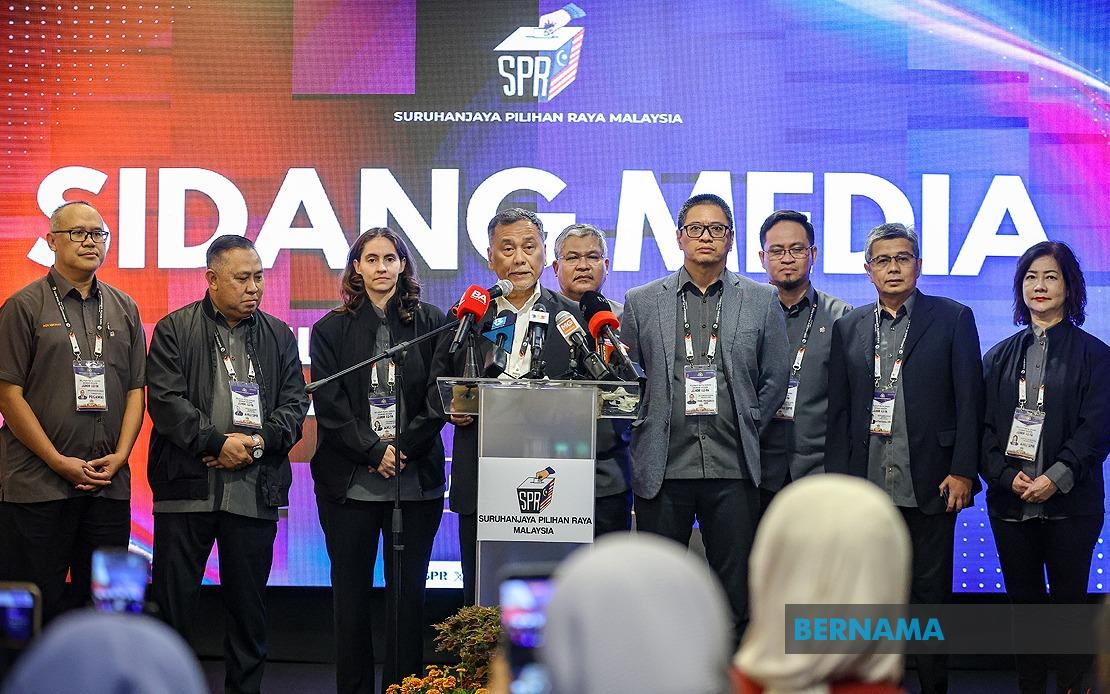
Barisan Nasional has reinforced its political stranglehold over Johor, capturing 48 of the 56 seats contested in the state election announced early on July 12, delivering the coalition a commanding two-thirds majority to govern Malaysia's southern powerhouse. The outcome marks a significant consolidation of BN's authority in the state, as the coalition expanded its representation by eight seats compared to the 40 it won in the 2022 state election, while opposition Pakatan Harapan secured only eight seats. The Election Commission released the final tally in the early morning hours, with the Puteri Wangsa constituency being the last to be declared after a closely watched contest.
Within the BN framework, the distribution of victories reflected the traditional power structure of the coalition in Johor. Umno, the dominant partner, captured 36 seats, securing the lion's share of the coalition's gains and consolidating its influence across the state. The Malaysian Chinese Association (MCA) claimed eight seats, recovering ground it had previously ceded, while the Malaysian Indian Congress (MIC) achieved a perfect result by winning all four seats it fielded, demonstrating the coalition's broader appeal across ethnic and demographic lines. The composition of BN's enlarged majority underscores the resilience of Malaysia's traditional governing coalition even amid broader political turbulence at the national level.
Pakatan Harapan's reduced footprint in Johor reflects mounting electoral challenges facing the opposition coalition across the country's key states. The Democratic Action Party (DAP) managed to retain six seats but experienced substantial losses, forfeiting 11 of the 17 constituencies it had contested, including four previously held seats—Johor Jaya, Tangkak, Jementah, and Perling—which fell to MCA and MIC. This erosion of DAP's Johor base represents a broader retreat for the opposition party, which has struggled to maintain momentum in the state despite its importance as an urban and semi-urban stronghold. Both PKR and Amanah contributed minimally to PH's haul, each securing just a single seat, illustrating the coalition's fragmented positioning in Johor's complex electoral landscape.
Perikatan Nasional's complete evaporation from the state assembly marks a dramatic reversal from its 2022 performance, when it had won three seats. The coalition, which had positioned itself as an alternative force, failed to defend any of its previous constituencies. Dr Sahruddin Jamal, the former Johor Menteri Besar and Johor Bersatu chairman, lost his Bukit Kepong seat to BN, while the party also relinquished Endau and Maharani. This collapse reflects the instability that has dogged PN since its formation and the difficulty of sustaining a third-force challenge in a state dominated by entrenched two-coalition competition. The complete wipeout carries implications for PN's national strategy, particularly given Johor's significance as a gateway state to the Klang Valley and its substantial federal parliamentary contingent.
Other political newcomers and smaller parties proved entirely unable to gain traction. Parti Bersama Malaysia (Bersama) forfeited all its deposits across 15 contested constituencies, signaling both financial wastage and profound rejection by voters. The Malaysian United Democratic Alliance (MUDA), Parti Sosialis Malaysia (PSM), and Parti Orang Asli Malaysia (ASLI) similarly failed to register victories, while six independent candidates were shut out entirely from the 56-seat chamber. This outcome demonstrates the formidable structural barriers facing non-traditional political vehicles in Malaysian state elections, particularly in a state where communal and party loyalty patterns remain deeply rooted.
At the individual level, several prominent figures shaped the electoral narrative. Onn Hafiz Ghazi, the BN chairman for Johor, decisively retained the Machap seat with 20,382 votes, securing a winning margin of 15,375 votes in a direct contest against PH's Nur Hafiz Roslan. His emphatic victory underscored his personal appeal and positioned him as the key figure representing BN's expanded mandate. Former Health Minister Datuk Seri Dr Adham Baba successfully reclaimed the Pasir Raja seat, which he had previously held for two consecutive terms, demonstrating the pull of established political veterans even amid broader electoral currents. All nine state executive councillors who sought re-election successfully retained their seats, indicating stability within the BN government structure.
The election also witnessed the historic achievement of Datuk Samsolbari Jamali from Ayer Hitam UMNO division, who successfully defended the Semarang seat for a sixth consecutive term, establishing a remarkable record of electoral longevity. Conversely, two Members of Parliament who descended into state-level politics experienced defeat, as Onn Abu Bakar lost in Senggarang and Suhaizan Kayat fell in Larkin to BN candidates. The defeat of these federal legislators underscores the distinct dynamics operating at state elections and the challenges facing opposition figures attempting to consolidate power across multiple electoral tiers. A notable bright spot for PKR and PH came when former Education Minister Dr Maszlee Malik captured Puteri Wangsa, the final seat declared, defeating four competitors including BN's Teow Chia Ling and candidates from minor parties.
The electoral contest itself mobilized substantial participation across Johor's political landscape. The July 11 polling exercise engaged approximately 2.7 million registered voters across the state, drawing 172 candidates representing diverse political organizations and independent aspirants. BN and PH each fielded 56 candidates, while Perikatan Nasional presented 33 contenders, Bersama fielded 15, MUDA put forward four, independent candidates numbered six, and PSM and ASLI each offered single representatives. This broad range of candidacies reflected the competitiveness of Johor politics at the grassroots level, even as the ultimate outcome demonstrated the dominance of established institutional structures.
Datak Onn Hafiz Ghazi characterized the victory as a substantial mandate from the Johor electorate to continue BN's governance trajectory. Speaking at Johor UMNO headquarters, he framed the enhanced two-thirds majority as a trust that BN had accepted with gratitude and humility, emphasizing the coalition's commitment to engaging the rakyat and addressing outstanding issues affecting residents' quality of life. From the opposition benches, PKR election director Datuk Seri Amirudin Shari acknowledged Johoreans' fulfillment of their democratic responsibility while positioning Pakatan Harapan as committed to serving as a credible and principled opposition capable of articulating popular grievances and proposing solutions to unresolved fundamental problems. Johor PAS, representing the defeated Perikatan Nasional component, issued a measured statement respecting the results as a legitimate democratic expression of voter preference regarding state leadership.
The outcome carries substantial implications for Malaysian federalism and coalition politics heading into subsequent electoral cycles. BN's expanded supermajority in Johor consolidates the coalition's control over a state that represents a critical economic hub, manufacturing center, and demographic bellwether for national political trends. The state's enhanced stability under a reinforced BN government may provide momentum for the coalition's broader positioning at the federal level, particularly as it navigates complex policy challenges and preparation for the next general election. Conversely, the opposition's struggles in Johor reflect broader difficulties in constructing an effective alternative narrative capable of competing against BN's organizational machinery and grassroots networks in states where the ruling coalition maintains deep institutional entrenchment and voter familiarity.

