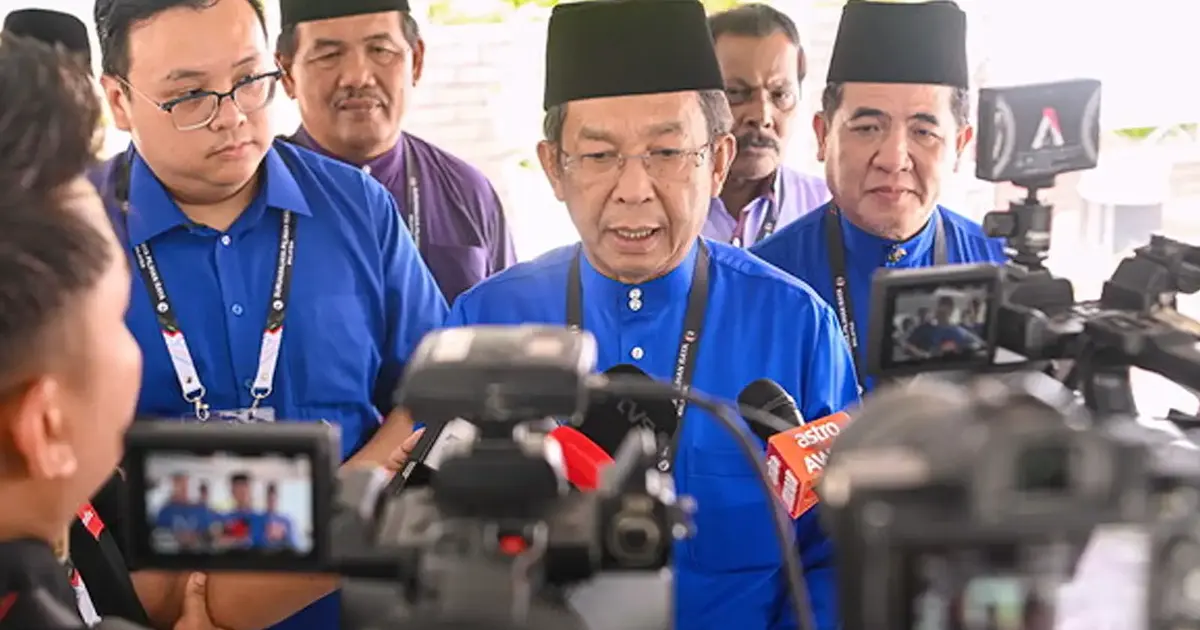
Barisan Nasional has adopted a cautious approach to selecting its next Menteri Besar for Negeri Sembilan, pledging to finalise the leadership decision only once the coalition wins the state election. State Umno chief Jalaluddin Alias made the announcement, underscoring the coalition's confidence in securing victory while acknowledging the uncertainty inherent in any electoral contest.
The decision to defer the announcement reflects a strategic calculation common in Malaysian politics, where coalitions often withhold leadership commitments until they have confirmed their electoral mandate. By declining to name a candidate prematurely, Barisan Nasional preserves flexibility in negotiations that may follow an election win, particularly if coalition partners demand certain portfolios or positions. This approach also prevents rival camps from targeting a specific individual during campaign season, a significant advantage in competitive state races.
Jalaluddin's statement that several leaders within Umno and the broader Barisan Nasional coalition possess the capability to serve as Menteri Besar points to internal depth within the party's leadership ranks in Negeri Sembilan. This acknowledgment subtly emphasises that the coalition is not dependent on any single figure, potentially strengthening perceptions of organisational stability. However, it also suggests that the final choice remains genuinely open, with the decision likely to depend on post-election negotiation dynamics and the performance of individual leaders' constituencies.
Negeri Sembilan has emerged as a critical battleground in Malaysia's political landscape, representing one of the states where neither major coalition holds unassailable dominance. The incumbent administration's composition carries implications not only for the state's development but also for broader federal political dynamics. A Barisan Nasional victory would consolidate its position in the central region, potentially influencing parliamentary calculations at the national level. Conversely, should the opposition bloc secure control, it would reshape the political map significantly.
The timing of leadership decisions in state elections remains a contentious issue in Malaysian politics. Some political analysts argue that delayed announcements undermine democratic principles by keeping voters uninformed about who would lead them if a particular coalition wins. Others contend that post-election leadership selections, negotiated among coalition partners, reflect the reality of coalition governance in Malaysia's federal system, where no single party often secures an outright majority and partnership arrangements must be formalised after results are known.
Barisan Nasional's composition itself necessitates post-election coordination, as the coalition comprises Umno, MCA, MIC, and other smaller parties. The distribution of the Menteri Besar position among coalition partners depends on several factors, including the overall seat count each component party secures, the political geography of the state, and established conventions about power-sharing. Umno's dominance within Barisan Nasional suggests the Menteri Besar will almost certainly hail from that party, but the specific individual could be selected based on which Umno leader demonstrates the strongest electoral performance or best political positioning.
For Negeri Sembilan's electorate, this approach means casting their votes without explicit clarity about the leadership structure they would receive under Barisan Nasional's administration. Voters must rely on party manifestos, track records, and the credibility of various coalition figures mentioned as possibilities. This dynamic puts a premium on voters' understanding of internal party dynamics and their confidence in the coalition's governing capacity generally, rather than specific leader-focused voting patterns that might emerge if candidates were named in advance.
The opposition bloc likely faces similar considerations regarding its own Menteri Besar candidate selection, though their approach to announcing leadership decisions may differ. Should opposition parties choose to pre-emptively name their candidate, they risk that individual becoming a focal point for criticism and campaign attacks. Conversely, naming a candidate early allows voters to form clearer preferences based on specific personalities and leadership platforms.
Jalaluddin's framing of the decision—emphasising the existence of multiple capable leaders—serves multiple political functions simultaneously. It projects confidence while avoiding the appearance of internal competition or faction-building around particular candidates. It also sends reassuring signals to party members that leadership development and succession planning within Umno remain healthy, contradicting any perception of stagnation or over-reliance on particular individuals.
The broader implications for Malaysian politics merit consideration. As state elections occur more frequently and competitively across the federation, the question of when and how leadership candidates are announced will likely attract increasing scrutiny from democratic advocates and political observers. The balance between preserving coalition flexibility and providing voters with clear leadership information remains unresolved in Malaysian electoral practice.
For Negeri Sembilan specifically, the actual menteri besar selection process will unfold behind closed doors following the election, guided by coalition negotiations and factional considerations within Umno. The public announcement strategy Jalaluddin has outlined reflects the coalition's confidence in its prospects while acknowledging the complex political arithmetic that shapes post-election decision-making in Malaysia's federal system, where state administrations rarely operate in isolation from national party dynamics and coalition arrangements.

