Barisan Nasional is positioning itself to recapture ground among Federal Land Development Authority (FELDA) voters ahead of the Johor state election on July 11, with party leaders emphasizing the state government's track record of addressing longstanding community concerns. The coalition's focus on FELDA settlements reflects the strategic importance of these constituencies, which have historically provided substantial voter blocs but have shown volatility in recent electoral cycles. With nearly 7,000 registered voters spread across four FELDA settlements within the Kulai parliamentary constituency, the outcome in these communities could prove decisive in several state seats.
Kulai Barisan Nasional chairman Datuk Mohd Jafni Md Shukor outlined the geographic scope of this engagement, identifying FELDA Taib Andak, FELDA Inas, and FELDA Bukit Permai—all located within the Bukit Permai state constituency—alongside FELDA Bukit Batu in the Bukit Batu state seat. These four communities represent a concentrated population of swing voters whose participation rate and voting preferences have shifted noticeably between the 2018 and 2022 elections. The specific mention of voter numbers underscores how closely the coalition is tracking demographic trends in these areas, suggesting that internal polling data has identified FELDA constituencies as either vulnerable or recoverable ground.
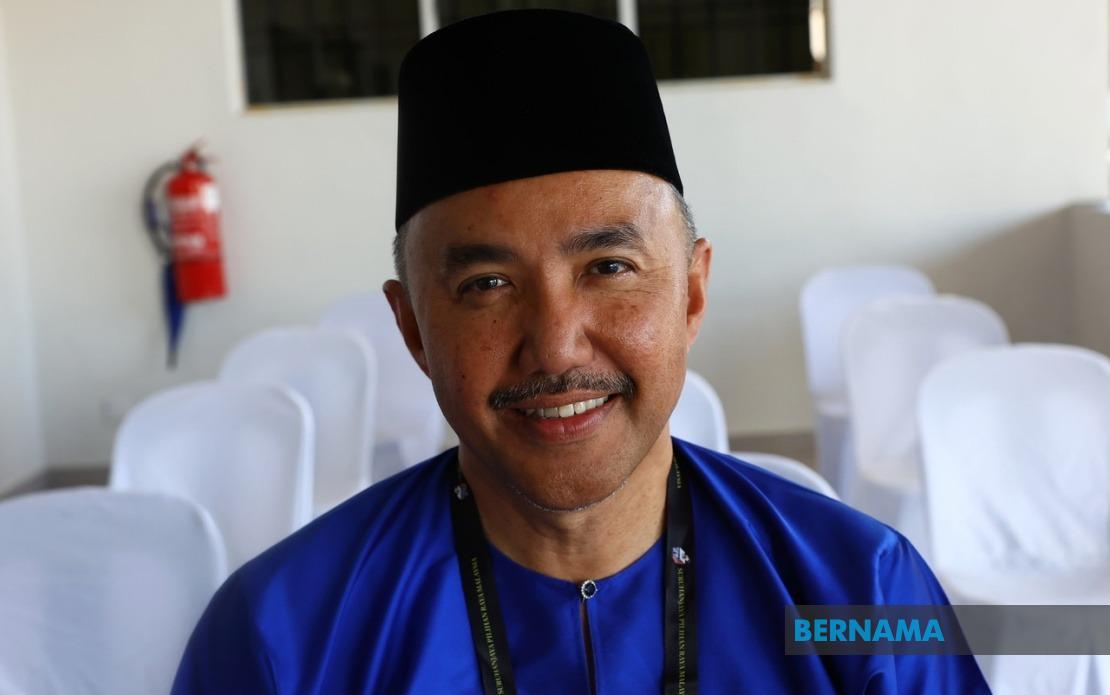
According to Datuk Mohd Jafni, who is defending the Bukit Permai seat in a four-cornered contest, the Johor state government's sustained commitment to FELDA welfare under Menteri Besar Datuk Onn Hafiz Ghazi forms the foundation of Barisan Nasional's campaign strategy in these areas. He acknowledged frankly that the coalition's position deteriorated markedly during the 2018 state election, a period when rural communities and FELDA settlers became increasingly disaffected with the federal government and its policies. However, he characterized the subsequent 2022 state election as a turning point, when strategic interventions and policy reversals began to rebuild confidence among FELDA voters.
The Johor state government has deployed education funding as a primary vehicle for reconnecting with FELDA families. Through the Johor Education Foundation (YPJ), the administration has channeled education assistance to children of FELDA settlers, addressing a perennial concern for communities where household incomes remain below state and national averages. This targeted investment in human capital development carries symbolic weight, signaling to settlers that the government views their children's futures as a priority. Education support resonates particularly in rural constituencies where school fees, transport costs, and examination expenses often strain family budgets and drive migration to urban areas.
A second major intervention addresses a bureaucratic impediment that has frustrated FELDA communities for decades. The Johor government has substantially resolved the land title issue that has affected FELDA settlers' ability to leverage their landholdings for credit, investment, or inheritance purposes. Achieving a 99.9 percent settlement rate for ownership applications represents a significant administrative breakthrough, converting a source of grievance into a demonstration of competent governance. For settlers, secure land titles unlock economic opportunity and provide the collateral necessary to pursue agricultural improvements or diversify income sources. This resolution carries disproportionate weight in rural constituencies where land remains the primary asset base.
The political context for this election involves generational dynamics within FELDA communities. Many settlers or their descendants have grown increasingly mobile, with younger family members migrating to towns and cities for employment in manufacturing, services, and professional sectors. This demographic shift means that FELDA constituencies are no longer monolithic voting blocs, but rather communities with increasingly heterogeneous economic interests. Barisan Nasional's messaging about government assistance and land title resolution must compete for attention with broader concerns about urban development, employment, inflation, and the cost of living—issues that transcend rural-urban boundaries.
Datuk Mohd Jafni's appeal for electoral renewal reflects the coalition's argument that development initiatives require continuity and that a single term is insufficient for comprehensive reform. He specifically referenced "Bangsa Johor"—the state government's branding of collective identity and shared prosperity—as the organizing principle for four years of development work. This framing attempts to elevate policy discussion beyond narrow partisan advantage to a broader vision of state-level cohesion. Whether this narrative resonates depends partly on whether FELDA voters perceive tangible improvements in their living standards and economic security, or whether they view government assistance as routine entitlements disconnected from electoral performance.
The competition facing Datuk Mohd Jafni in Bukit Permai is notably fragmented. He confronts challengers from Parti Bersama Malaysia (Muhammad Aidil Riduan Mohd Yusof), Pakatan Harapan (Mohamad Shafwan Ani), and Perikatan Nasional (M. Lina Manoh). This four-way contest complicates the electoral mathematics considerably. In 2022, Datuk Mohd Jafni won with a majority of 4,755 votes, a margin that would be vulnerable if the opposition vote consolidates or if turnout patterns shift. The fragmentation of the opposition, however, potentially works in Barisan Nasional's favor if none of the challengers achieves breakthrough momentum.
Regionally, the Johor state election carries implications beyond the state itself. As Malaysia's second-largest state by population and a key economic hub, Johor's electoral trajectory influences how national coalition dynamics evolve. A strong Barisan Nasional performance would affirm the coalition's recovery narrative following the 2018 federal election loss, while a disappointing result would raise fresh questions about whether the coalition can sustain support among rural constituencies where it has traditionally dominated. FELDA communities, as model rural constituencies with government settlement structures, represent a bellwether for the coalition's broader rural strategy.
Early voting is scheduled for July 7, three days before the main polling date of July 11. This staggered arrangement accommodates government employees and others who may be deployed on election day, but it also extends the campaign period and provides opportunities for late-stage campaigning. For Barisan Nasional, early voting performance in FELDA areas will offer real-time data about the efficacy of its messaging regarding government assistance and land title resolution. If early turnout is robust and exit polling indicates strong support, it would validate the coalition's confidence; conversely, weak early-voting performance would suggest that the FELDA vote remains contested terrain despite government interventions.
The underlying question animating this contest concerns the durability of FELDA voters' loyalty to Barisan Nasional. The coalition's appeal in these communities rests on the argument that it has learned from past failures and that sustained engagement, not just periodic attention during elections, builds durable political relationships. Whether four years of the Johor Education Foundation, land title resolutions, and other welfare measures constitute sufficient evidence of renewed commitment will be tested when FELDA voters cast their ballots. The nearly 7,000 voters in Kulai's four FELDA settlements may ultimately determine not just the outcome in these specific constituencies, but the broader trajectory of rural electoral politics in Johor and beyond.

