The financial sector's pivot towards sustainability accountability is reshaping how Malaysian companies access capital and compete regionally. Banks and financial institutions are now routinely requesting environmental, social and governance (ESG) reports from loan applicants, a development that reflects broader global shifts in investment philosophy and risk assessment. This trend has profound implications for Malaysia's corporate landscape, from multinational corporations to small and medium enterprises navigating an increasingly complex regulatory environment.
According to ESGright Sdn Bhd principal consultant Prathab V, this banking sector requirement creates a decisive competitive advantage for companies that embrace sustainability reporting. The business case extends beyond mere regulatory compliance: institutions providing capital now treat ESG performance as a critical risk indicator, fundamentally reshaping lending decisions. Companies demonstrating robust sustainability practices gain preferential access to financing, while those lagging behind face higher borrowing costs or outright rejection from credit facilities. This market-driven mechanism operates independently of mandatory regulations, creating organic pressure throughout the economy.
Malaysia's regulatory framework reflects this global momentum, though with a tiered approach. Listed companies on Bursa Malaysia face mandatory sustainability disclosure obligations, requiring them to publish detailed statements covering environmental impact, social responsibility, and governance structures. Unlisted companies and SMEs operate in a voluntary space, yet practical commercial incentives now favour compliance. Access to supply chain relationships with multinational companies, participation in export markets, and securing institutional financing all increasingly depend on credible ESG credentials. The voluntary-mandatory distinction has thus become less meaningful in competitive reality.
The government's role in accelerating this transition manifests through industry regulators and sustainability frameworks that nudge businesses towards reporting. This soft-power approach, combined with market pressures from financial institutions, creates a coordinated ecosystem encouraging voluntary adoption. Malaysia has recognized that strengthening professional capacity in sustainability reporting and governance represents critical infrastructure for maintaining regional competitiveness. The investment in human capital—training professionals to understand and implement ESG frameworks—positions the country as a sustainability hub within ASEAN.
ESGright's trajectory illustrates Malaysia's emerging prominence in this field. The consulting firm has grown to become the fifth-largest Global Reporting Initiative (GRI) professional trainer globally by participant numbers, and ranks third across the Asia-Pacific region. Malaysia itself maintains one of the highest concentrations of GRI-certified professionals in Southeast Asia, demonstrating government commitment and business responsiveness. This expertise base becomes increasingly valuable as regional and global companies establish operations in Malaysia and require local professionals versed in international sustainability standards.
The International Financial Reporting Standards Foundation's appointment of ESGright as Malaysia's first approved education partner signals another layer of institutional development. This designation specifically focuses on sustainability-related financial disclosures aligned with International Sustainability Standards Board standards, creating a pipeline of professionals equipped to navigate emerging requirements. Such infrastructure development reflects Malaysia's strategic positioning within global capital markets, where sustainability disclosure standards continue evolving and converging across jurisdictions.
For small and medium enterprises, the sustainability transition presents distinct challenges alongside opportunities. Global Reporting Initiative chief executive officer Robin Hodess emphasized that SMEs require appropriately scaled frameworks rather than imposing identical requirements applied to large corporations. Resource constraints plague smaller businesses, yet supply chain dynamics increasingly demand sustainability credentials. Major Malaysian exporters and multinational suppliers now expect their vendors to demonstrate environmental and social governance, creating cascading requirements through supply chains. SMEs joining this reporting bandwagon gain access to supply chain opportunities critical for survival and growth in export-oriented sectors.
The complexity emerges partly from proliferating frameworks and disclosure standards. Companies navigate multiple reporting systems simultaneously—GRI Standards remain globally recognized, but emerging frameworks from the Sustainability Accounting Standards Board, Task Force on Climate-related Financial Disclosures, and others create overlapping requirements. This fragmentation generates what Prathab terms "compliance fatigue," where companies exhaust resources satisfying diverse mandates rather than driving genuine sustainability improvements. The tension between compliance obligations and shareholder profit priorities creates strategic dilemmas for boards attempting to balance stakeholder expectations.
Many major Malaysian listed companies, particularly those with international operations, adopted ESG practices well before Bursa Malaysia's mandatory requirements took effect. This early adoption reflected recognition that international markets increasingly demand sustainability credentials as market entry conditions. Companies seeking to export products or attract institutional investment from developed markets recognized that ESG reporting accessibility translated to competitive advantage. These early movers established reporting practices aligned with GRI Standards, positioning themselves advantageously when formal requirements eventually materialized.
Robin Hodess observed that ESG reporting complexity has intensified as frameworks proliferate, requiring guidance for companies navigating competing obligations, investor engagement, and internal implementation. Companies increasingly need specialized advisors and trainers to translate frameworks into operational improvements. This professional services opportunity fuels demand for ESG consultants and trainers, creating economic activity while building institutional capacity. The knowledge economy dimension extends Malaysia's economic development beyond manufacturing and services into the sustainability advisory and certification sectors.
Prathab advocated a focused approach where companies identify particular sustainability areas where they can generate maximum impact rather than attempting to perfect every dimension simultaneously. This strategic perspective acknowledges practical constraints while promoting meaningful progress. A company might prioritize biodiversity conservation, waste reduction, or labour practices depending on sector characteristics and existing competitive advantages. This targeted approach paradoxically generates greater overall impact than diluted efforts across all dimensions, demonstrating that effective sustainability strategy requires business discipline and focus.
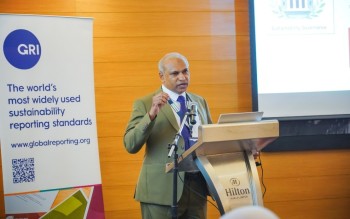
The dialogue between ESGright and Global Reporting Initiative participants highlighted the significance of these shifts across Malaysia's business leadership. The meeting brought together approximately 40 corporate sustainability leaders representing combined market capitalisation exceeding RM380 billion, underlining the economic weight behind this transition. These market leaders collectively set tone and expectations throughout supply chains and sectors, amplifying pressure for smaller competitors to adopt aligned practices. The momentum extends beyond philosophical commitment to economic imperatives shaping capital allocation, lending decisions, and competitive positioning.
Looking forward, Malaysia's positioning as an ASEAN sustainability leader creates regional influence and economic opportunity. The concentration of GRI professionals, emerging expertise in ISSB standards, and government commitment position the country to serve as a training and certification hub for Southeast Asian companies navigating sustainability transitions. This professional services opportunity complements Malaysia's existing economic sectors while supporting the broader regional transition towards sustainable business practices. As banks continue embedding ESG requirements into lending decisions, companies of all sizes increasingly recognize that sustainability reporting transcends environmental idealism to become fundamental competitive infrastructure.

