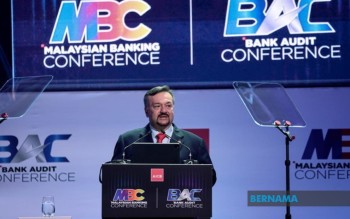
The future of Malaysia's banking sector will require far more than technological prowess alone. At the Asian Institute of Chartered Bankers (AICB) Nexus 2026 Conference in Kuala Lumpur on July 8, Finance Minister II Datuk Seri Amir Hamzah Azizan outlined a vision for the industry that positions human capability and machine intelligence as complementary forces rather than competing ones. His remarks signal a significant policy direction amid growing global concerns about automation's impact on financial services and the risks of relying too heavily on algorithmic decision-making without adequate human oversight.
The minister's emphasis on preserving human judgment within an increasingly AI-driven financial ecosystem reflects a maturation in how policymakers across Asia are approaching digital transformation. Rather than adopting the uncritical enthusiasm that has characterized some technology adoption narratives, Amir Hamzah articulated the view that sustainable competitive advantage in banking flows from institutions capable of combining technological innovation with the irreplaceable human qualities of integrity, contextual understanding, and ethical reasoning. This perspective carries particular weight given Malaysia's aspirations to position itself as a regional financial hub and the sector's critical importance to economic stability.
Central to the minister's vision is the idea that resilience in banking cannot be constructed through regulation and capital adequacy alone, or indeed through technology by itself. Instead, he argued, financial institutions require a deliberate integration of sound regulatory frameworks, sufficient capital buffers, technological capability, and—crucially—a workforce equipped with the judgment and character to navigate complexity. This multifaceted approach acknowledges that markets are ultimately shaped by human decisions and relationships, and that algorithmic systems, however sophisticated, operate within parameters and assumptions that humans must establish and continually reassess.
Amir Hamzah challenged the implicit assumption that competitive success flows inevitably to institutions boasting the most advanced technological infrastructure. His contention that industry leaders will instead be those with talented people capable of governing complexity and acting with integrity represents a counterweight to tech-deterministic thinking that sometimes dominates financial sector discourse. For Malaysian banks operating in an increasingly competitive regional environment, this framing suggests that differentiation will increasingly depend on the quality, adaptability, and ethical standards of their workforce rather than purely on the sophistication of their systems.
The minister underscored that investment in human capital must be recognized as foundational infrastructure for the banking system itself, not as a peripheral concern or a cost to be minimized. This perspective carries implications for how financial institutions structure their human resources strategies, compensation models, and career development pathways. A banking system cannot be genuinely future-ready, Amir Hamzah argued, if the people within it lack the skills, confidence, and support to work effectively alongside artificial intelligence or to exercise meaningful oversight over algorithmic decision-making. This principle suggests that Malaysian banks may need to reassess talent investment priorities as they accelerate digital transformation.
The role of the AICB in this ecosystem emerged as particularly significant in the minister's remarks. Through its professional standards, qualification frameworks, and leadership development programs, the institute provides institutional mechanisms through which banking expertise can be built and maintained at scale across the sector. The organization's industry platforms and networks create spaces for professionals to develop capabilities that transcend any single institution, potentially creating a shared baseline of competence and ethical standards across the Malaysian banking workforce. In an era of rapid technological change and increasing talent mobility, such industry-level capability building becomes ever more important.
Amir Hamzah articulated explicitly that responsibility for building a future-ready, ethical banking sector cannot rest with any single actor. The government, regulators, individual institutions, and professional bodies like AICB each carry distinct responsibilities, yet none can succeed in isolation. This distributed accountability framework recognizes that sustainable transformation requires coordinated action across multiple stakeholders with different mandates and capabilities. For Malaysia, it suggests that the Financial Services Committee and Bank Negara Malaysia, alongside industry associations and professional bodies, will need to maintain active coordination on workforce development and ethical standards.
Underlying all these considerations is a principle that Amir Hamzah identified as the enduring thread connecting the best of banking practice: service to people conducted with integrity. This formulation repositions banking not primarily as a technology or financial engineering exercise, but as a service profession fundamentally concerned with managing people's resources and meeting their economic needs. As artificial intelligence becomes embedded in banking operations—from credit assessment to fraud detection to portfolio management—maintaining this service orientation becomes both more challenging and more essential. The minister's framing suggests that Malaysian banks should evaluate their AI implementation not primarily in terms of efficiency gains or cost reduction, but in terms of whether the technology enhances their capacity to serve customers with greater fairness, transparency, and care.
The timing of these remarks reflects broader conversations occurring across Southeast Asia about managing the intersection of rapid technological change with financial stability and social responsibility. As other regional economies grapple with similar questions about AI adoption in banking, Malaysia's policy direction—emphasizing balance rather than technology-first transformation—may influence how the broader region approaches these challenges. The minister's vision suggests that competing successfully on a regional stage will require not just keeping pace with technological innovation but maintaining distinctive human and ethical strengths that cannot easily be replicated through systems alone.

