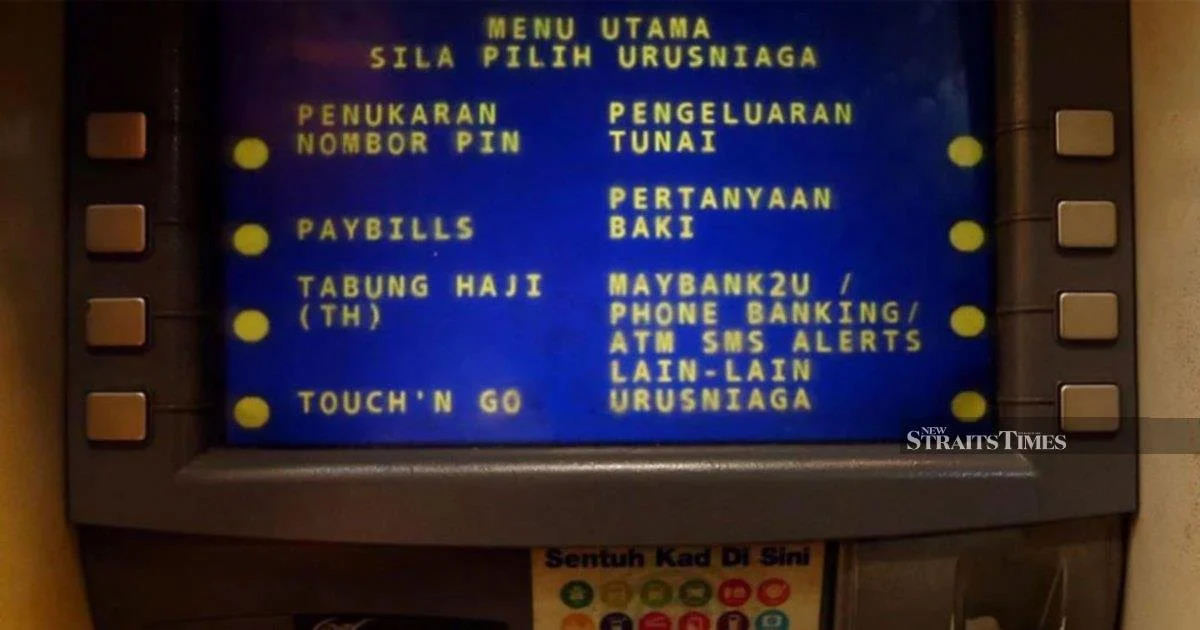
Bank Negara Malaysia has intensified its push for consumer protection by directing Malaysians to lodge complaints whenever they encounter the RM1 interbank withdrawal levy on machines belonging to their own banking institutions, according to Communications Minister Datuk Fahmi Fadzil. The central bank's intervention signals growing concern about potential regulatory breaches in the automated teller machine sector, where customers should theoretically face no charges when accessing their own bank's infrastructure. This directive comes as consumers continue to report inconsistencies in fee structures across the country's banking network.
The distinction between domestic and interbank ATM transactions remains a critical point of confusion for many Malaysian bank customers. When an account holder uses an ATM operated by their own financial institution, the transaction should be conducted free of charge under standard banking practices. However, when customers withdraw funds from machines belonging to rival banks, the RM1 interbank fee applies as a processing charge shared among the banking industry. This two-tiered fee system has been in place for years but enforcement and consistency in application have sometimes proven uneven.
Bank Negara's call for public reporting represents an escalation in regulatory oversight, shifting responsibility partly to consumers themselves to maintain market integrity. By encouraging Malaysians to document and report questionable charges, the monetary authority is essentially crowdsourcing compliance verification across the nation's extensive ATM network. This approach leverages the collective observation power of millions of bank customers to identify systemic violations that might otherwise escape regulatory scrutiny due to resource limitations.
The emergence of these complaints suggests that some financial institutions or ATM operators may be either misconfiguring their systems, inadvertently charging customers incorrectly, or in rare cases, deliberately overcharging to boost revenue. For customers who use ATMs multiple times weekly, even sporadic erroneous RM1 charges can accumulate into significant unrecovered amounts over time. This is particularly troubling given the widespread reliance on ATM withdrawals among lower and middle-income Malaysians who depend on cash transactions for daily commerce.
From a broader consumer protection standpoint, this issue underscores the importance of price transparency and accurate billing in the digital financial ecosystem. Customers increasingly expect their banking relationships to be straightforward and fee structures to be applied consistently according to agreed terms. When charges appear without clear justification, trust in the financial system erodes, even if individual amounts seem nominal. Bank Negara's intervention acknowledges this reality and affirms the regulator's commitment to defending consumer interests against potential billing irregularities.
The reporting mechanism established through this directive will likely generate valuable data that Bank Negara can use to investigate patterns of non-compliance among specific banks or ATM network operators. If certain institutions emerge as repeat offenders, the central bank can escalate enforcement actions, potentially including warnings, sanctions, or remedial requirements. This evidence-based regulatory approach is more efficient than blanket audits and ensures that intervention is proportional to identified misconduct.
For Malaysian consumers, the practical implication is clear: scrutinizing ATM receipts and maintaining records of transactions becomes increasingly important. Many bank customers dismiss ATM charges as unavoidable costs of modern banking and fail to notice when erroneous fees appear. By cultivating greater awareness and accountability, Bank Negara is effectively enlisting the banking public as quality control partners in maintaining regulatory standards. This democratization of oversight can be particularly powerful in a country with Malaysia's geographic and demographic scale, where centralized monitoring of millions of daily transactions remains logistically challenging.
The incident also raises questions about the adequacy of existing banking system architecture and error-detection mechanisms. Most major banks employ sophisticated software to process transactions and apply appropriate fee structures, yet glitches do occur. Whether caused by system bugs, outdated customer identification databases, or incorrect ATM machine programming, these failures represent failures in the chain of quality assurance that financial institutions are expected to maintain. Bank Negara's pressure on banks to resolve such issues efficiently reflects the regulator's expectation that institutions bear primary responsibility for accurate customer billing.
Regionally, Malaysia's ATM fee structure is relatively consumer-friendly compared to some Southeast Asian neighbours, where withdrawal charges at rival bank machines can be substantially higher. However, maintaining that competitive advantage requires vigilance against fee creep and system failures. By acting decisively on complaints about improper charges at own-bank ATMs, Bank Negara signals that it will not tolerate attempts to circumvent established fee arrangements, thereby protecting the integrity of Malaysia's retail banking landscape.
Moving forward, customers who suspect they have been incorrectly charged should contact Bank Negara Malaysia's consumer complaint channels directly, providing transaction dates, times, ATM locations, and receipt details. Documenting and reporting these incidents contributes to a broader regulatory effort to ensure that Malaysia's banking sector remains fair, transparent, and accountable to the customers who depend on it daily.

