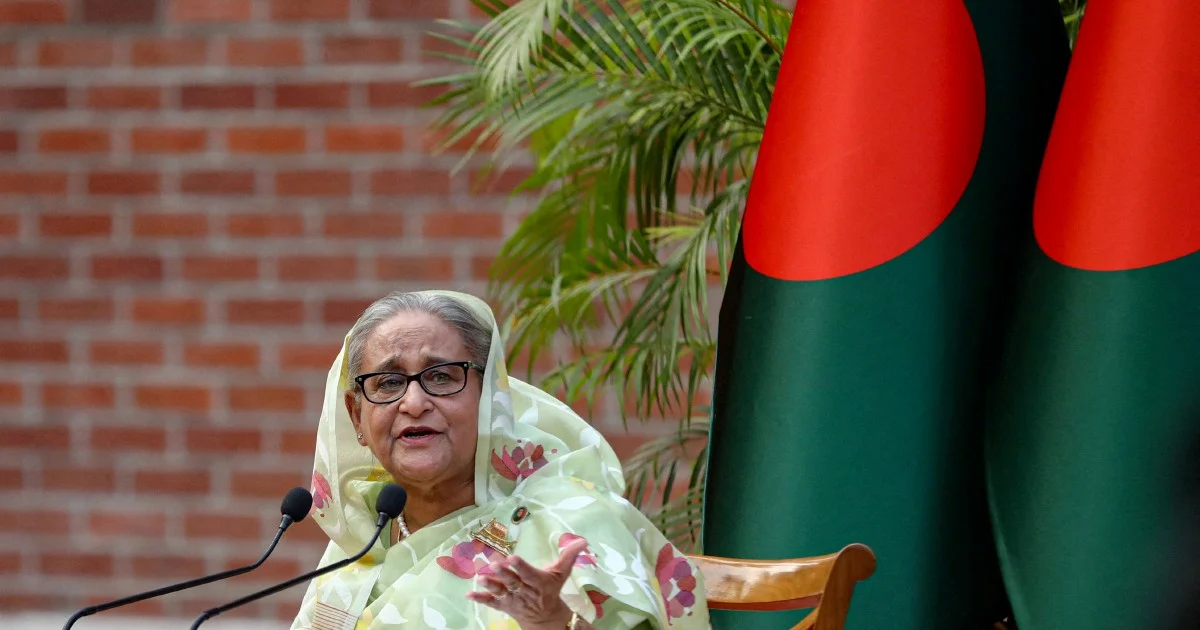
Sheikh Hasina, Bangladesh's ousted Prime Minister, has become the focus of an intensifying standoff between the exiled leader and the interim government controlling the country. A senior official delivered a stark warning on Monday that Hasina will be imprisoned immediately upon her return from self-imposed exile in India—a proclamation that directly contradicts statements the former leader made just days earlier to international media outlets, in which she declared her intention to return in December and submit herself to judicial proceedings.
The extraordinary political crisis unfolding across South Asia reflects the deep fractures in Bangladeshi politics and raises profound questions about the nation's commitment to due process and democratic governance. Hasina's departure from Dhaka earlier this year followed widespread civil unrest and mass demonstrations that ultimately forced her from office, with hundreds killed during the turbulent transition of power. Her refuge across the border in India has placed her beyond the reach of Bangladeshi authorities, but it has not insulated her from legal jeopardy—multiple criminal cases have been filed against her since her departure.
The government's unambiguous warning represents a deliberate rejection of Hasina's professed willingness to face the legal system domestically. When Hasina spoke to Reuters in the weeks before the ministerial announcement, she appeared to signal a strategic shift toward confronting her political opponents through established judicial channels rather than remaining indefinitely beyond national borders. Her stated plan to return voluntarily and surrender to court suggested a calculation that facing trials might ultimately strengthen her position or legitimise her grievances in the eyes of her supporters. The government's response effectively nullifies such calculations, making clear that return will be treated as capitulation followed by immediate detention.
For Malaysian observers and policymakers, this development carries significant implications for regional stability and the treatment of exiled political figures across Southeast Asia. The Bangladesh situation illustrates how civil instability can rapidly destabilise neighbouring countries, particularly when large populations flee as refugees or when leaders seek sanctuary abroad. The proximity of Bangladesh to Malaysia through maritime routes and shared Islamic heritage means internal Bangladeshi crises frequently generate ripple effects throughout the region, affecting trade, security arrangements, and diplomatic relations.
The detention threat also underscores broader concerns about the rule of law in the region. While Hasina's administration faced serious accusations regarding extrajudicial killings and human rights abuses during her tenure, the current interim government's approach of pre-emptively declaring that a returning citizen will be imprisoned—rather than allowing courts to determine guilt or innocence—represents a troubling departure from judicial norms. This pattern mirrors concerning trends elsewhere in South and Southeast Asia, where political transitions often result in score-settling rather than impartial justice.
Hasina's leverage has diminished considerably since her arrival in India. While New Delhi initially offered her sanctuary, India's broader regional calculations and diplomatic relationships with Bangladesh's interim leadership may limit how long that protection can be sustained. The Indian government faces pressure to maintain constructive relations with Bangladesh's current authorities while simultaneously managing the sensitivities of hosting a controversial regional figure. This triangular dynamic—between Hasina, the Bangladeshi interim government, and India—will likely shape how the political crisis ultimately resolves.
The cases against Hasina encompass accusations ranging from corruption to complicity in disappearances and extrajudicial executions during her administration. Whether these charges reflect genuine accountability or represent victor's justice remains contested among international observers and rights organisations. The government's categorical statement that she will face prison upon return, regardless of court proceedings, suggests that the interim administration has already concluded her guilt and made detention a political certainty rather than a legal possibility determined through proper trial.
Hasina's dilemma reflects the perilous position of many ousted leaders in the developing world who lack the financial resources or diplomatic networks to secure asylum in Western nations. She cannot remain indefinitely in India without facing increasing diplomatic pressure, yet returning to Bangladesh appears to guarantee immediate incarceration. This binary choice—exile or imprisonment—may eventually force her to consider seeking asylum in a third country, potentially complicating regional diplomacy further.
The unfolding situation also illuminates the fragility of Bangladesh's interim governance structure. The administration's swift and unequivocal rejection of Hasina's return signals confidence in its political position, yet such hardline positions risk entrenching divisions and prolonging instability rather than facilitating genuine reconciliation. Malaysia and other regional nations with interests in Bangladeshi stability should monitor whether the interim government ultimately pursues reconciliation or deepens authoritarian consolidation of power. The trajectory of Bangladesh's political evolution will carry consequences extending well beyond Dhaka's borders.

