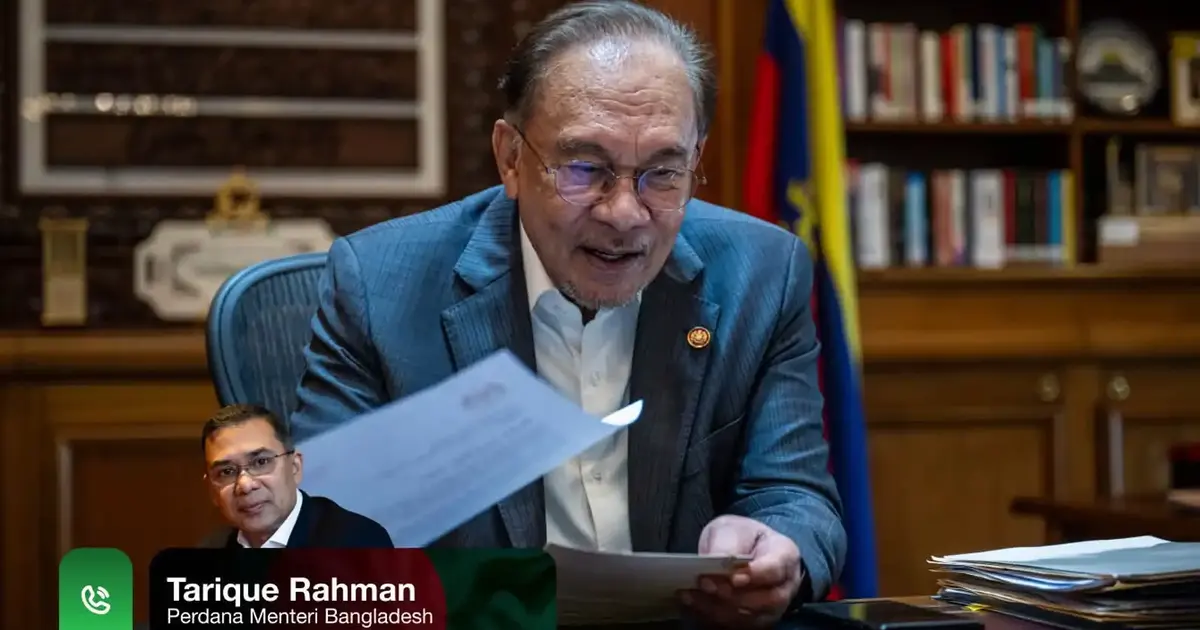
Malaysia has received an urgent appeal from Bangladesh to help resolve an escalating energy crisis through liquefied natural gas supplies. Prime Minister Anwar Ibrahim disclosed the request during a telephone conversation today with his Bangladesh counterpart, Tarique Rahman, signalling growing energy pressures across South Asia and the region's interconnected resource dependencies.
The appeal reflects Bangladesh's deteriorating power situation, which has prompted the government to seek assistance from neighbouring countries and regional partners. As one of South Asia's most densely populated nations with over 170 million people, Bangladesh requires substantial energy resources to sustain industrial production and household consumption. Recent months have witnessed tightening supplies of conventional natural gas from domestic fields, pushing authorities to explore alternative sourcing strategies and international partnerships.
Malaysia, as a significant liquefied natural gas exporter through its Petronas operations, represents a logical partner for Bangladesh's energy requirements. The country has maintained substantial LNG production capacity and established export infrastructure, positioning it to potentially accommodate additional buyers seeking to address supply deficits. For Malaysian policymakers, such requests highlight the country's strategic importance in regional energy security and its diplomatic leverage in bilateral relations across South and Southeast Asia.
The timing of Bangladesh's request carries particular significance given the geopolitical dynamics in South Asia and recent political developments in Dhaka. Prime Minister Tarique Rahman's government, which recently assumed office following significant political upheaval, faces immediate pressure to stabilise the economy and restore public confidence. Energy security forms a critical component of any stabilisation programme, making the pursuit of reliable LNG sources a near-term priority rather than a long-term planning exercise.
Energy shortages in Bangladesh have cascading effects throughout the economy, constraining manufacturing operations, limiting power generation for domestic consumption, and increasing production costs for industries competing in global markets. Textile manufacturing, a cornerstone of Bangladesh's export economy, faces particular vulnerability to power disruptions and rising energy costs. The sector employs millions of workers and generates substantial foreign exchange, making energy stability essential to broader economic resilience and employment maintenance.
Regional energy cooperation has emerged as an increasingly important dimension of Southeast and South Asian diplomatic engagement. Malaysia's willingness to engage seriously with Bangladesh's request demonstrates recognition that energy security transcends individual national boundaries and requires coordinated responses. Bilateral discussions on LNG supply arrangements could establish frameworks for sustained cooperation, benefiting both nations through expanded trade relationships and enhanced regional stability.
From Malaysia's perspective, expanding LNG export markets provides economic benefits and strengthens the nation's position as a reliable energy supplier. Diversifying customer bases reduces dependency on any single buyer and allows Malaysian producers to negotiate from positions of greater stability. Enhanced energy cooperation with Bangladesh also reinforces Malaysia's broader diplomatic engagement in South Asia, where the country maintains historical ties and growing commercial interests.
The LNG market operates through long-term contracts and spot purchases, offering flexibility for addressing urgent supply requirements. Malaysia could potentially facilitate either arrangement depending on Bangladesh's immediate needs and longer-term energy planning. Short-term spot purchases would provide rapid relief, whilst long-term contracts would establish predictable supply arrangements supporting Bangladesh's industrial planning and infrastructure development.
Implementing energy supply arrangements requires navigating infrastructure considerations, including port facilities for receiving LNG vessels and regasification terminals necessary to convert liquefied gas back to usable form. Bangladesh possesses regasification capacity at its Moheshkhali LNG terminal, constructed in recent years to receive liquefied gas imports. This existing infrastructure removes a significant implementation barrier, enabling relatively rapid establishment of Malaysian supply flows should both governments agree on commercial terms.
Beyond immediate supply considerations, the conversation between Anwar Ibrahim and Tarique Rahman potentially signals broader recognition of mutual interests spanning energy, trade, and regional stability. Malaysia maintains substantial business interests in Bangladesh and the two countries share membership in the Organisation of Islamic Cooperation and ASEAN-related forums. Energy cooperation could catalyse expansion of bilateral relationships across multiple sectors, creating mutual benefits extending beyond the immediate energy crisis.
The request also underscores vulnerabilities in South Asian energy infrastructure and supply chains. Rapid industrialisation and population growth have outpaced domestic energy production capacity in multiple nations throughout the region, creating dependencies on imported supplies. Malaysia and other energy-producing nations occupy strategic positions within these emerging supply networks, wielding considerable influence over regional economic trajectories and development outcomes.
Moving forward, formal negotiations between Malaysian and Bangladeshi officials will likely focus on commercial terms, supply volumes, delivery schedules, and long-term commitments. Such discussions would involve government-to-government engagement and direct negotiations between Petronas and Bangladeshi energy authorities. The outcome will significantly influence Bangladesh's ability to address immediate energy shortages whilst building sustainable power systems supporting continued economic development and poverty reduction across the nation.

