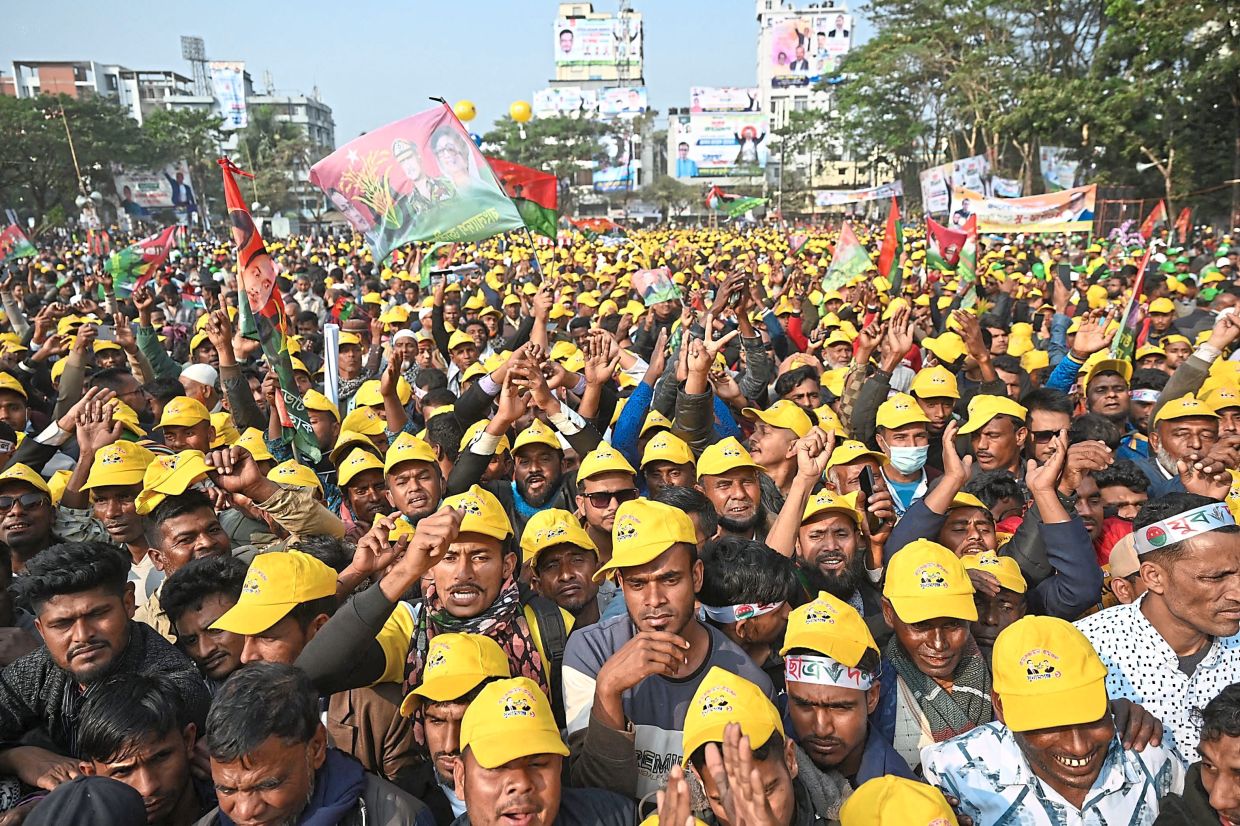
Bangladesh's parliament will convene on Thursday afternoon to elect the country's new president, with Mirza Fakhrul Islam Alamgir, the 78-year-old secretary general of the Bangladesh Nationalist Party (BNP), widely expected to secure the position representing a significant moment in the nation's post-revolution political landscape.
Alamgir's ascension to the presidency would mark a symbolic victory for Prime Minister Tarique Rahman's BNP, which secured a decisive electoral mandate in February—the first elections held following the tumultuous 2024 revolution that toppled the government of Sheikh Hasina. The presidential position, while largely ceremonial in nature, carries considerable symbolic weight in Bangladeshi politics and remains a coveted honour within the country's political establishment. Alamgir is expected to prevail decisively against his sole challenger, Oli Ahmed, who has been nominated by the opposition 11-party alliance headed by Jamaat-e-Islami.
Reflecting on his unexpected rise to the presidency, Alamgir expressed humility about his impending elevation during remarks to journalists on Tuesday. "I never thought that I would become the president -- it is the infinite grace of the party and almighty Allah," he stated through the state news agency BSS, signalling both gratitude to his party and an acknowledgement of the role fortune has played in his political trajectory. His commitment to continued public service underscored his intention to remain engaged with ordinary citizens even after assuming office, a pledge that resonates with Bangladesh's current political climate and public expectations following the revolutionary upheaval.
The election proceeds following the resignation last month of Mohammed Shahabuddin, the previous president who stepped down citing health concerns. Shahabuddin, 76, had become increasingly untenable in the position due to his close ties with the fallen Hasina administration, and his departure paved the way for the current election. His tenure, which began in 2023, ended prematurely before the scheduled 2028 conclusion, reflecting the broader political realignment that has unfolded since the revolution.
For Southeast Asian observers, Bangladesh's political transformation carries regional significance. The ouster of Hasina represented a dramatic reversal for a government that had maintained tight control over domestic affairs and regional relationships. Hasina currently remains in hiding in India, having declined to appear for her trial in Dhaka where she was convicted in absentia of crimes against humanity in November and sentenced to execution—a punishment that underscores the revolutionary government's determination to hold the previous administration accountable.
Alamgir's background demonstrates a lifetime engagement with Bangladesh's political struggles and democratic aspirations. Born on January 26, 1948, he became politically active while pursuing economics studies at Dhaka University, distinguishing himself as a prominent student leader during the 1969 uprising against Pakistan's military rule—a movement that fundamentally altered the trajectory toward Bangladesh's independence two years later. This early activism established him as a figure committed to democratic principles and opposition to authoritarian governance, credentials that would define his career.
Following his student activism, Alamgir pursued an academic career in economics before transitioning into government service and electoral politics. His ministerial portfolio subsequently encompassed agriculture, aviation, and tourism—positions that provided him with substantial administrative experience and demonstrated competence across diverse policy domains. However, his emergence as a nationally prominent political figure occurred during Hasina's extended period in office, when he served as a critical opposition voice amid circumstances that severely constrained democratic expression.
During Hasina's administration, Alamgir maintained the BNP's organisational cohesion and political relevance at considerable personal cost. While BNP head Khaleda Zia remained imprisoned and her son Tarique Rahman was forced into exile, Alamgir shouldered the burden of preserving party unity and visibility under relentless governmental pressure. He endured multiple arrests on charges he characterised as politically fabricated, demonstrating the kind of personal resilience that has become valued within opposition circles across South Asia. The BSS noted that observers had credited him with sustaining the party through these extraordinarily difficult circumstances.
Alamgir's personal life reflects stability and family commitment. He is married to Rahat Ara Begum, a retired financial official, and the couple have two daughters, grounding his public persona in domestic responsibility and conventional family structures that resonate with Bangladeshi social values.
The presidential election scheduled for Thursday represents a consolidation of the BNP's political dominance following their February electoral victory, which itself constituted a watershed moment in Bangladeshi democracy. Unlike the rigged and suppressed elections that characterised the final years of Hasina's governance—a period that earned condemnation from international human rights organisations—the February vote signalled a potential restoration of competitive electoral politics and genuine democratic contestation.
For Malaysia and broader Southeast Asia, Bangladesh's political transition carries implications for regional stability and the trajectory of South Asian democracy. The region has watched closely as Bangladesh navigates its post-revolutionary period, and the election of a veteran opposition figure to the presidency signals continuity in anti-authoritarian governance rather than radical systemic departure. Alamgir's ascension embodies the aspiration for institutional restoration and democratic normalisation that animated the 2024 revolution.
Voting is scheduled to commence around 2pm local time on Thursday, with the parliamentary chamber serving as the electoral venue. The outcome appears predetermined given the BNP's overwhelming numerical superiority in parliament, yet the procedural formality underscores Bangladesh's commitment to constitutional observance even when electoral outcomes are predetermined. This adherence to institutional forms, however symbolic, distinguishes the current political environment from the arbitrary governance associated with the previous administration.

