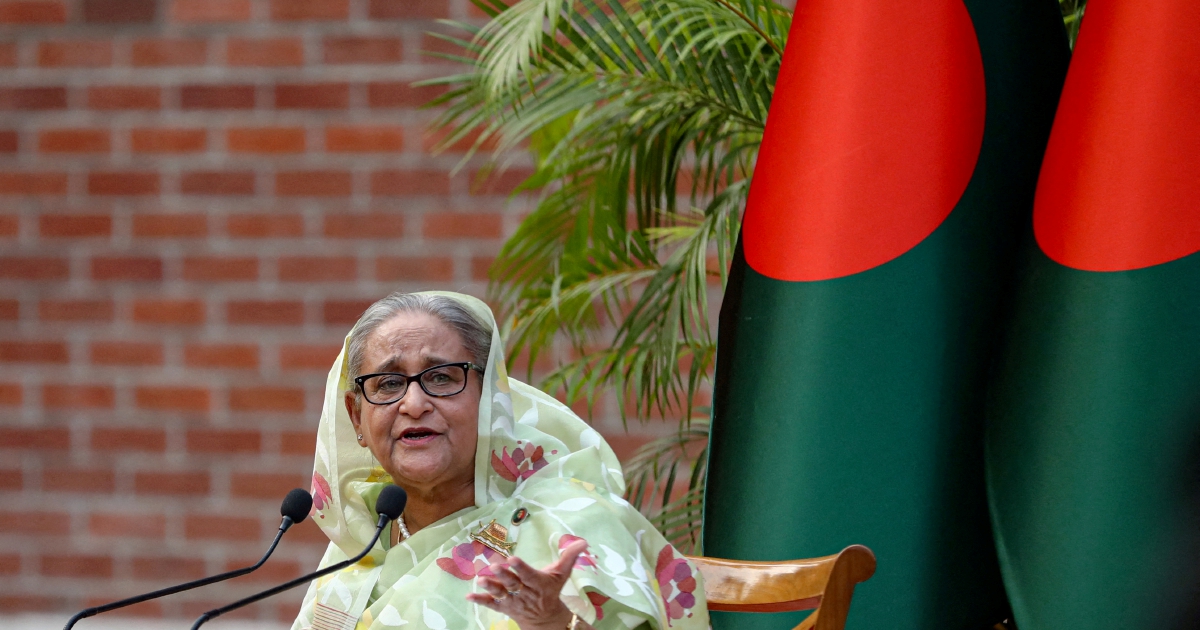
Bangladesh authorities announced Wednesday that they have seized approximately 760 billion taka in assets—equivalent to about $6.2 billion—connected to former Prime Minister Sheikh Hasina, members of her immediate family, and a network of ten business groups allegedly linked to their interests. The massive confiscation represents one of the most sweeping asset recovery actions undertaken since Hasina's departure from office and underscores the new administration's commitment to addressing what it characterises as systemic corruption under her tenure.
The scale of the asset seizure reflects the depth of investigations being conducted into the financial holdings amassed during Hasina's years in power. Beyond the former premier herself, authorities have targeted her family members and the business conglomerates they controlled or influenced, suggesting a comprehensive approach to dismantling what the transitional government views as entrenched networks of economic control. This action signals an intensified phase in the post-transition accountability process that has already seen multiple high-level arrests and investigations.
The 760 billion taka figure, though substantial in nominal terms, requires context within Bangladesh's economy. The country's annual government budget exceeds 7 trillion taka, meaning the confiscated assets represent roughly one-tenth of annual public spending. For Southeast Asian observers, the quantum of these assets underscores the scale of wealth concentration among political elites in the region and raises questions about transparency in governance structures across comparable democracies.
The targeting of ten business groups alongside personal assets suggests authorities are pursuing a strategy that goes beyond individual accountability to address institutional patterns of resource allocation. Business groups in Bangladesh, particularly those with political connections, often serve as vehicles for wealth accumulation and are frequently intertwined with state procurement processes, licensing decisions, and regulatory exemptions. Unraveling these connections is complex and requires coordinated action across multiple regulatory agencies.
For Malaysian observers, the Bangladesh case offers instructive parallels and contrasts with domestic experiences of post-transition asset recovery. Malaysia's own history of managing confiscations following leadership changes demonstrates both the potential and pitfalls of such exercises. The sustainability and effectiveness of asset recovery depend heavily on institutional independence, transparent legal processes, and protection against political misuse of confiscation powers—challenges that confront any transitional administration.
The confiscation announcement carries implications for regional perceptions of governance accountability. Neighbouring countries and international observers will closely monitor how Bangladesh implements these seizures, whether they survive legal challenges, and whether recovered funds are deployed transparently for public benefit. The credibility of Bangladesh's transition process—and by extension, regional confidence in democratic accountability mechanisms—partly hinges on demonstrating that asset recovery serves public interest rather than serving as a vehicle for new power consolidation.
International dimensions also merit consideration. Many assets accumulated by political figures in South Asia involve offshore holdings, foreign real estate, and international financial instruments. Bangladesh's ability to recover such assets depends on cooperation from jurisdictions where these holdings are located and on invoking international legal frameworks governing asset recovery. The complexity of cross-border asset tracing and recovery mechanisms means that the final recoverable amount may be substantially lower than the initial assessment figure.
The business groups implicated in these seizures likely provided various services to state enterprises and government entities, benefiting from preferential access to contracts, loans, and regulatory consideration. Disrupting these networks could have immediate economic ramifications if the confiscated companies provided essential goods or services. Authorities will need to manage the operational continuity of viable businesses while preventing continued resource stripping by connected parties.
For Malaysian investors and businesses operating across South Asia, the Bangladesh seizures underscore the importance of corporate governance clarity and structural separation between business operations and political patronage networks. Companies seeking long-term stability in the region must demonstrate genuine commercial viability independent of political protection and government favour. The Bangladesh precedent shows that even very substantial asset holdings provide limited protection if political fortunes change and new administrations prioritise accountability over continuity.
The legal framework underpinning these confiscations will be critical to their ultimate success. Bangladesh authorities must demonstrate that seizures follow established legal procedures and that affected parties have meaningful opportunity for due process and appeal. Arbitrary or legally questionable confiscations, even when targeting genuinely corrupt figures, can undermine rule of law and create precedents for future political weaponisation of confiscation powers.
Moving forward, the effectiveness of Bangladesh's asset recovery will depend on several factors: whether seized assets are properly secured and documented; whether proceeds are channelled transparently into state development programmes; whether international cooperation enables recovery of offshore holdings; and whether legal challenges are resolved expeditiously. These implementation details will ultimately determine whether this action becomes a model for regional accountability or a cautionary tale about the limitations of post-transition justice mechanisms.

