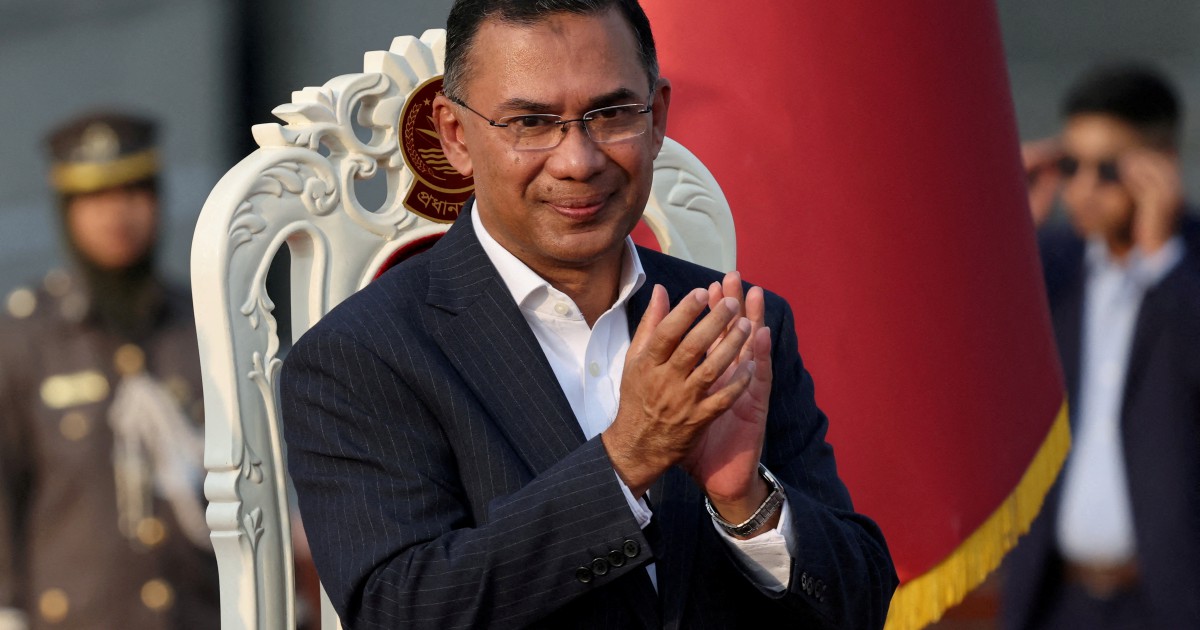
Bangladesh has effectively suspended high-level diplomatic visits to India, announcing that Prime Minister Tarique Rahman will refrain from travelling to New Delhi until the Indian government agrees to extradite Sheikh Hasina, the previous Bangladeshi premier who sought refuge across the border following the civil unrest that engulfed the nation in 2024. The declaration, made through an official statement on Sunday, represents a significant hardening of Dhaka's position on one of South Asia's most fraught bilateral relationships and signals the weight the transitional government places on securing Hasina's return to face potential prosecution.
The 2024 uprising in Bangladesh fundamentally restructured the country's political landscape, culminating in the departure of a regime that had governed for over a decade. Sheikh Hasina's flight to India came as mass demonstrations gathered momentum, transforming the immediate neighbourhood into a focal point for managing the fallout from the disorder. Her arrival in India, a traditional ally of Bangladesh despite the volatility that periodically strains their ties, provided a sanctuary that New Delhi has so far maintained, declining requests for her surrender to Bangladeshi authorities.
The extradition demand reflects deeper anxieties within Bangladesh's new administration regarding legitimacy and accountability. The transitional government, assembled in the aftermath of the uprising, appears determined to demonstrate that justice mechanisms will pursue those held responsible for the preceding administration's actions. By conditioning a prime ministerial visit—typically a cornerstone of bilateral engagement—on Hasina's return, Dhaka is signalling the non-negotiable nature of this objective to its neighbour and its own population.
India's stance has remained measured but firm. New Delhi has not ruled out extradition through available legal channels, yet has avoided creating pressure that might destabilise the broader relationship or invite reciprocal demands. The two nations share a 4,156-kilometre land border and complex interdependencies spanning trade, security, and water resources. Any visible capitulation by India would generate domestic criticism from sections viewing the move as sacrificing strategic autonomy to Bangladeshi demands, while acquiescence by Bangladesh in the absence of extradition would undermine the transitional government's standing.
The timing of Dhaka's statement underscores growing impatience within Bangladesh's leadership. Weeks and months have elapsed since Hasina's departure, yet her legal status remains unresolved, creating uncertainty about whether the new administration can deliver accountability to its citizens. The announcement serves as both a diplomatic tool and a domestic political message, reassuring various constituencies that the government is committed to pursuing accountability even at the cost of deferring engagement with a crucial regional power.
For Malaysia and other Southeast Asian nations, Bangladesh's stance carries implications beyond bilateral dynamics. The posture reflects how post-uprising administrations navigate competing pressures: the demand for domestic justice against pragmatic engagement with powerful neighbours. How this standoff resolves will offer insights into whether transitional governments can sustain nationalist agendas whilst maintaining essential regional partnerships. The standoff also illustrates the limitations of geographical proximity in a region where geopolitical interests frequently diverge from cultural or historical ties.
India's historical role as a refuge for displaced leaders and dissidents is being tested by Bangladeshi expectations. Previously, such arrangements proceeded with minimal fanfare, but the visibility of this particular case—coupled with Dhaka's public linking of diplomatic engagement to extradition—has stripped away customary discretion. New Delhi must weigh its traditional diplomatic courtesy against the costs of appearing to harbour a leader accused of presiding over widespread disorder and alleged abuses.
The suspension of high-level visits also affects practical cooperation across sectors. Regular ministerial exchanges facilitate coordination on flood management, border demarcation disputes, trade promotion, and security matters where shared interests exceed divergences. Postponing these interactions creates space for misunderstandings to fester and opportunities for collaborative solutions to erode.
Bangladesh's leverage in this dispute remains constrained. India's strategic significance to Bangladesh's stability—from security guarantees to development financing—limits how far Dhaka can push confrontation. Conversely, India cannot entirely dismiss Bangladeshi demands without alienating a neighbour whose stability and orientation matter significantly to Indian interests. This asymmetry suggests neither side will easily capitulate, prolonging the impasse.
Sheikh Hasina's legal position in India further complicates resolution. She has not formally requested political asylum, operating instead in a grey zone of administrative tolerance. Should India move toward extradition, substantial procedural hurdles would emerge, including potential challenges through Indian courts and questions about the nature of charges awaiting her in Bangladesh. These legal intricacies provide cover for Indian authorities reluctant to make explicit political decisions about her fate.
For the transitional Bangladeshi government, maintaining this hardline stance serves multiple purposes. It demonstrates resolve to constituencies that view the previous administration's actions unfavourably, establishes the new administration's authority to set conditions for bilateral engagement, and applies persistent pressure on India without requiring immediate escalation. However, sustaining this position indefinitely risks calcifying the relationship precisely when Bangladesh requires Indian cooperation on numerous fronts.
The standoff ultimately reflects how post-conflict or post-upheaval societies grapple with justice and normalisation simultaneously. Bangladesh appears to have concluded that deferring normal relations is the price of pursuing accountability, at least for the immediate period. Whether this calculation proves sustainable or must ultimately yield to pragmatism will shape not only Dhaka-New Delhi ties but also provide a template for how similar disputes across the region might unfold in coming years.

