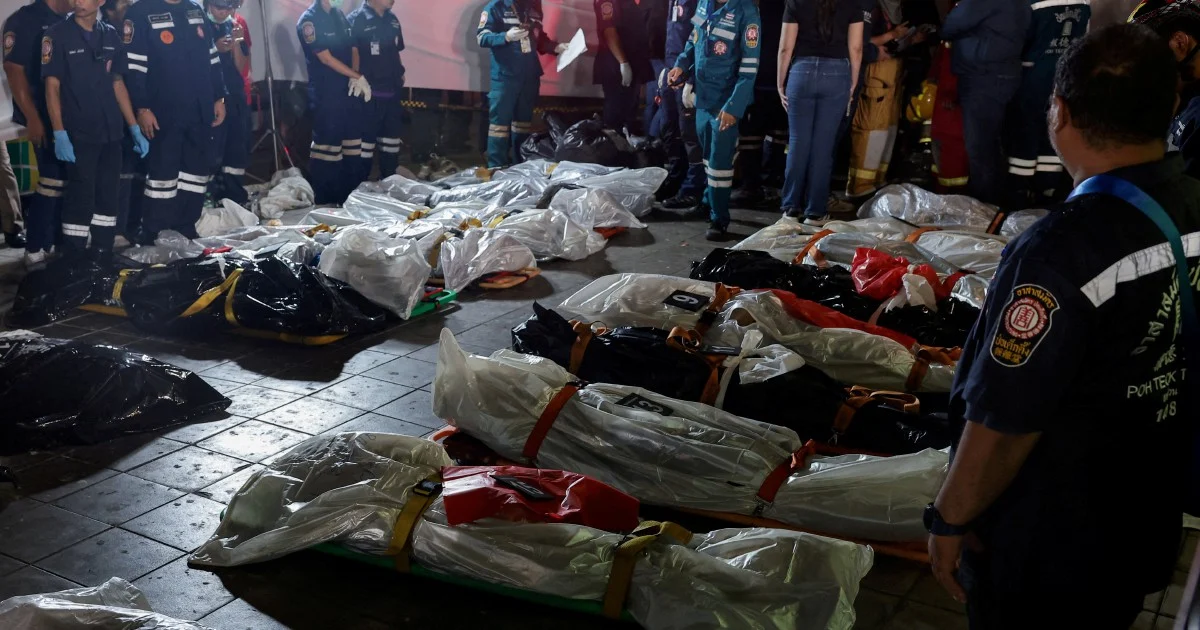
Thailand's capital was struck by tragedy late Sunday when a fire engulfed a popular bar, resulting in one of the most deadly incidents at an entertainment venue in recent years. Prime Minister Anutin Charnvirakul announced to local media that the inferno had claimed the lives of at least 27 individuals, though the final toll remained uncertain as rescue efforts and investigations continued into the early hours of Monday morning.
The Bangkok establishment, which had been operating as a gathering spot for locals and tourists, became a death trap as flames rapidly spread through the structure. Emergency responders faced significant challenges in evacuating patrons and locating victims amid thick smoke and intense heat. The nature and origin of the fire were not immediately disclosed, but the speed at which the blaze consumed the venue and claimed so many lives raised immediate questions about structural safety, emergency exits, and crowd capacity management.
This incident marks a sobering reminder for both Thailand and the broader Southeast Asian region about the persistent risks facing crowded entertainment venues. Bangkok's nightlife district continues to attract thousands of visitors nightly, yet questions linger about whether establishments comply with international fire safety standards and whether local authorities conduct regular safety inspections. The tragedy highlights vulnerabilities that extend beyond Thailand's borders, affecting how similar venues operate throughout Southeast Asia where rapid urbanisation and tourism growth have sometimes outpaced safety infrastructure development.
For Malaysian readers, the disaster underscores the importance of vigilant oversight of public gathering spaces domestically. Malaysia has experienced several serious fires at entertainment and hospitality venues over the past decades, lessons that should inform current building codes and inspection protocols. The incident serves as a comparative case study for how quickly situations can spiral without adequate fire suppression systems, clearly marked emergency exits, and properly trained staff prepared to respond to emergencies.
Thailand's tourism industry faces potential reputational damage from the incident, particularly among international visitors who consider personal safety when choosing destinations. While isolated incidents do not define a nation's overall safety record, they do prompt travellers and travel advisories to scrutinise local safety measures. This could have downstream effects on the broader regional tourism market, including competing destinations in Southeast Asia that may attract displaced visitors concerned about safety standards in Thailand.
Prime Minister Anutin's immediate public statement reflected the Thai government's awareness of the incident's severity and its need to maintain transparency with the public and international observers. His confirmation of the casualty figure provided official acknowledgement while investigation teams began piecing together what led to the catastrophe. The preliminary death toll of 27 was expected to be revised as missing persons were accounted for and injured victims received treatment in Bangkok's medical facilities.
The fire at this Bangkok venue occurred within a context where entertainment districts across Southeast Asia operate with varying regulatory oversight. Some establishments maintain exemplary safety standards with regular audits and staff training, while others operate with minimal compliance checks. This disparity creates uneven risk profiles that affect both local workers and international visitors who have no way of assessing venue safety before entering.
Investigators would likely examine multiple factors in the coming days: whether emergency lighting and exit signage were adequate and functioning, if the venue exceeded safe occupancy limits, what materials were used in interior construction and whether they met fire-resistance standards, and whether fire suppression systems were properly maintained and operational. Understanding these elements would reveal systemic gaps that may exist across similar establishments throughout Thailand and the region.
For Malaysian operators of bars, nightclubs, and other entertainment spaces, the Bangkok incident presents a cautionary tale about cutting corners on safety investments. Fire safety infrastructure—including sprinkler systems, fire alarms, emergency lighting, and evacuation routes—represents non-negotiable baseline requirements rather than optional enhancements. Local authorities should use this incident as justification for conducting surprise inspections and enforcement campaigns throughout Malaysia's entertainment districts.
The human toll extends beyond statistics. Behind the 27 confirmed deaths were individuals with families, friends, and communities who would be forever changed by this event. Many survivors would carry physical injuries and psychological trauma. Staff members who were working at the time faced impossible choices during the chaos. The incident rippled through multiple families and social networks, underscoring why prevention through rigorous safety standards represents not merely regulatory burden but an essential responsibility.
Thailand's emergency services would face months of victim identification, family support services, and coordination with international authorities where foreign nationals had been present. The government would face inevitable calls for reforms and accountability. Simultaneously, Thai authorities would need to balance emergency response with efforts to restore public confidence in Bangkok's safety for both residents and the tourism sector that significantly contributes to national economic growth.
As details emerge from the Bangkok investigation in coming weeks, Southeast Asian governments and venue operators should monitor developments closely. Best practices identified from the incident response could inform regional safety protocols. Conversely, any findings that reveal deliberate negligence or systematic failures in oversight should prompt immediate scrutiny of similar establishments in neighbouring countries including Malaysia. The fire represents not merely a Thai tragedy but a regional wake-up call about protecting lives in shared entertainment spaces.

