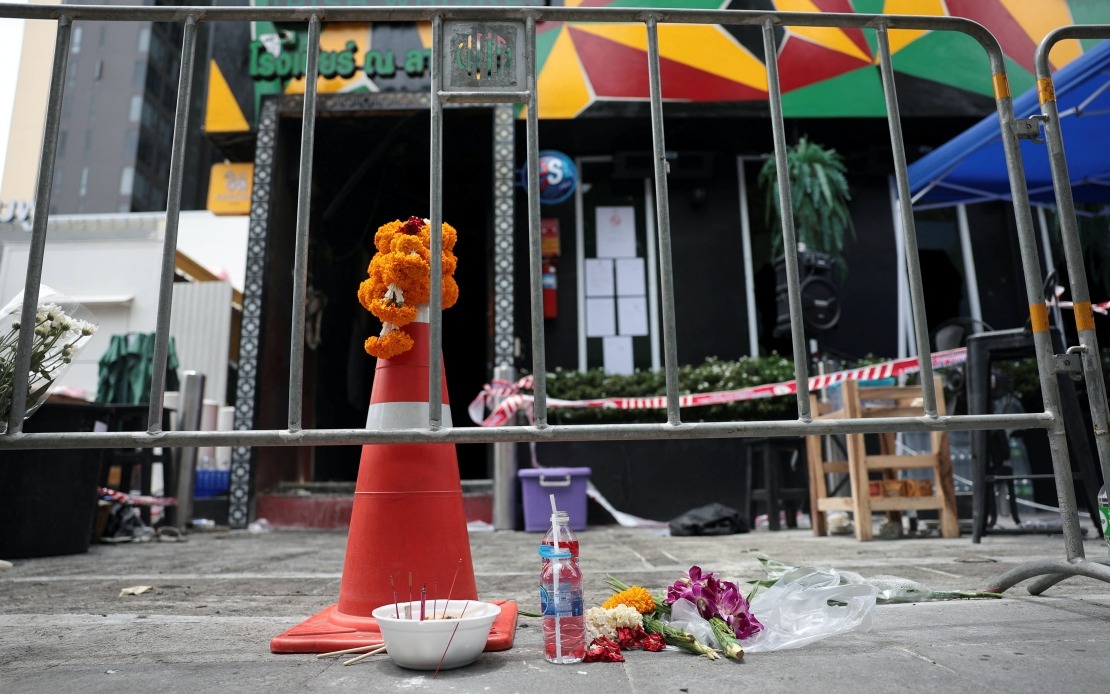
Thai police have established that the 33 fatalities from a devastating bar fire in Bangkok's Lat Phrao district resulted from inhalation of toxic gases rather than thermal injuries. Metropolitan Police Bureau Commissioner Police Lieutenant General Sayam Boonsom disclosed on Thursday that forensic examination revealed carbon monoxide and cyanide present in the victims' bodies, with asphyxiation being the primary cause of death across all cases examined. This determination carries significant implications for understanding how rapidly such incidents can become catastrophic and why emergency evacuation procedures remain critical in entertainment venues throughout Southeast Asia.
The toxic gases encountered during the incident prevented victims' body tissues from absorbing oxygen, a physiological response that proves fatal within minutes of exposure. Carbon monoxide, an odourless and colourless compound generated through incomplete combustion, combines with haemoglobin in the bloodstream more readily than oxygen itself, thereby suffocating cellular function from within. Cyanide, meanwhile, blocks the enzymes responsible for cellular respiration at the mitochondrial level. The combination of these two toxins would have created a deadly environment that progressed far more rapidly than visible flames, leaving occupants incapacitated before they could mount an effective escape.
The Monday midnight fire at the entertainment establishment claimed 33 lives and left more than 70 injured. As of Thursday, fourteen patients remained in intensive care whilst forty-four had been discharged from medical facilities. The rapid casualty toll underscores how quickly such incidents can overwhelm both the venues' inherent safety systems and first responders' capacity to manage mass evacuations and medical emergencies simultaneously.
Forensic officers have completed their initial scene examination, though investigations continue with investigators now directing focus towards multiple potential causes. Preliminary findings point toward possible electrical faults as a primary trigger, though authorities are simultaneously examining structural and operational violations that may have transformed an initial fire into a mass casualty event. Among these violations are unauthorised building modifications, blocked emergency exit routes, and potential safety system failures that would have compromised evacuation procedures during the critical minutes immediately following ignition.
Police have not yet filed formal charges, but authorities have identified several offences under investigation. These include causing death and injury through negligence, conducting unauthorised structural alterations to the premises, and negligently causing the fire itself. Additionally, investigators are examining potential breaches of regulations governing entertainment venue operations and whether the establishment functioned beyond the scope granted through its operating licence. Such expansions—whether in terms of capacity, layout changes, or operational modifications—frequently compromise safety systems designed around original specifications.
The investigation has involved extensive witness interviews, with police having questioned more than 106 individuals connected to the venue, emergency response, or the incident itself. These testimonies will likely prove instrumental in establishing the sequence of events immediately preceding and following the fire's outbreak, identifying whether warning systems functioned correctly, and determining whether staff conducted evacuation procedures or remained unaware of developing dangers.
For Malaysian readers and Southeast Asian stakeholders, this incident raises troubling questions about entertainment venue safety standards across the region. Many establishments in Thailand, Malaysia, Singapore, and surrounding nations operate in older buildings where structural modifications for expanded capacity frequently outpace corresponding upgrades to fire suppression and emergency egress systems. The Bangkok incident demonstrates how regulatory oversight gaps can convert ordinary fires into tragedies of staggering proportions.
The use of hazardous materials in interior design—including foam insulation, synthetic furnishings, and decorative elements—contributes significantly to toxic gas production during fires. The rapid onset of carbon monoxide and cyanide poisoning means occupants may lose consciousness before reaching exits, regardless of whether those exits remain unblocked. This chemical dimension of fire hazard receives less public attention than physical barriers, yet proves equally lethal.
Thailand's entertainment sector faces mounting scrutiny following this disaster. Venue operators across Bangkok and provincial areas will face intensified inspections, with authorities prioritising verification of emergency systems, exit capacity, and structural compliance. Industry observers anticipate potential regulatory tightening that could increase operational costs for smaller establishments whilst driving safety improvements across the sector.
The incident also highlights the critical importance of public awareness campaigns regarding fire safety in crowded venues. Many patrons remain unfamiliar with venue layouts, emergency exit locations, or appropriate response protocols when encountering smoke or disorientation. Training staff in evacuation procedures and maintaining clearly marked, unobstructed exits represents baseline protection that numerous venues throughout Southeast Asia have neglected.
Investigators' focus on unauthorised structural modifications reflects a common pattern in entertainment venues throughout the region, where owners frequently alter layouts to increase seating capacity or create exclusive sections without obtaining necessary approvals or updating safety systems accordingly. Such modifications typically occur gradually and informally, escaping regulatory attention until incidents force retrospective examination of how establishments had deviated from originally approved designs.
The Bangkok tragedy will likely prompt regional discussions about harmonising safety standards for entertainment venues across Southeast Asian nations. Malaysia's regulatory framework for such establishments may face renewed examination, with particular attention to inspection frequency, the stringency of exit width and capacity requirements, and enforcement mechanisms for premises operating in violation of their approved specifications.

